What's inside
As an Amazon Associate I earn from qualifying purchases. This post may contain affiliate links at no extra cost to you.
Our Top Picks
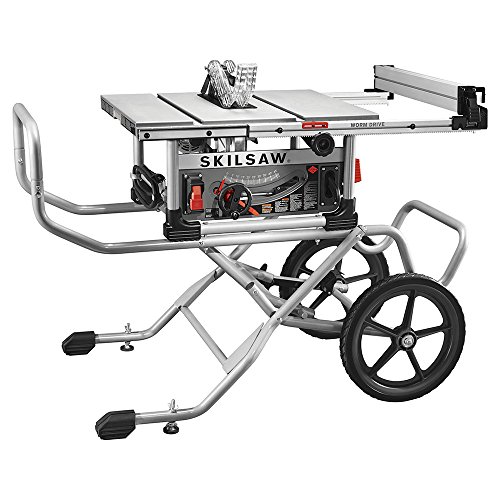 SKIL 10 Inch Heavy Duty Worm Drive Table52.6 x 29.5 x 35 inches52.6 x 29.53 x 35.08 inches94.3 poundsCheck on Amazon

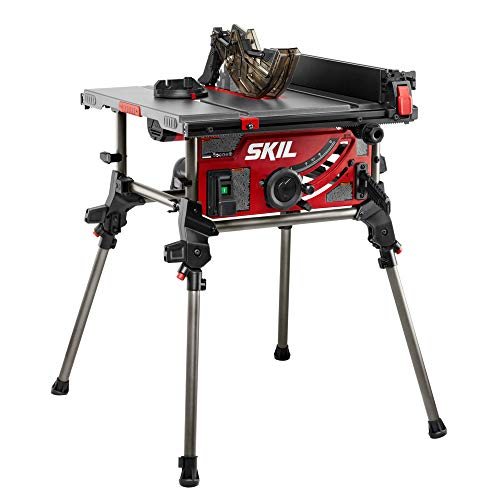

Ridgid R4550 vs Metabo HPT C10RJS: Comparing Jobsite Table Saws for Sheet Goods
Both the Ridgid R4550 and Metabo HPT C10RJS are 10-inch, 15-amp jobsite table saws built around the same basic job: breaking down plywood, OSB, MDF, framing lumber, and trim at a jobsite. The important differences are not cutting power alone. They are rip capacity, stand design, fence behavior, dust control, portability, and how much support your sheet goods need before they reach the blade.
For occasional cabinet work or home renovation, either saw can handle sheet goods. Neither turns a 4-by-8-foot panel into an easy one-person cut, however. A table saw this size has a relatively small tabletop, so safe and accurate sheet cutting depends heavily on outfeed support, a straight fence setup, and a good method for supporting the offcut.
As an Amazon Associate we earn from qualifying purchases at no extra cost to you.



Key specifications
| Feature | Ridgid R4550 | Metabo HPT C10RJS |
|---|---|---|
| Blade size | 10 inches | 10 inches |
| Motor | 15 amps | 15 amps |
| Maximum rip capacity | About 30 inches | About 35 inches |
| Maximum cut depth at 90 degrees | About 3-1/8 inches | About 3-1/8 inches |
| Blade speed | About 5,000 rpm | About 4,500 rpm |
| Stand | Folding wheeled stand | Folding wheeled stand |
| Best advantage | Compact jobsite setup and solid general-purpose performance | Extra rip width for wide cabinet and shelving parts |
Specifications can vary slightly by package and retailer, so check the label and included accessories before ordering. The practical difference is the fence capacity: the Metabo HPT gives you roughly five more inches of rip width, which matters when cutting a 30-inch cabinet side or wide shelf from a full sheet.
How they handle sheet goods
The Metabo HPT C10RJS has the clearer advantage for wide rips. Its approximately 35-inch capacity lets you cut wider panels without immediately switching to a circular saw and guide. That does not mean you should feed a full 4-by-8 sheet across the saw by yourself. A ¾-inch plywood sheet weighs roughly 60 to 75 pounds, depending on the material, and it can bind or lever upward if the unsupported portion catches the fence or blade.
The Ridgid R4550 is better suited to crosscutting and ripping narrower strips after the sheet has been broken down. Its roughly 30-inch capacity covers common cabinet partitions, base panels, drawer parts, and many shelving cuts. If your normal work is flooring, framing, or small cabinetry, the extra capacity of the Metabo may spend most of its life unused.
Both motors are adequate for plywood and construction lumber when the blade is sharp. A 15-amp jobsite saw can bog down in thick hardwood, wet lumber, or a dull combination blade. The higher no-load speed of the Ridgid does not automatically make it the faster saw in real cuts. Feed rate, blade quality, and whether the stock is pinching the blade matter more.
Fence and accuracy
For sheet goods, a fence that locks parallel is more important than a small difference in motor speed. A fence that shifts at the rear can make a long rip wander into the blade, producing burn marks, a tapered panel, or kickback. Check the fence with a tape measure at the front and rear of the blade before making an important cut.
The Metabo HPT’s extra rip range is useful, but extended fences also demand more support and careful locking. Keep the fence rail clear of sawdust and confirm that the far end has engaged before feeding material. The Ridgid’s smaller footprint can be easier to place in a cramped garage or on a remodeling site, especially when you are making repeated narrow cuts.
Neither saw should be treated like a precision cabinet saw out of the box. Verify that the blade is parallel to the miter slot, square the blade to the tabletop, and confirm the 45-degree stop. If the saw has been folded and transported repeatedly, check those settings again. A quick setup check prevents a surprising amount of wasted plywood.
Stands, portability, and dust
Both saws use wheeled folding stands, which are much more useful than bare tabletop legs when moving between a truck and a work area. The trade-off is size: the stand makes storage easier than a separate workbench, but it still needs a level footprint and room for the fence rail. On uneven ground, the saw can rock while you push a panel, so use stable support rather than relying on the wheels.
Dust collection is acceptable rather than excellent. Connecting a shop vacuum helps with MDF and plywood dust, but fine dust will still escape around the blade and throat plate. A vacuum is especially worthwhile indoors, where airborne MDF dust becomes a health and cleanup problem. For a replacement or upgrade, compare table saw dust-collection accessories that match the saw’s port size.
Which one should you buy?
Choose the Metabo HPT C10RJS if wide ripping is a regular part of your work. The extra capacity is meaningful for cabinet sides, closet shelving, workbench tops, and other parts wider than 30 inches. It is the better fit when you want to do more of the sheet breakdown on the table saw and have enough room for front and rear support.
Choose the Ridgid R4550 if you mostly cut narrower parts, value a compact setup, or find it at a substantially lower price. The cheaper saw is fine for many homeowners and general contractors. You are not giving up the basic 10-inch blade capacity or 15-amp power needed for normal plywood and framing cuts.
If your main job is breaking down full sheets, consider whether either jobsite saw is the right first tool. A circular saw guide rail for sheet goods is often safer and easier for the initial cut. Cut the panel into manageable pieces on a sheet of rigid foam, then use the table saw for repeatable final-width rips.
Safer sheet-goods technique
Support the panel at the same height as the saw table, keep the fence on the offcut side only when the setup calls for it, and never reach over the blade to retrieve a falling piece. Use a push stick once your hand approaches the blade zone. For a wide rip, have a helper support the incoming sheet without pulling or pushing sideways.
Use a sharp blade designed for plywood rather than a coarse framing blade. A 40-tooth or higher-quality plywood or combination blade normally leaves a cleaner edge and reduces splintering. If the sheet begins to bind, stop the saw and diagnose the alignment; do not force it through. For most buyers, the Metabo HPT’s wider fence capacity is the deciding feature, while the Ridgid is the more sensible value when 30 inches of rip width covers the work.