What's inside
As an Amazon Associate I earn from qualifying purchases. This post may contain affiliate links at no extra cost to you.
Our Top Picks
 DEWALT 15 Amp 8-1/4 in. Compact Portable JobsiteOne Size22.75 x 22.75 x 13 Inches54 poundsCheck on Amazon
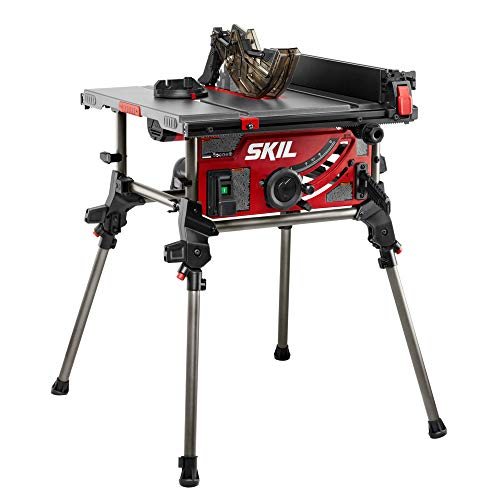
 SKIL 15 Amp 8-1/4-Inch Compact Portable Jobsite Table8-1/4''25.98 x 22.83 x 12.99 inches40 poundsCheck on Amazon


The short answer
The Skilsaw SPT99T is slightly easier to carry if you value a lower listed weight and a compact worm-drive layout. The DeWalt DWE7485 is the better choice if transport includes repeated setup, fence adjustments, and loading the saw into a vehicle without wanting to disturb its settings.
The difference is not dramatic. Both are 8-1/4-inch jobsite saws, both weigh roughly 45 to 50 pounds without a stand, and neither is genuinely light when carried up stairs. The more important question is whether you are carrying the saw from storage to one work area or moving it repeatedly between jobs.
As an Amazon Associate we earn from qualifying purchases at no extra cost to you.



Specifications that affect portability
| Feature | Skilsaw SPT99T | DeWalt DWE7485 |
|---|---|---|
| Blade diameter | 8-1/4 inches | 8-1/4 inches |
| Motor | 15 amps, worm drive | 15 amps |
| Listed saw weight | About 44 pounds | About 46 pounds |
| Maximum rip capacity | About 25 inches | 24-1/2 inches |
| Maximum cut depth at 90 degrees | About 2-5/8 inches | 2-9/16 inches |
| Stand included | No | No |
Published weights can vary slightly by revision, blade, and packaging, so do not treat the two-pound difference as decisive. A 44-pound saw is still awkward if you have to lift it from the floor, and a 46-pound saw may feel easier if its handle and balance suit you better.
Carrying the Skilsaw SPT99T
The SPT99T has a useful carry handle and a compact body. Its motor sits in a worm-drive arrangement rather than the conventional side-mounted direct-drive layout used by many jobsite saws. That gives the saw a dense, purposeful shape, but it also puts substantial weight in the motor and gearbox area.
For a short carry from a truck to a driveway, the Skilsaw is manageable. The handle gives you a clear grip, and the saw does not have a large folding stand attached to catch on doorways. It is also a good fit for a contractor who stores the saw on a shelf or in the back of a van and only sets it up occasionally.
The trade-off appears during long carries. The worm-drive gearbox makes the SPT99T feel nose-heavy to some users, particularly when carried one-handed. If you need to climb several flights of stairs, a second person or a small hand truck is more practical than relying on the handle alone. The bare saw is portable; it is not featherweight.
Its rack-style fence has relatively few loose pieces, and the onboard storage helps keep the push stick, blade wrench, and fence components from becoming separate items in your vehicle. That matters because misplaced parts are a common failure mode with compact table saws: the saw arrives at the job, but the fence or wrench is still in the workshop.
Carrying the DeWalt DWE7485
The DWE7485 is also compact, with a metal roll cage around the housing and storage for the fence, blade, and accessories. The cage protects the saw when it is slid into a truck or dropped onto a workbench, although it adds bulk around the outside.
Its biggest transport advantage is the rack-and-pinion fence. The fence adjusts quickly and stays parallel more reliably than many basic sliding fences. If you carry the saw folded or tilted in a vehicle, check the fence before cutting, but you are less likely to spend several minutes re-squaring it after every setup.
The DeWalt is a little heavier on paper, but its shape is relatively balanced. The roll cage also provides multiple places to grasp the saw. That does not eliminate the awkwardness of a 46-pound lift, but it can make loading it into a pickup or onto a bench less frustrating.
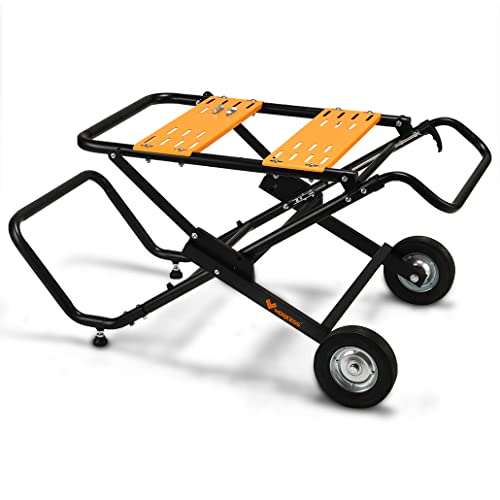
The main failure mode is assuming that a compact saw needs no support. Without a stand, both saws can rock on uneven ground. A rocking saw makes narrow rips less predictable and can cause the workpiece to bind against the fence. For repeated transport and outdoor work, budget for a folding stand or a stable homemade platform. A portable table saw stand adds weight and setup time, but it is safer than balancing either saw on scrap lumber.
Which one is easier to set up?
The DeWalt generally wins for fast repeat setup. Its fence adjustment is precise, its controls are familiar, and its compact footprint works well on a jobsite bench. The saw is especially convenient for cabinet installers, trim carpenters, and remodelers who may make several short cuts, pack up, and move to another room.
The Skilsaw is attractive when cutting power matters more than rapid fence changes. Its worm-drive motor delivers strong torque through thick stock, and it has a little more listed rip capacity. That extra capacity is useful for breaking down plywood, but it does not make the saw easier to carry. For large sheets, neither model replaces a track saw or a proper outfeed setup.
Both saws can become difficult to transport if you leave the blade, fence, cord, and push stick loose. Remove or secure the fence before loading. A fence knocked out of alignment can produce inaccurate cuts, while a loose blade wrench can disappear under the vehicle seat. A padded tote or dedicated shelf is worthwhile if the saw travels often.
Which should you buy?
Choose the Skilsaw SPT99T if you want the lighter bare saw, appreciate worm-drive torque, and usually carry it short distances. It is the better transport choice when every pound matters and you do not mind a slightly more specialized motor layout.
Choose the DeWalt DWE7485 if the saw will be moved, set up, adjusted, and packed away repeatedly. Its fence system, protective cage, and balanced compact design make the complete work routine easier, even though the scale weight is a little higher. It is also the safer recommendation for buyers who want an uncomplicated general-purpose jobsite saw.
If the DeWalt is substantially cheaper in your area, buy it without hesitation. The portability difference is small, and the cheaper saw is fine for home renovation, shelving, flooring, and occasional deck work. Spend the savings on a stable stand, a quality combination blade, and basic table-saw safety accessories. Those additions will improve real-world transport and cutting more than a minor difference in bare-saw weight.