What's inside
As an Amazon Associate I earn from qualifying purchases. This post may contain affiliate links at no extra cost to you.
How to Choose Tongue-and-Groove Pliers for Different Pipe Diameters
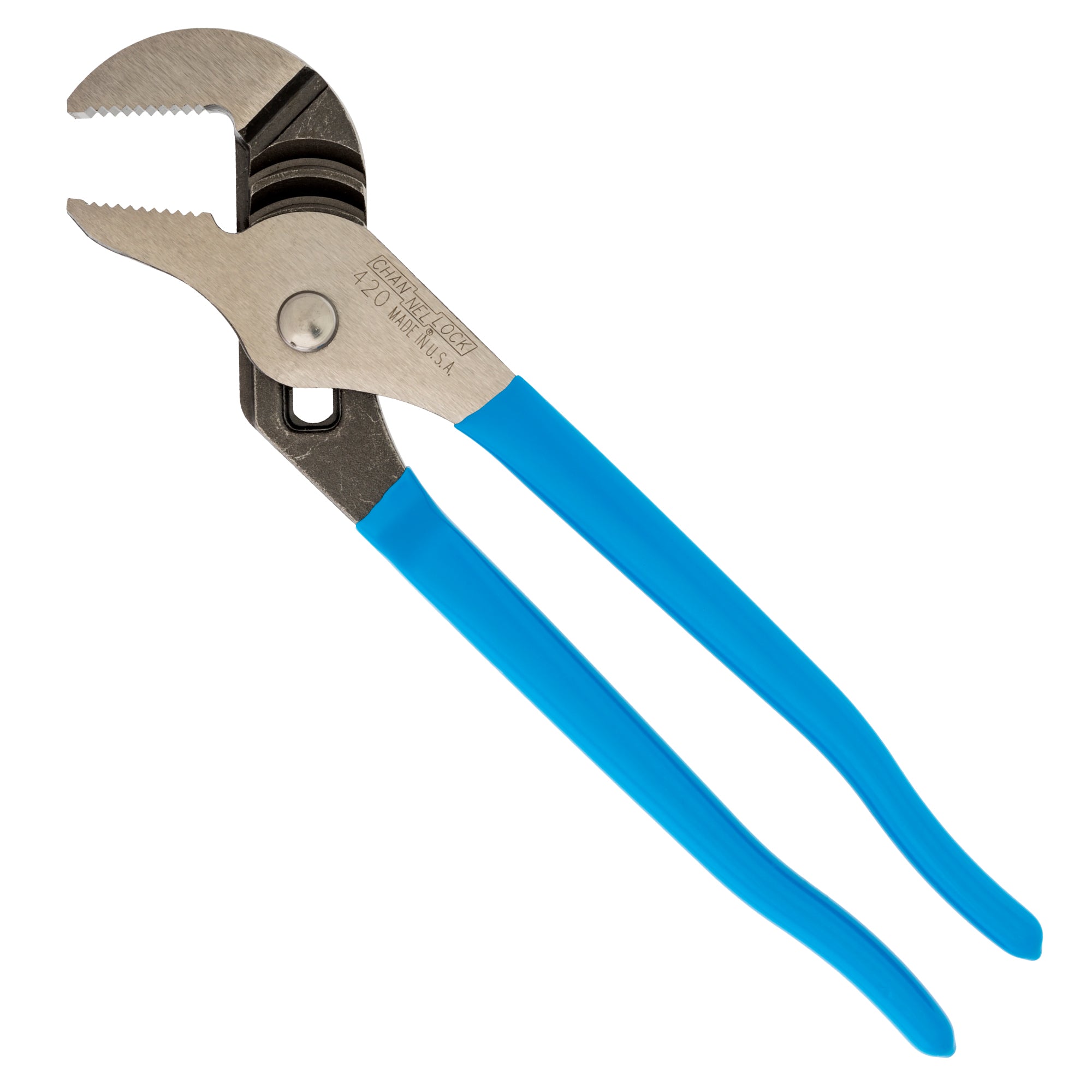
Tongue-and-groove pliers are useful for gripping round pipe, fittings, valves, nuts, and irregular parts that ordinary combination pliers cannot hold. The main buying mistake is choosing by the plier’s overall length rather than its usable jaw capacity. A long pair may reach farther, but it can still be the wrong tool if the jaws do not open far enough or the teeth do not engage the pipe securely.
Start with the largest outside diameter you expect to grip. Then choose pliers with some spare capacity. A tool rated for a 2-inch opening may technically fit a 2-inch fitting, but its jaws will be near their limit and may only contact the edge of the part. For reliable work, aim for at least 10 to 20 percent more opening than the pipe or fitting diameter.
Match plier size to pipe diameter
Pipe size can be confusing because nominal pipe size is not the same as outside diameter. For example, nominal 1-inch steel pipe has an outside diameter of about 1.315 inches. Nominal 2-inch steel pipe measures about 2.375 inches outside. Plastic pipe follows different dimensions, and fittings are often much larger than the pipe itself. Measure the part you need to grip, or check its actual outside diameter, instead of relying only on the label.
| Typical job | Useful jaw opening | Best plier size | What to watch for |
|---|---|---|---|
| Small nuts, hose fittings, and pipe under 1 inch | Up to about 1.5 inches | 8- to 10-inch pliers | Good access, but limited leverage |
| General plumbing and 1- to 1.5-inch pipe | About 2 to 2.5 inches | 10- to 12-inch pliers | Most useful household size range |
| Larger fittings and pipe around 2 inches | About 2.5 to 3.5 inches | 12- to 16-inch pliers | Needs stronger jaws and handles |
| Large valves, couplings, and pipe over 2 inches | Over 3.5 inches | 16- to 20-inch pliers or a pipe wrench | Heavy, awkward, and easy to over-stress |
These are working ranges, not strict standards. A 10-inch pair may open wide enough for a large fitting, while a compact 8-inch pair may be more practical in a cabinet or under a sink. The critical measurements are jaw opening, throat depth, tooth shape, and handle leverage.
For small and medium pipe
For faucets, supply-line fittings, traps, hose connections, and small threaded pipe, 8- to 10-inch pliers are usually the easiest to control. They fit in cramped spaces and are less likely to smash a plastic fitting when you apply force. A pair with several adjustment positions is helpful because it lets you keep the handles closer together rather than operating at the extreme end of the jaw range.
For general home plumbing, 10-inch tongue-and-groove pliers are often the best first purchase. They handle many 1/2-inch and 3/4-inch fittings and are capable of gripping larger slip-joint nuts and couplings. The cheaper option is fine here if the jaws close evenly, the adjustment joint is tight, and the teeth are sharply formed rather than rounded.
Do not use serrated pliers directly on a finished chrome, brass, or painted surface unless damage is acceptable. The teeth can leave deep marks, and excessive force can distort thin-wall tubing. Wrap the part with leather, a rubber sheet, or several layers of cloth when appearance matters. This reduces grip, so do not expect wrapping to replace the correct tool.
For large pipe and fittings
When the fitting is larger than about 2 inches across, 12- to 16-inch pliers provide more useful leverage and jaw spread. Longer handles reduce the hand force needed, but they also make it easier to apply enough torque to crack a plastic fitting, crush thin-wall pipe, or strip a soft brass surface.
Look for thick jaws, a substantial pivot, and a locking adjustment mechanism that does not jump out of position. Wide, hardened teeth are preferable for steel and cast fittings. Narrow or poorly aligned teeth can bite at only one point, causing the tool to twist sideways. That sideways load is a common failure mode: the plier slips, your hand hits nearby hardware, or the fitting corners are damaged.
For a larger general-purpose setup, consider 16-inch tongue-and-groove pliers. They are useful for large couplings and valves but are excessive for most small repairs. If you regularly work on large steel pipe, a properly sized pipe wrench may be safer and more effective. Pipe wrenches center their teeth for heavy turning, while tongue-and-groove pliers are better at holding, positioning, and working on fittings with limited clearance.
Jaw design matters as much as size
Traditional tongue-and-groove pliers use a series of slots for adjustment. More positions make it easier to keep the handles at a comfortable angle, but extra positions do not automatically mean greater strength. The jaws should remain parallel enough to grip the part, and the pivot should not wobble noticeably when the handles are squeezed.
Some designs have smooth or lightly serrated sections near the tip for delicate work, followed by aggressive teeth farther back. This is useful when one tool must handle both finished fittings and rough steel. A narrow jaw reaches into restricted spaces, while a broad jaw spreads force over more of a large fitting. Choose broad jaws for heavy work and slimmer jaws when access is the main problem.
Check the handle shape before buying. Comfort grips help during repeated work, but thick rubber can make the handles harder to slide between pipes. Exposed metal handles are easier to clean and often slimmer, though they are less comfortable in cold weather and can pinch skin if the joint closes sharply.
Buying and using them safely
Before tightening, set the jaws so both sides contact the work squarely. Keep the pliers aligned with the fitting rather than pulling at an angle. Grip as close to the base of the jaw as practical; using only the tips concentrates force and increases slipping. Pull steadily instead of jerking. If the fitting will not move, use penetrating oil, heat where appropriate, or a larger dedicated wrench rather than extending the handles with a pipe.
A budget pair is reasonable for occasional household work and soft materials. Spend more when you need frequent heavy use, precise adjustment, corrosion resistance, or dependable tooth hardness. If you need a compact tool for sinks and cabinets, 8-inch tongue-and-groove pliers are easier to carry and control. For a broad maintenance kit, a set of 8-, 10-, and 12-inch pliers covers more situations without forcing a large tool into a cramped repair.
Inspect the teeth and pivot periodically. Replace the pliers if the jaws no longer meet evenly, the teeth are rounded, or the adjustment joint slips under moderate pressure. A larger tool is not a substitute for a secure grip, and no tongue-and-groove plier should be used on energized electrical equipment or as a replacement for a wrench designed for high-torque pipe work.