What's inside
As an Amazon Associate I earn from qualifying purchases. This post may contain affiliate links at no extra cost to you.
The Klein 935DAG and Bosch GAM 220 MF both measure angles and help transfer them to a miter saw, but they suit different trim workflows. The Klein is a compact digital angle gauge with magnetic attachment; the Bosch is a two-arm angle finder designed to capture and transfer an angle. For straightforward crown or baseboard cuts, either can help. The deciding questions are how you take the measurement, how you transfer it, and whether the extra features justify the price.
As an Amazon Associate we earn from qualifying purchases at no extra cost to you.


Our Top Picks
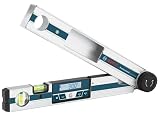
 Klein Tools 935DAG Digital Electronic Level and AngleLevel2.36 x 2.2 x 1.2 inches0.2 PoundsCheck on Amazon
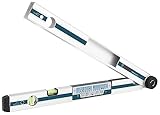
 Klein Tools 935DAGL Digital Level Angle Finder withOne Size4.57 x 2.48 x 1.36 inches0.37 poundsCheck on Amazon

At a glance
| Feature | Klein 935DAG | Bosch GAM 220 MF |
|---|---|---|
| Design | Compact digital angle gauge | Two-arm digital angle finder |
| Angle range | 0–90° in each quadrant | 0–220° |
| Accuracy | ±0.1° at 0° and 90°; ±0.2° at other angles | ±0.1° |
| Readout | Digital display with backlight | Digital display with backlight |
| Best fit | Checking a blade or surface; compact storage | Capturing an inside or outside corner and transferring it |
Specifications can vary by product revision, so check the manufacturer’s current documentation before relying on a feature for a particular setup. Both tools measure angles; neither automatically turns every reading into the correct miter-saw setting for every trim profile.
Different tools for different measuring steps
The Klein’s compact body is useful when you want to check a saw table, blade, or other flat reference. Its magnetic base can hold it against a steel surface, leaving your hands free to adjust or inspect. That makes it handy for setup and occasional angle checks. But it does not have a pair of arms that you can lay into a wall corner and lock in place. You’ll need another way to capture and transfer that corner angle.
The Bosch’s folding arms do that job directly. Open the arms against the two walls, take the reading, then carry the tool to the saw. Its scale and miter-angle functions are intended to help convert the measured corner angle into a saw setting. The 220° range also accommodates reflex angles and outside corners that a simple 0–90° gauge cannot represent as a single reading.
What matters on a trim job
For baseboard, a small angular error can show up as a gap that widens along the cut. A 0.5° error across a 3-inch-wide board changes the cut by roughly 0.026 inch; on a long, visible joint, that may be enough to need filler or a recut. Neither tool removes the need to test-fit. Walls are often out of square, corners may bow, and trim can sit differently at floor level than higher up.
For crown molding, getting the corner reading is only part of the work. You also need the spring angle and the right saw setup—flat on the table or nested against the fence. A digital angle finder can reduce guesswork, but it cannot identify your molding’s spring angle or compensate for a saw that is out of square. Make a test cut using scrap of the same profile and check the joint before cutting finished stock.
On an inside corner, press the Bosch arms firmly against both wall faces without forcing them into a flexible corner bead or a patch of caulk. On an outside corner, keep the arms from slipping off the edges. A reading that changes when you lift the tool is a warning: check for uneven surfaces, loose arms, or poor contact, then measure again at the height where the trim will sit.
Accuracy, handling, and limitations
The Bosch’s stated ±0.1° accuracy is tighter than the Klein’s stated tolerance away from 0° and 90°. In practice, contact and setup usually matter more than that difference. Dirt under a gauge, a blade that is not clean, arms held at slightly different points, or a corner that changes along its height can all overwhelm a fraction of a degree. Recheck the tool’s zero or reference before a precision setup, and repeat the measurement rather than trusting one number.
The Klein is easier to stash in a pouch and quick to place on a blade or steel surface. Its magnet is useful on compatible metal, but it won’t stick to an aluminum fence or a nonmagnetic surface. Avoid treating the magnet as a substitute for stable contact: a gauge that rocks or sits on sawdust gives a false reading. The Bosch takes more room and has moving joints to keep clean and stable, but its arms save time when repeatedly measuring corners.
Which one should you buy?
Choose the Bosch if your main job is measuring room corners and transferring those angles to a miter saw. It is the more complete trim-oriented tool, particularly if you work in older houses where corners rarely land at 90°. Its higher cost buys a more direct workflow, not a guarantee of perfect joints.
Choose the Klein if you mainly need a compact digital gauge for checking saw setup, blade angle, or flat surfaces, and you already own a bevel gauge or another way to capture corners. For occasional trim in a fairly square room, the cheaper tool can be enough—especially if you’re willing to test-cut and fine-tune. If you need a dedicated corner-measuring tool but want to compare alternatives, browse digital angle finders for trim. For checking a saw blade or table, compare digital angle gauges.
Before you make the first cut
Measure the corner at trim height, take a second reading nearby, and note whether the two agree. Confirm the saw’s 0° and 90° references with a reliable square. Cut a short offcut, hold it in place, and adjust if the joint shows a consistent gap. If the wall is irregular, a scribed joint or back-beveled cut may fit better than chasing a single digital reading. These tools make angle measurements quicker; careful contact, a sound saw setup, and a test piece still decide whether the trim fits.