What's inside
As an Amazon Associate I earn from qualifying purchases. This post may contain affiliate links at no extra cost to you.
Our Top Picks
 SKIL 10" Dual Bevel Sliding Compound Miter Saw-MS6305-0010''35.43 x 22.44 x 14.17 inches39.4 poundsCheck on Amazon


DeWalt DWS713 vs. Ryobi TSS103: the short version
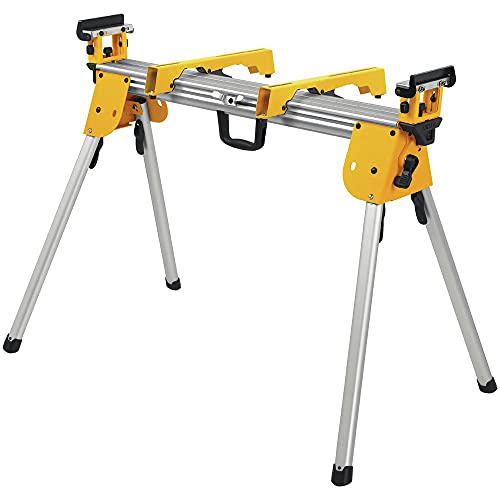
The DeWalt DWS713 and Ryobi TSS103 are both 10-inch corded compound miter saws aimed at remodelers and DIY users. The important difference is simple: the DeWalt is a compact, non-sliding saw, while the Ryobi TSS103 is a sliding compound saw. That gives the Ryobi more cutting capacity, but also adds weight, length, adjustment points, and another mechanism that can develop play.
For door casing, baseboard, window trim, and small framing jobs, the DeWalt is usually the cleaner tool to live with. For wider boards, shelving, deck work, and occasional 2×12 cuts, the Ryobi’s sliding head is more useful. The cheaper option is not automatically a bad choice; it depends on whether you need the extra capacity.
As an Amazon Associate we earn from qualifying purchases at no extra cost to you.


Key differences
| Feature | DeWalt DWS713 | Ryobi TSS103 |
|---|---|---|
| Blade size | 10 inches | 10 inches |
| Motor | 15 amp | 15 amp |
| Blade speed | About 5,000 rpm | About 4,600 rpm |
| Cut type | Compound, non-sliding | Sliding compound |
| Bevel | Single bevel, left | Single bevel, left |
| Typical 90-degree capacity | Up to approximately 2×6 | Up to approximately 2×12, depending on setup |
| Best fit | Trim and portable finish work | Wider stock and general DIY construction |
Exact capacities can vary with blade diameter, fence position, and the particular revision of a saw. Check the manual if you are buying used. A worn blade, damaged fence, or missing table insert can matter more than a small difference in advertised specifications.
Cutting capacity for trim and DIY work
The DWS713’s non-sliding design is its main limitation. It handles common trim sizes easily, including 1×4 and 1×6 material, and it can cut a 2×6 across the width at 90 degrees. It is also less likely to produce a wandering cut because the blade head travels through a fixed arc rather than moving on rails.
The TSS103 slides forward and backward, allowing it to cut much wider stock in one pass. That is valuable for stair parts, wide shelving, fascia, and landscape lumber. It can also crosscut a 2×12-sized board in many setups. However, wide cuts require good technique. Pull the head toward you, start the cut, then push steadily through the material. Starting at the back and dragging the blade forward can make the blade climb or grab the workpiece.
For casing and baseboard, extra capacity does not necessarily improve the result. A sliding saw takes more bench space and can be awkward when the rails hit a wall. If your work is mostly 3 1/4-inch or 5 1/4-inch baseboard, the DeWalt’s smaller footprint is often more convenient.
Accuracy, fences, and adjustments
The DeWalt has the advantage in simplicity. Its miter detents make common angles quick to set, and there are fewer parts to align. A miter saw can still cut poorly if the fence is not square, the blade is dull, or the stock is allowed to move. Before installing trim, make test cuts in scrap and check the joint with the actual molding profile.
The Ryobi adds sliding rails and a larger cutting table. Those features are useful, but rail play becomes a failure mode over time. If the head moves sideways while extended, the saw may cut a visible gap in outside miters even when the miter scale reads correctly. Test a used TSS103 by extending the head fully and pushing it gently side to side. Noticeable movement is a warning sign.
Neither saw is a dual-bevel model, so compound cuts in the opposite direction may require turning the workpiece or flipping the saw setup. That is manageable for occasional DIY work, but slower when cutting crown molding. If you install large amounts of crown, a dual-bevel 10-inch miter saw is a more suitable category.
Which saw is better for trim?
Choose the DWS713 if your main jobs are baseboard, door casing, window trim, shoe molding, and light framing. It is relatively compact, easier to carry, and less demanding to support. Its 15-amp motor has plenty of power for pine, poplar, oak, and other typical trim materials when paired with a sharp blade.
Choose the TSS103 if you expect to cut wide boards regularly or want one saw for both trim and general construction. The slide lets you make fewer cuts on wide stock, but you need front and rear clearance for the rails. On a small workbench, that can be a real drawback.
For clean painted trim, the supplied blade may not be the best choice. A 10-inch 80-tooth trim blade generally leaves cleaner edges than a coarse framing blade. Use the correct arbor size, keep the blade sharp, and support long molding so it cannot tip as the cut finishes.
Portability and durability
The DWS713 is the better saw to move from room to room. Its fixed head avoids the long rear rail assembly found on sliding saws, and it is easier to place on a narrow folding stand. The Ryobi is more versatile but typically heavier and deeper. Its rails must stay clean; dust buildup can make the slide rough, while forcing a sticky mechanism can damage bearings or bushings.
Both tools are corded and need a stable work surface. Do not rely on the small built-in table alone when cutting long trim. Use supports at the same height as the saw table. Without them, the molding can rotate during the cut, producing an inaccurate angle or pinching the blade.
Which one should you buy?
The Ryobi is fine when it is substantially cheaper and you genuinely need sliding capacity. It is a sensible choice for a homeowner who will cut wide boards a few times a year and does not need contractor-level refinement. The DWS713 is the better buy when compactness, repeatable trim cuts, and straightforward maintenance matter more than maximum width.
If both are close in price, pick based on the work rather than brand loyalty. Buy the DeWalt for a trim-focused setup. Buy the Ryobi for broader DIY use. If neither saw fits your workspace, consider a miter saw stand with material supports; proper support will improve cut quality more than a small motor-speed difference.