What's inside
As an Amazon Associate I earn from qualifying purchases. This post may contain affiliate links at no extra cost to you.
Our Top Picks


Quick verdict
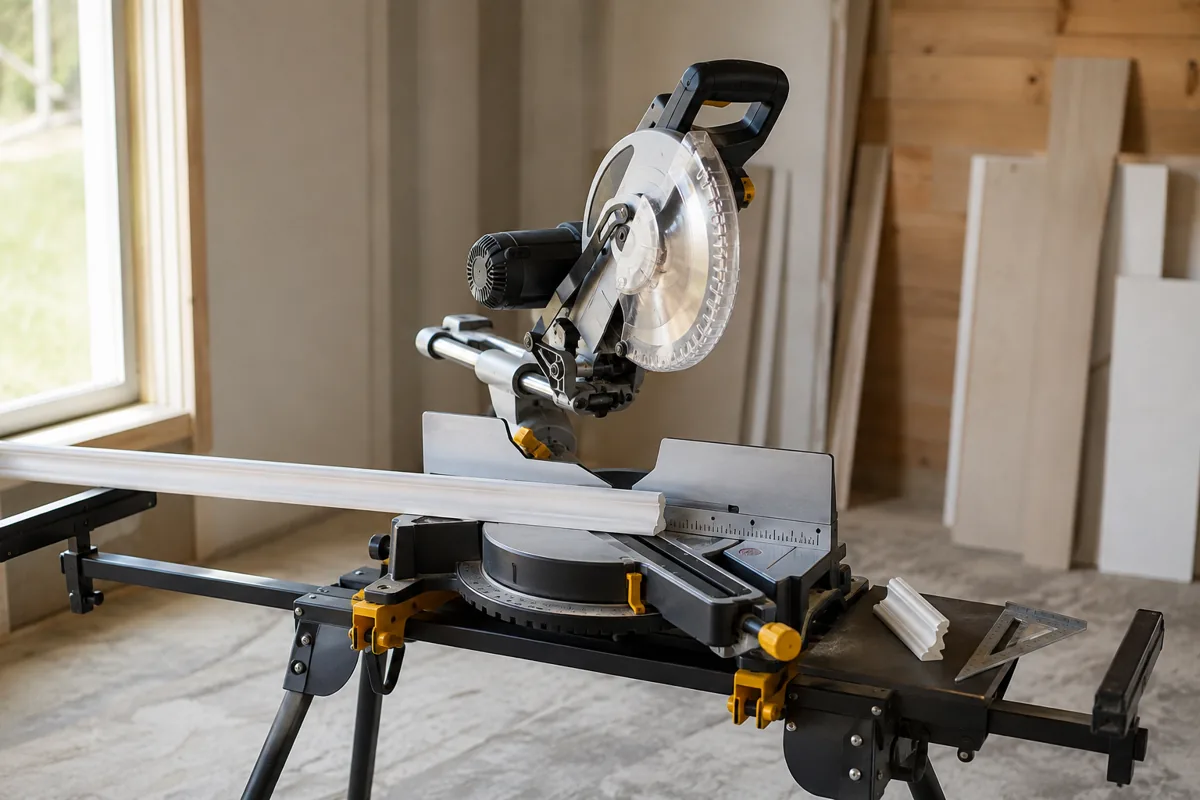
The DeWalt DWS716 and Makita LS1018 are 10-inch compound miter saws with sliding rails, aimed at trim work and general site cutting. Either can crosscut common framing lumber, but neither should be chosen on brand alone: fence support, cut capacity, setup, and the condition of the blade matter more to a square framing cut than a small difference in motor rating.
Choose the DeWalt if its fixed-rail design and familiar controls suit your workflow, or if you find it at a better price. Choose the Makita if you value its sliding compound layout and its stated 12-inch crosscut capacity at 90 degrees. For repeated cuts in wide stock, check the actual capacity and fence support before buying; a larger blade does not automatically mean a wider cut.
As an Amazon Associate we earn from qualifying purchases at no extra cost to you.


Key differences
| Feature | DeWalt DWS716 | Makita LS1018 |
|---|---|---|
| Blade diameter | 10 inches | 10 inches |
| Motor rating | 15 amps | 13 amps |
| Cutting action | Sliding compound miter saw | Sliding compound miter saw |
| Crosscut capacity at 90 degrees | About 12 inches, depending on stock position | 12 inches |
| Bevel range | Up to 48 degrees left and right | Up to 45 degrees left and right |
| Best fit | General trim and framing cuts; compare current configuration and price | Wide crosscuts and users who prefer its sliding layout |
Specifications can vary by market or saw configuration, so verify the manual and product listing for the exact version you are considering. Miter and bevel ranges are not the same as useful capacity: the saw may reach a stated angle but still need the workpiece repositioned or flipped to finish the cut.
How they handle framing lumber
Both saws can crosscut a standard 2×4, whose actual dimensions are about 1-1/2 by 3-1/2 inches, with ample room. A 2×6 is also a straightforward crosscut for either. Wider pieces such as a 2×8 are where a sliding saw earns its keep; lay the board flat against the table and use the manufacturer’s specified slide technique rather than forcing the blade through in one pass.
For accurate repeated cuts, support long stock level with the saw table. A board sagging several inches off one end can rotate against the fence, producing a cut that looks square at the top but is out at the bottom. Use a stop block for batches, but keep it clear of offcuts that could bind the blade. Never hold a short offcut between the blade and fence while cutting.
These are not substitutes for a framing circular saw when you need to cut sheets, rip boards, or work on a roof. A miter saw is most useful at a stable station for repeatable crosscuts, angles, and trim. If the job is mostly ordinary framing cuts and portability matters, a cordless circular saw may be a more useful purchase than either miter saw.
Accuracy, setup, and common failure modes
Out of the box, do not assume the blade is perfectly square to the fence or table. Unplug the saw, bring the head down, and check the blade with a reliable square, taking care not to touch the teeth. Adjust the fence or bevel stop as the manual allows. A small error becomes obvious in miters: two pieces each cut just one degree off can leave a visible gap at the joint.
Blade choice matters too. The included general-purpose blade can be adequate for rough framing, but a sharp, suitable 10-inch blade can improve cut quality. A dull blade tends to burn, wander, or tear fibers; pushing harder is not the fix. Replace or sharpen it, and keep the work clamped or firmly against the fence. For cleaner cuts in finish stock, consider a 10-inch miter-saw blade suited to the material.
Dust collection on miter saws is rarely complete. Expect chips and fine dust to escape, especially when cutting framing lumber, and use eye and hearing protection. Connect a shop vacuum if practical, but do not let a hose pull the saw or stock out of position. Check that the guard moves freely and returns over the blade; a sticking guard is a stop-work problem, not a nuisance to work around.
Which one should you buy?
For a homeowner making occasional cuts, the cheaper saw is fine if it is square, the slide moves smoothly, and its capacity covers the widest boards you expect to cut. The DWS716’s 15-amp rating does not by itself guarantee cleaner cuts or better accuracy than the Makita’s 13-amp motor. Feed steadily, use a sharp blade, and let the blade reach full speed before entering the wood.
For regular work with wide boards, compare the Makita’s stated 12-inch crosscut capacity against the DeWalt’s manual for the exact model, then test the real cut you need if possible. Also check how the rails move, whether the fence supports your stock, and whether the saw fits your stand or bench. A saw that can technically cut a wide board but leaves it poorly supported is not a good setup for repeatable framing work.
Before paying extra for either, inspect the arbor and blade condition on a used saw, confirm the bevel and miter locks hold their settings, and make a test cut in scrap. If your work is limited to 2x4s and 2x6s, prioritize a stable stand, accurate setup, and a sharp blade over maximum crosscut capacity. If you routinely cut wide trim or framing stock, choose the saw whose verified capacity and support match that material—not simply the one with the bigger headline number.