What's inside
As an Amazon Associate I earn from qualifying purchases. This post may contain affiliate links at no extra cost to you.
Our Top Picks

Quick verdict
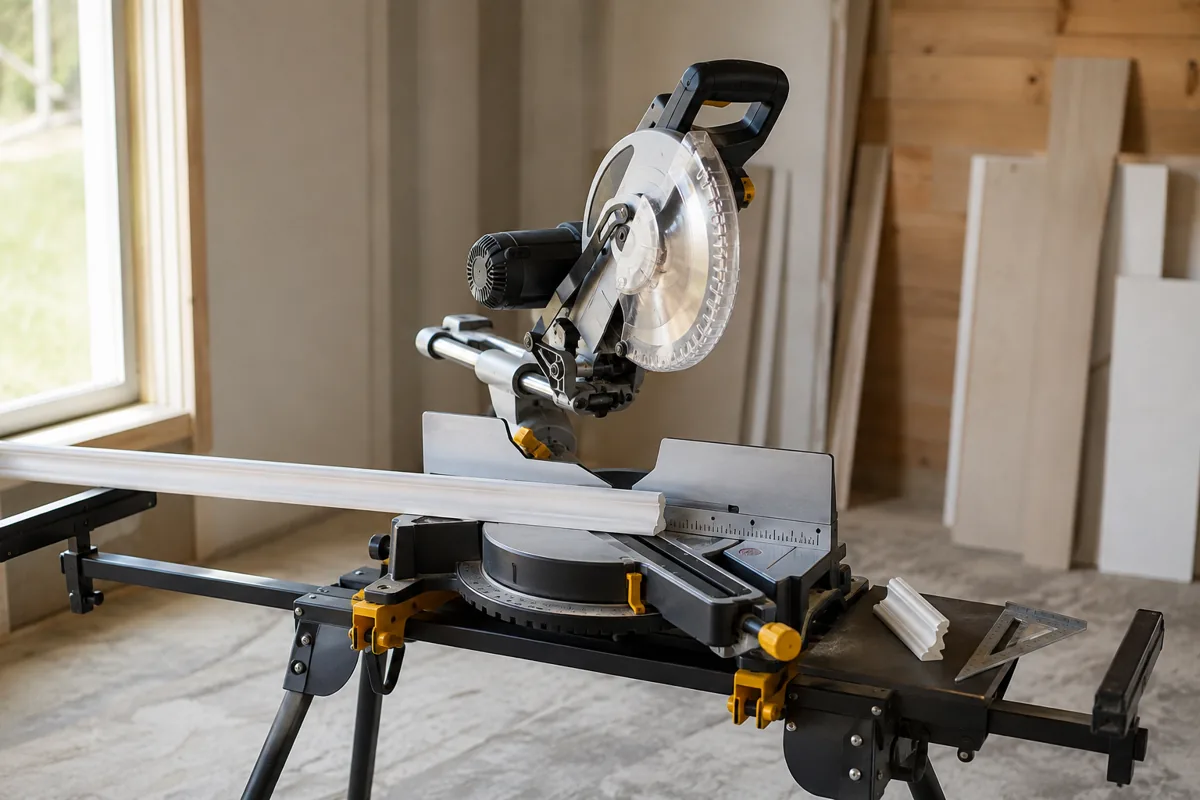
The Makita LS1019L is the better value for most finish carpenters. It has a 10-inch blade, a 2,600-watt motor, a built-in laser and a forward-rail design that needs less clearance behind the saw than a conventional sliding miter saw. The Festool Kapex KS 120 is lighter, more refined to set up and equipped with useful features for repeatable trim work, including dual lasers and a depth stop for trenching. But it costs substantially more, and its 10-inch blade and cutting capacity do not automatically make it a better saw for every shop.
Choose the Makita if you want strong capacity and good dust collection at a lower price. Choose the Kapex if portability, precise adjustments and a capable dust-extraction setup matter enough to justify the premium. Either can make accurate finish cuts; blade quality, calibration and work support matter more than the badge.
As an Amazon Associate we earn from qualifying purchases at no extra cost to you.


Key differences
| Feature | Makita LS1019L | Festool Kapex KS 120 |
|---|---|---|
| Blade diameter | 10 inches | 10 inches |
| Motor | 15 amps, 2,600 watts | 1,600 watts |
| Weight | About 57 pounds | About 47 pounds |
| Slide design | Dual steel rails; forward-facing layout | Rail-forward design; compact rear clearance |
| Cut-line aid | Laser | Dual lasers |
| Notable feature | Large cutting capacity and good dust collection for the class | Depth stop, fine adjustments and compact portability |
Specifications and included accessories can vary by market or package, so check the version being sold before ordering. Both are corded saws with 10-inch blades; neither is a cordless jobsite option.
Capacity and accuracy on trim
The LS1019L’s design puts the slide rails toward the front, reducing the space needed behind the saw. That helps in a small shop or when the saw is placed near a wall. It also offers generous crosscut capacity for a 10-inch saw, useful for wider casing, shelving and occasional framing stock. The trade-off is its roughly 57-pound weight: it is portable enough to move, but not a saw most people want to carry up and down stairs all day.
The Kapex weighs about 47 pounds and is easier to transport between rooms or jobsites. Its dual lasers indicate the blade’s cut edges, which can speed up positioning when switching between trim pieces. A laser is not a substitute for a test cut or a sharp blade, however. A small calibration error, a kerf-width assumption or a workpiece that shifts under the clamp can still leave a visible gap.
Both saws need to be checked before precision work. Verify the fence is square to the blade, confirm the bevel and miter detents, and cut a test piece from the same stock. For outside corners, make a matched pair and test-fit it before cutting the full run. If a joint is consistently open at one edge, correct the saw’s angle rather than forcing the trim into place with nails.
Dust collection and workflow
Dust is a real difference in finish carpentry: fine sawdust settles on painted surfaces and can clog a shop vacuum quickly. The Makita has a useful dust-collection design for a miter saw, but no open-blade saw captures everything. Connecting a suitable extractor and keeping the dust port clear is still worthwhile. The Kapex is designed to work with Festool extraction and generally suits a dust-controlled shop, but its performance also depends on the extractor, hose and material being cut. Expect some airborne dust with either saw.
The Kapex’s depth stop makes it convenient to cut shallow grooves or dados in several passes. That is useful for tasks such as cutting a relief in trim, but a miter saw is not a table saw: keep the work clamped, use the stop as intended and do not try to make an unsupported cut that could trap the blade. The Makita can handle many ordinary crosscuts and miters without that specialized workflow.
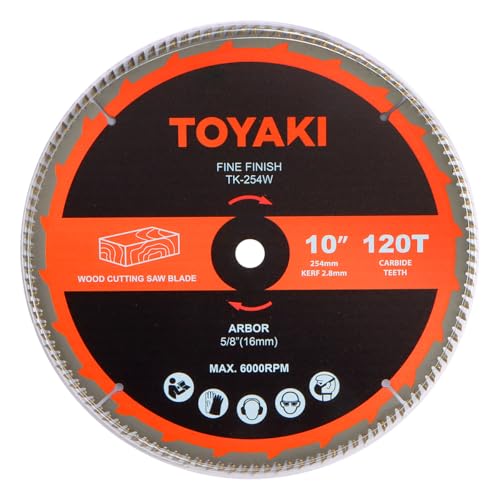
For clean casing and baseboard cuts, pair either saw with a sharp, high-tooth-count finish blade suited to the material. A general-purpose blade can tear veneer or leave a rough edge in delicate trim. A quality 10-inch finish miter-saw blade is often a more noticeable upgrade than moving from one of these saws to the other.
Which one should you buy?
Buy the Makita LS1019L if you want a capable 10-inch slider without paying for a premium system. It is a sensible choice for a remodeling crew, a serious DIY shop or a carpenter who needs capacity for mixed trim and occasional wider stock. Its main drawbacks are weight and the fact that the laser still needs checking against the actual cut. If you mostly cut standard baseboard and casing, the lower-cost saw is not a compromise that will automatically show up in the finished work.
Buy the Kapex KS 120 if you move the saw often, rely on repeatable setup, value the dual lasers and depth stop, or already own compatible Festool extraction. Its lighter body and thoughtful controls can make a long day of varied trim cuts easier. The price is hard to justify for occasional home projects, and the extra features do not eliminate the need to measure, support long stock and test-fit miters.
For either saw, a stable stand or bench and proper support for long trim are essential. A piece that sags or twists can produce an inaccurate cut even when the saw is perfectly calibrated. Consider a miter-saw stand with extensions if you work away from a fixed bench. For stationary use, a flat, rigid platform is enough.
Bottom line
The Makita LS1019L wins on value and capacity; the Festool Kapex KS 120 wins on portability and refined trim-focused features. For most buyers, the Makita is the more rational purchase. The Kapex earns its price only when its lighter weight, depth stop, laser layout and dust-extraction workflow save time regularly. Whichever you choose, spend time calibrating it and use a sharp finish blade: those choices have more influence on a tight corner than a premium feature you rarely use.