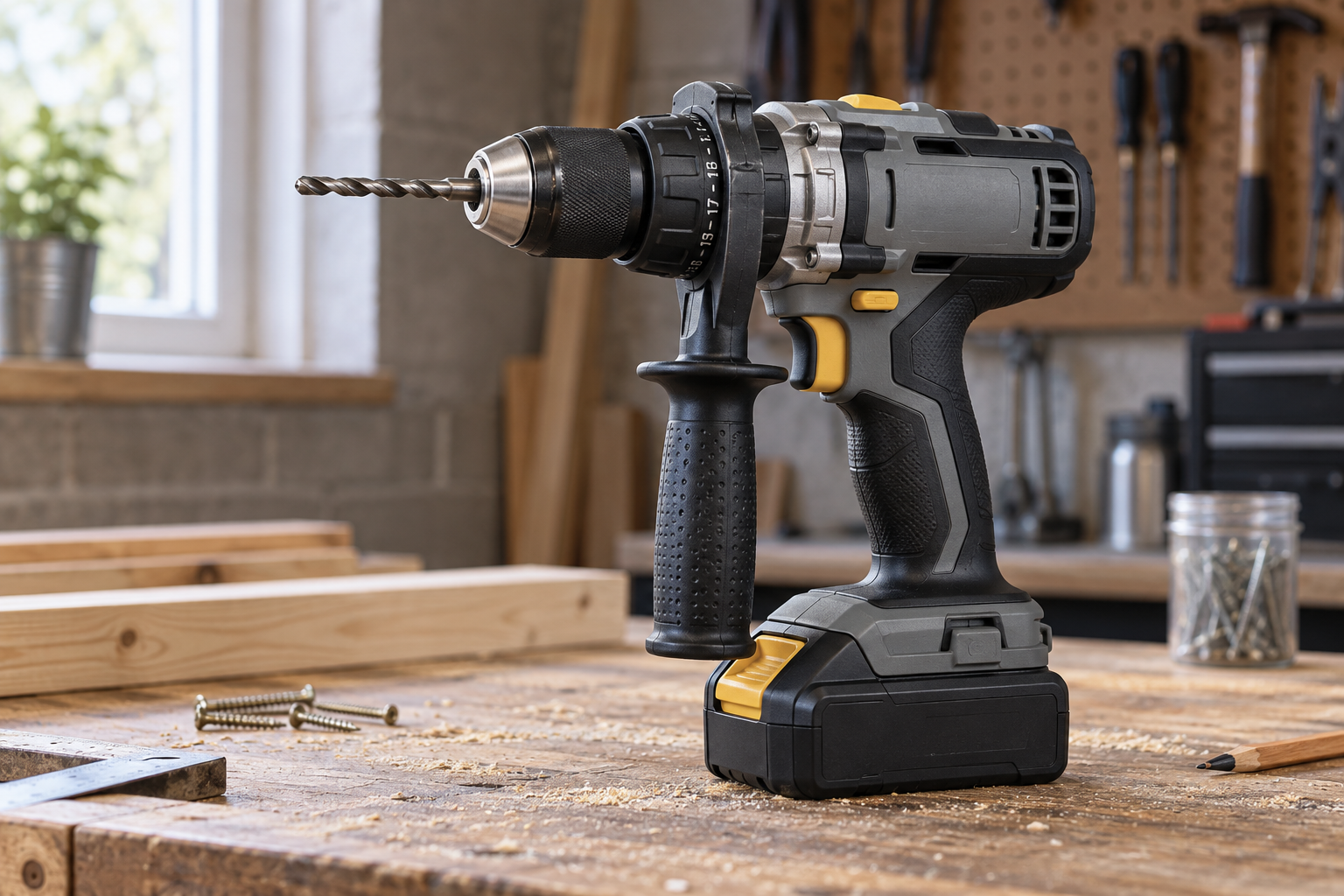
What's inside
As an Amazon Associate I earn from qualifying purchases. This post may contain affiliate links at no extra cost to you.
Our Top Picks
 Makita XPH16Z 18V LXT® Lithium-Ion Compact Brushless Cordless18 volts6.9 x 3.47 x 6.9 inchesCheck on Amazon
 Makita XPH12Z 18V LXT Lithium-Ion Compact Brushless Cordless7.8"L x 3.6"W x 9.5"H3.6 x 7.8 x 9.5 inches3.09 poundsCheck on Amazon
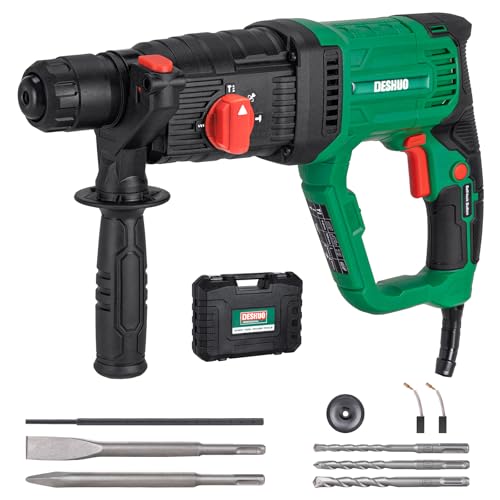 Deshuo 1" SDS-Plus Lightweight Rotary Hammer Drill forSmall15.15 x 8.85 x 3.93 inches7.19 PoundsCheck on Amazon

Makita XPH14 vs Bosch GSB18V-490: Comparing Compact Hammer Drills for Home Renovations
The Makita XPH14 and Bosch GSB18V-490 are cordless hammer drills aimed at the same general work: drilling wood and metal, driving screws, and making occasional holes in brick or block. They are not SDS rotary hammers, and that distinction matters. Both can drill small masonry holes, but neither is the right tool for repeated drilling into concrete.
The Makita is the stronger, more aggressive drill. The Bosch is smaller, lighter, and usually a better fit for cabinet work, shelving, and general indoor repairs. For a homeowner who only needs a hammer-drill setting a few times a year, the cheaper Bosch can be entirely adequate—provided you use sharp masonry bits and do not expect it to replace a rotary hammer.
As an Amazon Associate we earn from qualifying purchases at no extra cost to you.


Key specifications
| Specification | Makita XPH14 | Bosch GSB18V-490 |
|---|---|---|
| Battery platform | 18V LXT | 18V Bosch Professional |
| Chuck | 1/2-inch keyless | 1/2-inch keyless |
| Maximum torque | 1,250 in-lb | 490 in-lb |
| Speed | 0–550 / 0–2,100 rpm | 0–460 / 0–1,800 rpm |
| Hammer rate | Up to 31,500 blows per minute | Up to about 27,000 blows per minute |
| Length | About 8.2 inches | About 7.8 inches |
| Tool weight | About 4.9 lb bare | About 3.2 lb bare |
Torque figures are not directly comparable across brands; they are maximum ratings, not a guarantee that the drill will deliver that force continuously. Still, the difference reflects the tools’ character. The XPH14 has substantially more reserve for large wood bits, long screws, and stubborn fasteners. The Bosch gives up power to reduce size and fatigue.
Power for renovation work
For drilling through 2x lumber, both drills are capable. The Bosch handles ordinary pilot holes, spade bits, and furniture hardware without trouble. Its lower speed range is appropriate for larger bits, while the clutch provides useful control when driving screws into softwood or plywood.
The Makita is better when the work becomes demanding. Its brushless motor and higher torque make it more comfortable with large spade bits, hole saws, and long structural screws. It is also less likely to stall when a bit catches. That extra capacity comes with a downside: a catch can twist the tool hard enough to injure a wrist, so use the side handle and keep both hands on the drill for larger bits.
Neither drill should be judged by maximum torque alone. A 1,250 in-lb drill is not automatically better for every screw. Excess power can strip screw heads, snap smaller fasteners, or drive screws too deep. For routine indoor work, the Bosch’s smoother, lighter feel may actually make it easier to control.
Hammer-drilling brick and block
Both tools have a mechanical hammer-drill mode, which helps chip at brick, mortar, and some concrete. Use a carbide masonry bit, moderate pressure, and short pauses to clear dust. A 1/4-inch or 3/8-inch hole in brick for an anchor is a reasonable job. Drilling a few holes for a wall-mounted shelf is within their range.
The Makita’s higher impact rate and stronger motor give it the advantage in masonry, especially in hard brick or when drilling holes larger than 3/8 inch. However, it is still slow compared with an SDS-plus rotary hammer. A common failure mode is overheating: pressing harder after progress stops creates heat rather than more drilling power. If you need several holes, let the bit and motor cool and clear the hole frequently.
For repeated concrete work, buy or rent an SDS-plus rotary hammer. It will drill faster, transfer less vibration through your hands, and tolerate the job better than either compact hammer drill.
Size, balance, and control
The Bosch is the clear winner for overhead work and tight spaces. Its shorter body fits between studs and inside cabinets more easily, and the roughly 3.2-pound bare-tool weight is noticeable after 30 minutes of fastening. For assembling cabinets, hanging doors, installing curtain hardware, or drilling pilot holes, this is a meaningful advantage.
The Makita is larger and heavier, but the weight is not wasted. It feels planted when drilling large holes, and its side handle gives better leverage. That stability helps with hole saws and thick timber, though it makes the drill less pleasant for delicate trim work.
Both have a two-speed gearbox, variable trigger, clutch, and keyless chuck. Use the low gear for large bits and high resistance; use high gear for small holes and fasteners. Do not use the clutch as a substitute for careful trigger control when driving long screws into structural lumber.
Batteries, kits, and value
The best choice may depend more on batteries than on the drill. Makita’s 18V LXT system has a broad range of outdoor, workshop, and home-improvement tools. Bosch’s Professional 18V system is also extensive, but batteries are not interchangeable with Bosch’s 12V line or consumer tools that use a different battery format.
Compare complete kits, not bare-tool prices. A kit with one small battery may be cheaper but less useful for high-load drilling. For the Makita, a 3.0Ah or larger battery is a sensible minimum for demanding work; the Bosch can run comfortably on a compact pack because its motor draws less power.
If you need a general-purpose cordless hammer-drill kit and already own Makita batteries, the XPH14 is a strong upgrade for renovation work. If you own no batteries and mostly perform light repairs, the Bosch kit is often the more rational purchase.
Which drill should you buy?
Choose the Makita XPH14 if you will drill large holes in wood, drive long screws, work in dense framing lumber, or regularly drill brick. Its power reserve reduces stalling, but expect more weight, more wrist torque, and a higher kit cost. It is the better choice for a serious renovation tool kit.
Choose the Bosch GSB18V-490 if your work is mostly fastening, pilot holes, small wood bits, and occasional masonry anchors. The cheaper option is fine for those jobs, and its lighter body is easier to control. You may outgrow it if your projects expand into large hole saws or frequent structural work.
Whichever drill you buy, match the bit to the material, use the side handle when available, and stop when the tool overheats or the bit is no longer cutting. For concrete, buy an cordless SDS rotary hammer instead of forcing either of these drills beyond its design.