What's inside
- Best torque wrench for spark plugs: choose a small-range wrench that puts the specified torque near the middle of its scale
- Choose by torque range, not by the largest number on the handle
- Pick the right tool for your situation
- Check drive size, socket fit, and access before ordering
- Install the plug without guessing at the feel
- What wears first—and how to keep readings dependable
- Bottom line
- Related Guides
As an Amazon Associate I earn from qualifying purchases. This post may contain affiliate links at no extra cost to you.
Our Top Picks
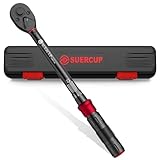
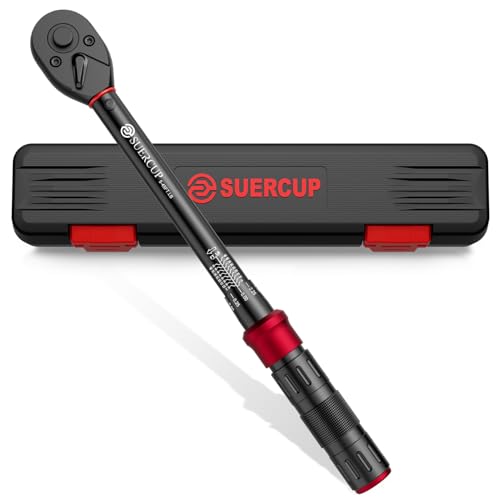 SUERCUP 3/8" Click Torque Wrench3/8" 5-45 Ft.Lb/6.8-61 N.m11.8 x 1.02 x 1.2 Inches1.5 poundsCheck on Amazon


Best torque wrench for spark plugs: choose a small-range wrench that puts the specified torque near the middle of its scale
The best torque wrench for spark plugs is a 1/4-inch-drive inch-pound wrench whose usable range comfortably includes your vehicle’s specified torque—typically around 10–20 lb-ft (120–240 in-lb), though the correct value varies by engine, plug, and installation conditions. For occasional home use, a click wrench with a clear in-lb scale is a practical choice; if you service several vehicles or need repeatable low-end readings, consider a quality digital or split-beam model. Confirm the torque specification in the service information for the exact engine before choosing a tool or tightening a plug.
Choose by torque range, not by the largest number on the handle
Spark-plug torque is low compared with the capacity of many general-purpose torque wrenches. A wrench rated from 20 to 150 lb-ft cannot accurately set a 12 lb-ft specification because 12 lb-ft is below its rated range. Even when a requested value falls within a wrench’s range, it is generally easier to set and read reliably when it is not crowded against the lower limit.
As an Amazon Associate we earn from qualifying purchases at no extra cost to you.


For a common 12 lb-ft specification, the conversion is 12 × 12 = 144 in-lb, or approximately 16.3 N·m. This illustrates why a small-range tool with an in-lb scale is useful: it avoids setting a low value on a large ft-lb wrench. Always use the specified unit and value, rather than assuming a typical torque applies to your engine.
| Wrench type | Illustrative range | Typical length | Best fit | Trade-off |
|---|---|---|---|---|
| 1/4-inch click wrench | 20–200 in-lb (2.3–22.6 N·m) | About 8–12 in | Routine plug changes and compact tool storage | Must be kept within its rated range; scale readability varies |
| 1/4-inch digital wrench | About 15–150 in-lb (1.7–16.9 N·m) | About 9–13 in | People who prefer a display with in-lb and N·m units | Needs batteries; display and controls can be awkward in tight access |
| 1/4-inch split-beam wrench | About 20–200 in-lb (2.3–22.6 N·m) | About 10–14 in | Frequent use and reduced reliance on a click mechanism | Often costs more; check the exact range and calibration guidance |
| 3/8-inch low-range wrench | About 10–80 lb-ft (13.6–108.5 N·m) | About 14–18 in | Users who also need one wrench for larger automotive fasteners | Longer handle and coarser low-end scale can be less convenient for plugs |
These are representative ranges and lengths, not specifications for every model in a category. Verify the manufacturer’s stated range, accuracy, and unit markings before buying. A 3/8-inch wrench can be suitable if the specified torque lies in its rated range, but it is not automatically a better spark-plug choice simply because the drive is larger.
Pick the right tool for your situation
| Your situation | A sensible choice | Why |
|---|---|---|
| Occasional plug changes, limited budget | 1/4-inch click wrench with an in-lb scale and a range covering the service specification | Simple operation and no batteries; check that the graduations are easy to read |
| Frequent work or alternating between unit systems | Digital wrench with selectable in-lb and N·m units | Direct unit selection reduces conversion and scale-reading errors |
| Tight engine-bay access | Short 1/4-inch wrench plus a compatible spark-plug socket | A compact head and handle may be easier to position, though the socket still needs room to align |
| One wrench for plugs and other vehicle fasteners | Low-range 3/8-inch model, if its minimum setting covers the plug specification | Broader usefulness can justify the longer handle, but do not use it below its rated minimum |
Prices vary by brand, calibration features, and construction. Basic click wrenches are generally the lower-cost option; digital and specialized split-beam tools tend to cost more. For a one-time repair, borrowing a correctly ranged, maintained wrench may be more sensible than buying a tool whose minimum setting is too high.
Check drive size, socket fit, and access before ordering
Most compact low-range torque wrenches use a 1/4-inch square drive. Match that drive to the spark-plug socket or use a suitable, well-fitting adapter. Many plug sockets are 3/8-inch drive, so a 1/4-to-3/8-inch adapter may be needed. Check that the adapter and socket fit the well without forcing the wrench sideways, and use a socket designed for the plug’s hex size and overall reach.
Wrench length affects access and handling. A longer handle can be easier to operate smoothly, but may hit bodywork, the cowl, or nearby components before the wrench reaches the fastener. A short wrench is easier to fit in some engine bays, yet can leave less room to maintain a steady pull. If possible, compare the wrench’s overall length and head profile with the available space—not just its drive size.
A universal joint or extension can help with access, but it can also make it harder to keep the wrench aligned and apply force smoothly. Avoid a crowfoot or other offset arrangement unless you understand how it changes the effective lever length; some configurations require a torque adjustment. A straight extension that keeps the drive axis unchanged generally does not require the same correction, but follow the tool manufacturer’s instructions.
Install the plug without guessing at the feel
- Find the exact specification. Use service information for the specific engine and plug type. Plug seat design, cylinder-head material, and other engine details can affect the required procedure.
- Prepare the threads as specified. Start with clean threads and follow the plug or vehicle maker’s instructions about lubrication. Do not add anti-seize unless directed: lubrication changes friction and can make a given torque produce more clamping force.
- Start the plug by hand. Use the socket and extension to thread it gently. If it will not turn smoothly, stop and realign it rather than using the wrench to force it into the head.
- Set the wrench in its working range. Select the specified value in the correct unit. If converting, 1 lb-ft equals 12 in-lb and 1 N·m equals about 8.85 in-lb. Avoid rounding a conversion so much that it changes the intended setting.
- Pull steadily, in line with the handle. Stop at the wrench’s signal or target indication. Repeatedly clicking a plug tighter can add torque; do not use the torque wrench as a breaker bar.
- Reset and store it correctly. For an adjustable click wrench, return the setting to its manufacturer-recommended storage position—often the lowest marked setting, but not below it. Keep it clean and dry, and follow the maker’s calibration interval and service guidance.
What wears first—and how to keep readings dependable
On an adjustable click wrench, the adjustment mechanism and internal spring can lose reliability after repeated overloads, drops, or long storage under tension. The ratchet head can also wear, collect grit, or develop play. Digital models add batteries and electronics that can fail or become difficult to read if stored carelessly. Treat any torque wrench as a measuring instrument: protect it from impacts, keep it away from heat and moisture, and do not use it for loosening tight fasteners.
Calibration is not the same as simply hearing a click. If the tool has been dropped, overloaded, or used heavily, follow the manufacturer’s inspection or calibration advice. A wrench that has been stored at its maximum setting for a long period, or whose setting mechanism feels rough, deserves attention before you rely on it for a low-torque job.
Bottom line
For most occasional spark-plug work, choose a 1/4-inch click torque wrench with a clearly marked inch-pound scale and a range that comfortably includes the exact engine specification. Choose a digital model if switching between in-lb and N·m is a regular need, or a low-range 3/8-inch wrench if its scale and reach suit other jobs too. Pair it with a compatible plug socket, confirm the installation instructions, and avoid applying lubrication or adapters in ways that change the torque result.