What's inside
As an Amazon Associate I earn from qualifying purchases. This post may contain affiliate links at no extra cost to you.
Our Top Picks
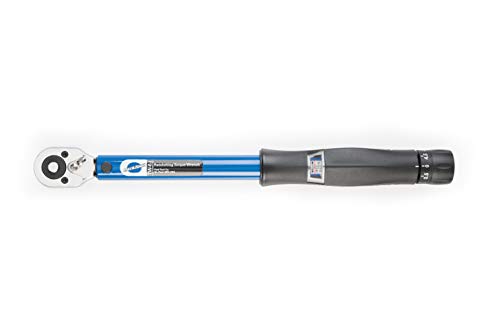 Park Tool TW-6.2 Ratcheting Torque Wrench 10-60Nm DriveOne Size14.75 x 2.75 x 2 Inches1.1 poundsCheck on Amazon
 LEZYNE Torque Drive Portable Compact Bicycle Multi-Piece ToolTorque Drive - 11 Bits9 x 5 x 2 inches0.4 PoundsCheck on Amazon


Best bicycle torque wrenches: the quick picks
The best bicycle torque wrench for most home mechanics is a compact 2–14 Nm preset-adjustable wrench with a clear scale, a 4 mm hex bit and a storage case; choose a small-range 1–6 Nm tool for delicate carbon-cockpit work, or a larger 10–60 Nm wrench for pedals, crank bolts and other high-torque jobs.
One wrench rarely covers every bicycle fastener well. Low-torque accuracy, readable adjustments and suitable bits matter more than a high maximum rating when the job is a stem or seatpost clamp. For bigger fasteners, a separate wrench is usually easier to use and more appropriate than pushing a small tool to its limit.
As an Amazon Associate we earn from qualifying purchases at no extra cost to you.


Choose by the work you actually do
| Your situation | Best fit | Why | Trade-off |
|---|---|---|---|
| Carbon bars, stem, seatpost or accessory clamps | 1–6 Nm, 1/4-inch drive | Fine control where small errors can matter; many bicycle fasteners fall in this range | Will not cover pedals or most crank bolts |
| One-tool home kit for routine adjustments | 2–14 Nm, 1/4-inch drive | Useful coverage for many cockpit, seatpost and bottle-cage fasteners | Not a substitute for a high-range wrench |
| Regular maintenance across several bikes | Two-wrench set: roughly 2–14 Nm and 10–60 Nm | Covers common low-range fittings as well as many larger fasteners | Costs more and takes more storage space |
| Occasional repairs on a tight budget | Preset 4, 5 or 6 Nm tool matched to your components | Simple to use for a recurring, known torque setting | Limited flexibility; verify the preset matches the manufacturer’s specification |
These ranges are tool capacities, not recommended settings for every part. Always use the torque value printed on the component or specified by its manufacturer. A fastener’s required torque can vary with its design, condition and lubrication.
What to look for before buying
Low-range performance and readable settings
For bicycle work, the bottom of the range deserves as much scrutiny as the maximum. A wrench rated from 2 to 14 Nm is a more sensible choice for a 4 Nm clamp than one that starts at 10 Nm. Avoid using a wrench below its stated working range, and don’t assume that a tool is accurate simply because its scale shows small increments.
Check the manufacturer’s accuracy specification, how it is stated, and the range over which it applies. A fine-grained scale makes a value easier to select, but does not by itself guarantee accuracy. A large, legible scale or positive adjustment steps are useful when setting a small value repeatedly.
Bits and drive size
A 1/4-inch drive is common on compact bicycle torque wrenches. A practical bit selection includes 3, 4, 5 and 6 mm hex, plus T25 Torx; some kits also include smaller hex bits and a short extension. The 4 mm and 5 mm bits see frequent use, but check your bike before paying extra for a large accessory assortment.
Bits should fit the fastener fully and snugly. A worn, undersized or poorly seated bit can damage the bolt head before the wrench reaches its target. An extension can help reach a recessed bolt, but it adds length and may affect leverage or clearance; follow the wrench maker’s instructions rather than improvising a setup.
Setting and using small values
Look for a locking collar or another clear way to secure the setting. The adjustment should be easy to read and not so stiff or loose that a small change becomes guesswork. A click-type wrench signals when the target torque is reached; stop at the first clear signal. Repeated clicks can keep applying force and risk overtightening.
For especially small settings, a preset tool may be less fiddly than a broad-range adjustable wrench. The trade-off is that a preset tool is useful only for its designated value, so it is a good choice when you have a recurring task and know the component’s specification.
Storage and protection
A fitted case keeps the wrench, bits and any extension together and protects the tool from knocks and dirt. Check that the tool locks securely in the case and that the bit slots fit the bits you will use. A loose bit rattling around in a toolbox can become lost or damaged, while debris in the drive can prevent a bit from seating properly.
Representative models and formats to compare
These established options illustrate different buying approaches. Confirm the current version’s range, included bits and calibration information before ordering, since packages and specifications can change.
| Tool | Stated torque range | Drive / format | Best suited to |
|---|---|---|---|
| Park Tool ATD-1.2 | 4, 4.5, 5, 5.5 and 6 Nm preset settings | 1/4-inch bit driver | Repeated cockpit and accessory work at one of its preset values |
| Park Tool TW-5.2 | 2–14 Nm | 3/8-inch click-type wrench | Adjustable low-range work for a home bicycle workshop |
| Topeak Nano TorqBar X | 4, 5 or 6 Nm versions | Compact preset bit tool | Travel or a minimal kit for a known torque value |
| Topeak D-Torq DX | 1–20 Nm | Digital wrench | Users who prefer a digital display and broader low-range coverage |
The ATD-1.2 and Nano TorqBar X trade adjustability for simplicity and compactness. The TW-5.2 covers more settings but has a 3/8-inch drive, so check compatibility with the bits or adapters you plan to use. A digital wrench can make the selected value easy to read, but it adds electronics and requires battery care. None of these tools should be chosen on range alone: compare the accuracy specification, instructions and included accessories for the exact model.
How to tighten a bicycle fastener safely
- Find the specified torque. Check the part itself or its manufacturer’s instructions. Do not substitute a generic value just because another bike uses the same-looking bolt.
- Prepare the joint. Clean the fastener and mating surfaces as appropriate. Use grease, threadlocker or carbon assembly paste only when the component maker calls for it; lubrication can change the torque-to-clamping-force relationship.
- Set the wrench in range. Choose the specified value, lock the adjustment and confirm the display or scale before fitting the tool.
- Seat the bit fully. Hold the tool in line with the bolt and turn smoothly. Stop at the first click or signal rather than applying extra force.
- Reset and store it correctly. Follow the manufacturer’s instructions after use. Many adjustable click wrenches should be returned to their lowest marked setting, not below it; don’t leave the tool wound up at a high value.
Ownership: what wears and what goes wrong
On a compact torque wrench, the bit and drive interface are exposed to frequent handling, dirt and side-loading. Replace bits that are rounded or damaged, and keep the drive clean and dry. Don’t use a torque wrench as a breaker bar: loosening stubborn fasteners can overload its mechanism. Use a suitable non-torque tool to loosen, then the torque wrench to tighten.
Accuracy can drift after impact, misuse or long service. Follow the maker’s calibration interval and storage guidance, and arrange calibration when the tool has been dropped or its readings are suspect. For a home mechanic who uses a wrench only occasionally, correct storage and careful handling are still worthwhile; infrequent use does not make an out-of-range or damaged tool safe to rely on.
Bottom line
For most routine bicycle adjustments, start with a clearly marked 2–14 Nm wrench and a useful 1/4-inch bit set. If carbon components or small fasteners are your priority, favor a tool whose working range starts low—or choose a preset tool matching your most common specified torque. Add a separate high-range wrench for pedals and other larger fasteners instead of forcing one compact tool to do every job.