What's inside
As an Amazon Associate I earn from qualifying purchases. This post may contain affiliate links at no extra cost to you.
Our Top Picks
 ARCCAPTAIN MIG205MP MIG Welder with Plasma CutterMIG205MP17.3 x 7.88 x 12.7 Inches46.3 PoundsCheck on Amazon

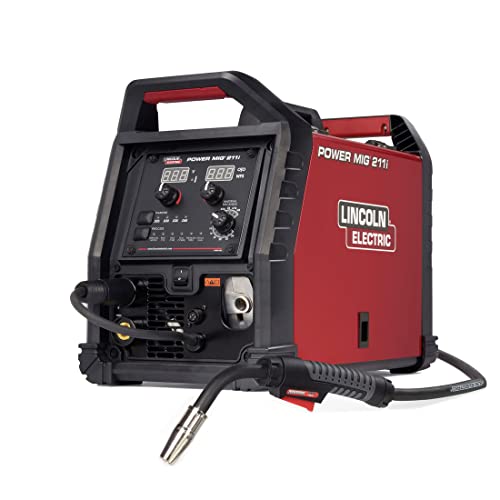

MIG Welder Power Sources: Inverter vs Transformer Buyer’s Guide
For most home garages, an inverter MIG welder is the better pick because it weighs less, often handles a wider range of input voltages, and offers useful controls in a compact package; a transformer machine is worth considering for a fixed shop setup where rugged simplicity and steady, frequent use matter more than portability.
The right MIG welding power source depends less on which technology is “best” and more on your work: material thickness, available electrical supply, how long you weld at a stretch, and whether you need to move the machine. Here’s how the trade-offs affect the purchase.
As an Amazon Associate we earn from qualifying purchases at no extra cost to you.


Inverter vs. transformer at a glance
Both types convert incoming electricity into the controlled welding current used to make a MIG weld. A transformer machine uses a large, heavy transformer to do this; an inverter uses electronic switching and smaller components. The figures below are representative ranges, not specifications for every model. Check the manufacturer’s data plate and manual before buying.
| Buying factor | Inverter MIG welder | Transformer MIG welder |
|---|---|---|
| Typical machine weight | About 20–60 lb | About 60–120 lb or more |
| Common input options | Some models accept 120 V and 240 V; others are 240 V only | Often 240 V; some smaller models use 120 V |
| Representative duty cycle | About 20–40% at a specified high-output setting | About 20–40% at a specified high-output setting |
| Controls | May offer digital settings, synergic programs, and fine adjustment | Often uses simpler taps or mechanical controls |
| Best fit | Garage work, portability, varied projects, limited storage | Fixed shop location, frequent use, preference for simpler electronics |
Weight and duty-cycle ranges overlap, and a larger inverter may weigh more than a small transformer unit. Compare machines at similar output, not by technology label alone.
How to choose for your setup
Choose an inverter for a home garage or shared workspace
An inverter is a strong choice if you need to carry the welder to a driveway, jobsite, or storage shelf. Lower weight also makes it easier to place on a cart with a gas cylinder and accessories. Many models provide precise adjustment, which can help when switching between thin sheet and heavier material.
Some inverters accept both 120 V and 240 V input. That flexibility can be useful, but it does not mean a 120 V outlet can deliver the same output as a 240 V circuit. At lower input voltage, the machine may have less available welding power or require a lower output setting. Confirm the required breaker size, plug type, and extension-cord guidance in the manual. A long or undersized extension cord can cause voltage drop and poor performance.
Consider a transformer for a fixed shop
A transformer machine can make sense if it will stay in one place, your shop already has the appropriate circuit, and portability is unimportant. Its simpler control layout may appeal to welders who prefer direct adjustments without menus or preset programs. A transformer’s size and weight can be drawbacks in a garage where floor space is tight or the welder must be moved often.
Do not assume a transformer is automatically more durable or has a higher duty cycle. Design, component quality, cooling, maintenance, and the rated output all matter. Compare warranty terms and service support, and check whether replacement parts are available.
Match duty cycle to the work, not the headline amperage
Duty cycle is the percentage of a ten-minute period that a welder can operate at a stated output under specified conditions. For example, a 30% duty cycle at 200 amps means up to three minutes of welding in ten minutes at that rating, followed by time for cooling. It does not mean the machine can weld continuously at 200 amps.
Duty-cycle ratings are tied to both output and test conditions. A machine may have a higher duty cycle at a lower amperage. For occasional repairs, tacks, and short welds, a modest rating may be adequate. For long beads or repeated production work, prioritize the duty-cycle figure at the output you expect to use. Also allow for pauses to reposition the work, change wire, and inspect the weld.
Use your projects to narrow the choice
| Your situation | Likely fit | What to verify |
|---|---|---|
| Beginner, occasional household repairs, little storage space | Compact inverter | Simple controls, included process options, wire-size range, and local service |
| Home garage with only a 120 V outlet | 120 V inverter or small 120 V transformer, depending on required output | Actual output on 120 V, circuit requirements, and material thickness limits |
| Regular fabrication with a dedicated 240 V circuit | 240 V inverter or shop-oriented transformer | Duty cycle at working amperage, breaker requirements, and cooling design |
| Fixed workshop with long welding sessions | Machine with a suitable high-output duty cycle, regardless of type | Thermal protection, serviceability, and available replacement components |
| Welder must be carried between locations | Inverter, especially a model with a manageable weight and handle | Total transport weight including leads, spool, and any gas equipment |
Budget for the whole welding setup
General market prices vary by output, features, included accessories, and region. As a broad guide, entry-level MIG machines may cost a few hundred dollars, while higher-output or shop-grade models can run from several hundred to over a thousand dollars. A low machine price can be misleading if the package lacks essential items or your electrical supply needs work.
Before choosing a power MIG welder, add the cost of a suitable circuit if needed, welding wire, contact tips, nozzle, shielding gas and cylinder where applicable, helmet, gloves, and a cart or storage solution. If your projects are occasional, a basic model with a realistic duty cycle may be better value than paying for output you rarely use. For regular work, factor in service access and the cost of consumables over time.
Ownership details that affect performance
Wire-feed issues are common on MIG machines and are not necessarily a power-source failure. Contact tips wear and should be replaced when the wire feeds inconsistently or the tip opening becomes enlarged. Keep the drive rolls matched to the wire type and diameter, set the roll pressure only tight enough to feed reliably, and keep wire clean and dry. Excessive pressure can deform soft wire; too little can cause slipping.
Dust can restrict cooling and shorten component life, particularly in a shop with grinding debris. Follow the manual’s cleaning instructions, keep vents clear, and disconnect power before maintenance. Avoid running the machine beyond its duty cycle, and do not bypass thermal protection. For either technology, inspect leads, connections, and the work clamp regularly; damaged insulation or loose connections need attention before welding resumes.
Bottom line
For a typical home garage, a dual-voltage inverter is often the most flexible choice—provided its 120 V output is sufficient for your projects and your circuit meets the manufacturer’s requirements. For a fixed shop, choose by duty cycle, output, serviceability, and electrical fit rather than assuming a transformer is automatically better for heavy use. The best MIG welding power source is the one that can handle your actual material and workload without exceeding your available power or cooling limits.