What's inside
As an Amazon Associate I earn from qualifying purchases. This post may contain affiliate links at no extra cost to you.
Our Top Picks
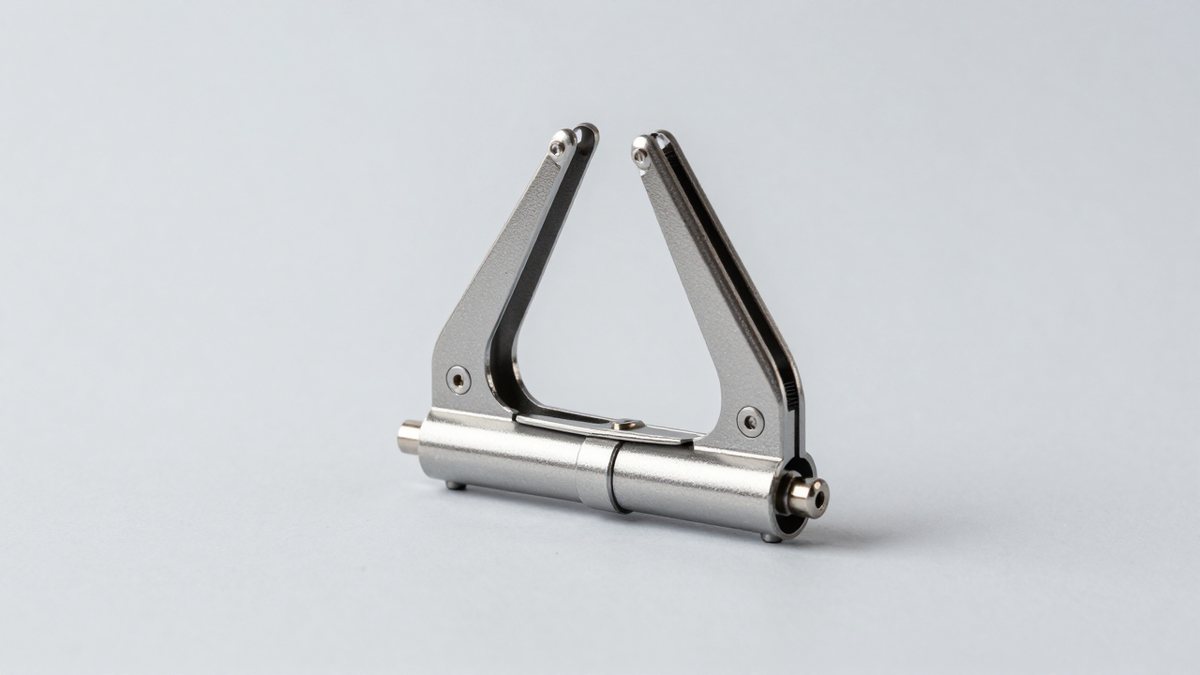
 Magswitch 300 Amp Switchable Magnetic Welding Ground Clamp300 Amp2.9 x 1.9 x 2.3 inches1 PoundsCheck on Amazon

The 6 Best Magnetic Welding Clamps for 45°, 90° & 135° Holds
For most fit-up work, choose a switchable magnetic clamp with clearly marked 45°, 90° and 135° faces; use a compact arrow magnet for light tack-ups, a larger multi-angle magnet for heavier stock, and a magnetic earth clamp only when you need a ground connection. Holding-force figures are usually maximum pull ratings, not a promise that a magnet will resist sliding or twisting on your workpiece. The six picks below are therefore organized by job and verified product type, with practical limits in mind.
Six picks by job
1. Strong Hand Tools MSA-series switchable magnetic squares — best for frequent, precise setup
Strong Hand Tools’ MSA switchable magnetic squares are a good choice when you want to position parts with the magnet off, switch it on for fit-up, and release chips or the finished assembly without prying. The product family includes several sizes and configurations, so confirm the exact model’s pull rating and listed angles before ordering. Choose this style for repeat fabrication, heavier components, or work where a fixed magnet is awkward to remove.
As an Amazon Associate we earn from qualifying purchases at no extra cost to you.


2. Strong Hand Tools MagTab — best for keeping the magnet clear of the weld
The MagTab design puts magnetic contact points on a tab that can be positioned to keep the body away from the weld area. That can help with access and reduce the chance of the clamp becoming part of the weld spatter problem. It is a useful specialist magnetic clamp for welding when clearance matters more than having a broad, conventional arrow shape. Check the model’s rated force and compatible angles: the MagTab name covers variants, not one universal capacity.
3. Bessey MSA magnetic welding angles — best for straightforward multi-angle work
Bessey’s MSA magnetic welding-angle range is aimed at holding ferrous parts at common layout angles, including 45° and 90° on applicable models. It suits users who want a familiar fixed-angle aid for tack welding and assembly rather than a switchable mechanism. Fixed magnets are simple, but they can collect filings and need to be pulled away from the work carefully. Verify that the specific model provides 135° if that angle is essential; not every multi-angle clamp offers the same set.
4. ABICOR BINZEL magnetic angle holders — best for a welding-focused supplier range
ABICOR BINZEL sells magnetic angle holders intended for welding setup. These are worth considering when sourcing welding accessories from a specialist supplier and when the listed angle geometry matches your joint. Compare the exact holder’s pull force, dimensions, and material thickness limits rather than assuming all magnetic holders from a brand share one rating. For frequent changeovers, a switchable model is usually more convenient than a fixed magnet.
5. Compact arrow-style magnetic welding square — best budget choice for light tack-ups
A basic arrow-shaped magnetic square is often the least expensive option and is useful for small brackets, thin steel, and occasional work. Many have marked 45°, 90°, and 135° edges, but their holding force and accuracy vary considerably by size and manufacturer. Treat an unverified pull rating as unknown. This is a sensible first magnetic clamp for a hobby bench, not a substitute for a fixture when a part is heavy, safety-critical, or likely to shift under weld contraction.
6. Magnetic earth clamp — best for grounding, not holding parts
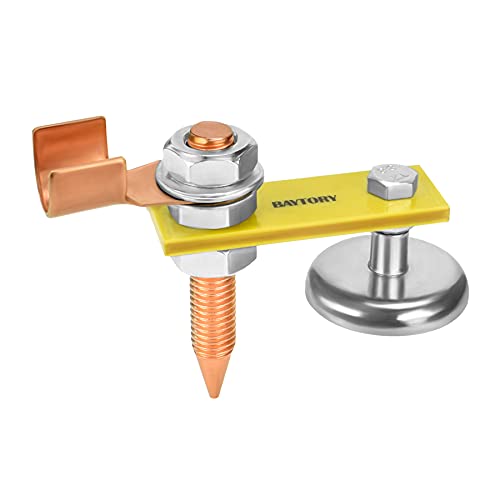
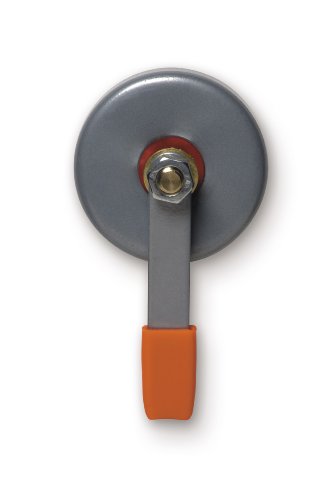
A magnetic welding earth clamp attaches the welding return lead to a ferrous work surface. It is not a fit-up clamp and should not be ranked by its ability to hold a joint square. Choose one by its rated welding current, cable connection, contact area, and the cleanliness of the work surface. Keep the electrical connection separate from the mechanical job: use a proper angle holder or fixture to position the parts.
Compare the options before you buy
There is no single reliable holding-force number for an entire product family. Ratings depend on the exact size and model, and manufacturers may state maximum pull under ideal contact conditions. The table distinguishes what can be compared responsibly from model-specific figures that must be checked on the product label or current datasheet.
| Pick | Typical angle use | On/off magnet | Holding-force guidance | Best fit |
|---|---|---|---|---|
| Strong Hand Tools MSA switchable square | Commonly 45°/90°; verify model for 135° | Yes, on switchable versions | Model-specific; check exact SKU rating in pounds | Repeat setups and cleaner release |
| Strong Hand Tools MagTab | Variant-specific | Model-specific | Model-specific; do not infer from the product family | Weld access and clearance |
| Bessey MSA welding angle | Commonly 45°/90°; verify model for 135° | Generally fixed on basic holders | Check exact size and datasheet | Simple, occasional fit-up |
| ABICOR BINZEL angle holder | Model-specific | Model-specific | Check current supplier specification | Welding-accessory sourcing |
| Compact arrow-style square | Often marked 45°/90°/135° | Usually fixed | Varies widely; avoid assumed ratings | Light work and tight budgets |
| Magnetic earth clamp | Not an angle-holding tool | Contact is typically removable | Use current rating in amps, not pull force | Attaching the welding return lead |
Why the numbers need context: a stated pull force typically describes separation straight away from a thick, flat steel plate. In real fit-up, a clamp may slide along the plate, rotate, or lose contact on a small tube. Paint, rust, scale, gaps, and a narrow contact face all reduce useful force. For a heavy assembly, support the work mechanically and use the magnet to position it—not as the only restraint.
Choose by your setup
- Occasional hobby work, small parts: start with a compact arrow-style magnetic square. Spend more only if you need a switch or more clearance.
- Frequent production or repeated repositioning: favor a switchable magnet. Turning it off makes placement and removal easier and helps keep steel grit from clinging during handling.
- Thin sheet or small tubing: prioritize a small contact footprint and light force. A large magnet can pull a thin part out of alignment or make fine adjustment difficult.
- Heavy sections or long assemblies: use multiple supports, clamps, or a welding fixture. A high pull rating alone does not prevent twisting or distortion.
- Need a 135° joint: check the actual faces and markings on the exact model. “Multi-angle” does not guarantee 135°.
- Need electrical grounding: buy a magnetic earth clamp rated for your welding current, separately from the magnetic clamps used to hold parts.
Set up for a more accurate fit-up
- Clean the contact areas. Remove loose scale, spatter, and filings from both the magnet and workpiece. Even a small gap can weaken magnetic contact.
- Confirm the angle on the part. Place the clamp against the actual faces, then check the joint with a square or angle gauge. Stamped edges are useful references, not a replacement for checking critical work.
- Support the assembly independently. Rest long or heavy stock on a bench, blocks, or a fixture so the magnet is not resisting the full weight or leverage.
- Tack opposite sides before welding out. Recheck alignment after each tack; heat and shrinkage can pull a joint away from its intended angle.
- Remove the clamp before it becomes trapped. With switchable models, turn the magnet off. With fixed magnets, slide or lift it away only after the work is stable and safe to handle.
Ownership notes: what wears and what causes trouble
Magnets themselves can be durable, but their contact faces are easy to compromise with weld spatter, grinding dust, and steel chips. Clean them with a brush and wipe the faces before storage; avoid striking the magnet or exposing it to excessive heat. On a switchable model, keep the mechanism free of grit and follow its maintenance instructions. If a clamp starts rocking, slips on clean flat steel, or has damaged contact faces, retire it from precision or heavy work.
The most common mistake is treating the advertised pull force as a working-load rating. Another is using a magnetic holder to force a warped part into position: the stored stress can release when the tack is made. Fit parts with suitable mechanical clamps or a fixture, use magnetic clamps for alignment, and verify the joint before committing to a full weld.