What's inside
As an Amazon Associate I earn from qualifying purchases. This post may contain affiliate links at no extra cost to you.
Stainless steel is not especially hard, but it is unforgiving. A drill bit that cuts ordinary mild steel can become dull within a few holes if it spins too fast, rubs instead of cutting, or lets the workpiece heat up. For most stainless-steel drilling, the best all-around choice is a quality cobalt high-speed-steel (HSS) set, used with firm pressure and cutting oil.
As an Amazon Associate we earn from qualifying purchases at no extra cost to you.


Our Top Picks
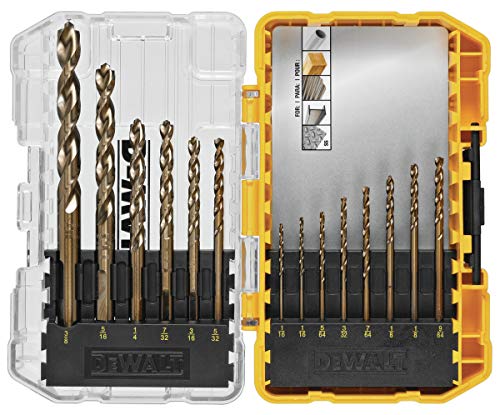 DEWALT Cobalt Alloy Steel Drill Bit Set withOne Size8.75 x 1.74 x 8.75 inches0.8 PoundsCheck on Amazon
 BOSCH CO14B 14-Piece Cobalt Drill Bit Set With14-Piece Drill Bit Set7.2 x 5.6 x 1.8 inchesCheck on Amazon
 BOSCH CO21B 21-Piece Assorted Set with Included Case21-Piece Drill Bit Set0 x 0 x 0 inchesCheck on Amazon
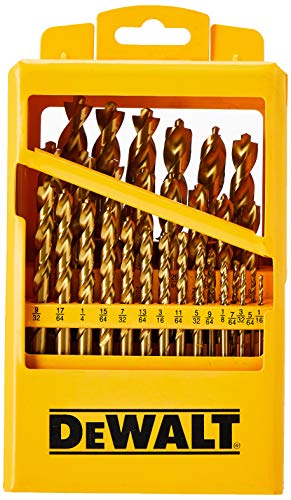 DEWALT Titanium Nitride Coated Drill Bit Set withOne Size10 x 7 x 3.75 inches3 poundsCheck on Amazon
Best overall: cobalt HSS drill bits
Look for a cobalt drill bit set marked M35 or M42. M35 contains about 5% cobalt and is the usual sweet spot for home, automotive, and fabrication work. M42 contains roughly 8% cobalt and holds its edge better at higher temperatures, but it is also more brittle and usually costs more.
Cobalt bits are not coated bits. Cobalt is mixed through the steel, so sharpening does not remove the wear-resistant material. That makes them a better long-term buy than inexpensive black-oxide bits when stainless is a regular part of your work. A set covering 1/16-inch through 1/2-inch in 1/64-inch increments is versatile, although a 1/16-inch to 3/8-inch set covers most brackets, sheet metal, tubing, and hardware jobs.
Choose a conventional 118-degree point for general drilling, or a 135-degree split point if you frequently drill sheet stainless or need easier starting without a center punch. A split point reduces walking, but it does not compensate for excessive speed or light pressure.
Stainless-steel drill bit types compared
| Bit type | Best use | Wear resistance | Main drawback |
|---|---|---|---|
| M35 cobalt HSS | General stainless, brackets, tubing, sheet | Very good | Costs more than basic HSS |
| M42 cobalt HSS | Frequent drilling and harder stainless grades | Excellent | More brittle and expensive |
| Black-oxide HSS | Occasional small holes | Fair | Dulls quickly when overheated |
| Carbide-tipped | Very hard stainless or production work | Excellent | Chips easily in a handheld drill |
| Step bit | Thin stainless sheet and larger holes | Good if cooled | Not suitable for thick material |
When an inexpensive set is good enough
A basic black-oxide HSS drill bit set is reasonable if you only need one or two holes in thin stainless, especially if the set already sits in your toolbox. Use a new, sharp bit, drill slowly, and apply oil. For a single 1/8-inch hole in 20-gauge sheet, buying a premium set may not pay for itself.
The cheaper option stops making sense when you need several holes, are drilling stainless plate thicker than about 1/8 inch, or have already burned through ordinary bits. Stainless work-hardens quickly. If a dull bit rubs for even a few seconds, it can create a hardened ring that is harder than the original material. A fresh inexpensive bit may then struggle where a cobalt bit would still cut.
For thin sheet with holes from about 1/4 inch to 1-1/2 inches, a cobalt step drill bit set is often faster than changing twist bits. Step bits make clean holes with less grabbing, but they are a poor choice for thick plate because each cutting step has limited depth.
How to prevent premature wear
Speed is the first control. For a 1/4-inch cobalt bit in stainless, start around 600 to 900 rpm. At 1/2 inch, roughly 250 to 450 rpm is more appropriate. Thin sheet does not automatically justify high speed; the bit still needs to cut rather than polish the surface. If your drill has only a fast and slow range, use the slow setting.
Use cutting oil made for drilling or tapping. General-purpose penetrating oil is better than nothing, but a proper sulfurized cutting fluid usually performs better. Apply a few drops before starting and add more when the hole becomes dry. Do not flood an electric drill, and keep oil away from hot motors and electrical openings.
Clamp the stainless securely and support thin sheet with scrap wood. Start with firm, steady pressure. The bit should produce a continuous curl or chip. If it only squeals, shines the surface, or produces fine powder, stop immediately: the bit is rubbing and the workpiece is likely work-hardening.
For holes larger than about 1/4 inch, drill a pilot hole only slightly larger than the web of the finishing bit. A pilot hole that is too small leaves the cutting edges doing excessive work; one that is too large can reduce the bit’s ability to bite. For a 1/2-inch final hole, a pilot around 3/16 to 1/4 inch is usually sufficient.
When to choose carbide or another design
Carbide-tipped bits are reserved for very hard stainless, hardened fasteners, or repeated production drilling with rigid equipment. They cut extremely well when aligned and cooled, but a handheld drill can make them chip if it tilts, catches, or breaks through suddenly. They are not the sensible upgrade for ordinary DIY stainless work.
For thin stainless kitchen panels, enclosures, and automotive sheet, a split-point cobalt bit or step bit is easier to control. For deep holes, use a short pilot bit first and clear the chips often. Long bits flex and can snap when the flutes pack with stainless chips.
Buying checklist
Prioritize genuine M35 or M42 labeling, a split point, accurately ground flutes, and a rigid case that protects the cutting edges. Avoid sets that simply say “titanium” without identifying the base steel; a thin titanium coating does not turn soft HSS into a stainless specialist. If you need replacement sizes rather than a large assortment, buying individual M35 cobalt drill bits can cost less and keeps you from replacing an entire set after losing one common size.