What's inside
As an Amazon Associate I earn from qualifying purchases. This post may contain affiliate links at no extra cost to you.
Our Top Picks


The Short Answer
For cutting metal pipe, the tool you want depends on where the pipe is and what kind of cut you need. An angle grinder with a cutoff wheel makes a faster, cleaner, and straighter cut on steel pipe in the open. A reciprocating saw is slower and rougher, but it wins when the pipe is installed tight against a wall, overhead, or in a demolition scenario where you can’t afford sparks.
If you can take the pipe to a bench or have clear access all the way around it, the cutoff wheel is better. If you are cutting in place during plumbing or HVAC demo, the reciprocating saw is usually the safer, more practical choice.
As an Amazon Associate we earn from qualifying purchases at no extra cost to you.



How Each Tool Actually Cuts
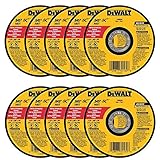
A cutoff wheel on a 4-1/2 inch angle grinder is an abrasive disc, typically 0.045 inch thick, spinning at 11,000 RPM. It grinds through metal rather than sawing it. On 1-1/2 to 2 inch Schedule 40 black steel pipe, a fresh wheel will get through in 15 to 30 seconds with light pressure. The cut is narrow and very straight if you keep the grinder square, and it leaves a relatively square edge that needs only light deburring.
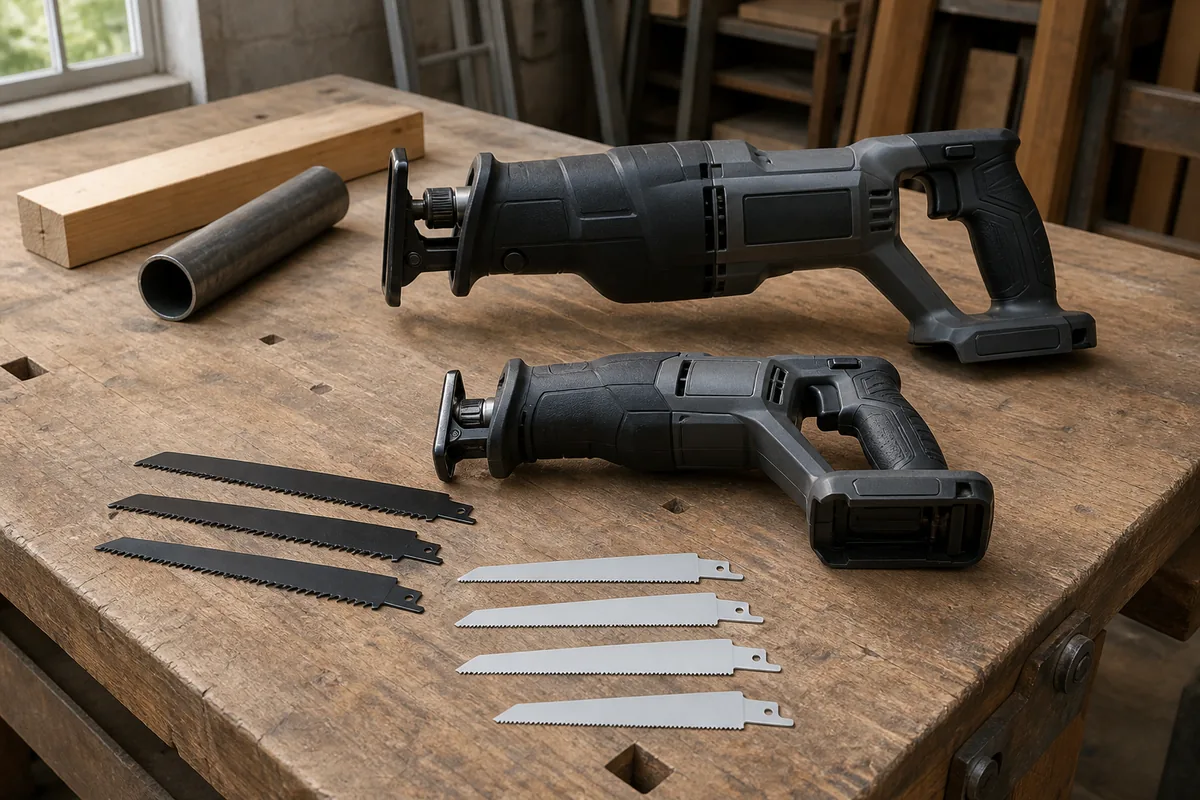
A reciprocating saw uses a toothed blade moving back and forth at 0-3,000 strokes per minute. With a proper 14 or 18 TPI bi-metal blade rated for metal, that same 2 inch steel pipe takes 45 to 90 seconds. Thin-wall conduit and copper go much faster, thick-wall steel and cast iron much slower. The cut is wider, rougher, and prone to wandering if you force the shoe off the pipe or use too few teeth in contact with the material.
That speed gap matters if you have a lot of cuts. For one or two pipes, it doesn’t.
Cut Quality, Burr, and Fit-Up
For any job where the pipe has to be threaded, welded, or fitted with a press fitting, cut quality is critical.
The cutoff wheel leaves a flat, square face with a small, hard burr on the inside diameter. That burr breaks off quickly with a file or deburring tool, and the face is square enough for threading dies to start cleanly. The downside is heat. The abrasive process puts a lot of heat into the cut, which can discolor the pipe and harden the edge on carbon steel. You also get a shower of sparks and abrasive dust that embeds in anything nearby.
The reciprocating saw leaves a rougher, slightly angled face with a larger, stringy burr. On thin-wall EMT or copper, the blade can grab and deform the pipe if you don’t support it well. On steel, you often get chatter marks and need more cleanup before the joint will seal. It does not heat the pipe nearly as much, and it produces chips rather than sparks, which is a major advantage indoors.
If you need a weld-ready cut on steel pipe and you are in a shop or outside, the cutoff wheel is the clear winner. If fit-up is less critical, like cutting out old galvanized waste line for disposal, the reciprocating saw’s rough cut does not matter.
Access, Control, and Where the Pipe Is
This is where most people choose wrong. On a bench, the angle grinder feels perfect. In a real building, pipes are rarely in the open.
A cutoff wheel needs clearance. You need to get the whole 4-1/2 inch disc perpendicular to the pipe and keep it there through the cut. You also need swing room for the grinder body and a clear path for sparks. Tuck a pipe 2 inches off a concrete wall or tight between joists and you simply cannot get a square cut without hitting the wall or guard. Overhead cuts with a cutoff wheel are also fatiguing and dangerous because you are fighting gyroscopic force and gravity while managing sparks falling on you.
A reciprocating saw needs only enough room for the blade to stroke. The blade is 6 to 9 inches long and can poke into tight bays, between studs, or under a cabinet. You can cut pipe that is touching a wall by coming in parallel and letting the blade flex slightly. You can cut overhead with one hand on the saw and the other supporting the pipe. Control is worse in terms of straightness, but access is far better. That is why plumbers and demo crews almost always reach for a reciprocating saw with metal-cutting blades on existing work.
Sparks, Dust, and How Each Tool Fails
Both tools can hurt you, but in different ways.
Cutoff wheels fail by shattering or kickback. A 0.045 inch wheel will explode if you twist it in the cut, pinch it, or use the side to grind. The fragments come off at grinder speed. Kickback happens when the wheel binds on the bottom of the pipe as it closes, throwing the grinder. You must support both sides of the pipe, never let the cutoff drop and pinch, and keep the wheel at 90 degrees. You need a full face shield, not just safety glasses, plus hearing protection and gloves. And you must manage fire risk. Sparks from cutting steel will travel 10 to 15 feet and will smolder in insulation, sawdust, or wall cavities. Indoors, you need a fire watch and to cover or move anything flammable.
Reciprocating saws fail by grabbing and vibration. If the blade teeth are too coarse for the wall thickness, the blade hooks a tooth and bucks the saw. Rule of thumb is at least 3 teeth in contact with the metal at all times. For 1/16 inch wall EMT, that means 18-24 TPI. For heavy Schedule 40, 14 TPI is fine. The other common failure is breaking blades from bending or from pushing too hard and overheating the teeth. The teeth dull quickly on hardened steel or if you run the saw at full speed without letting the blade do the work. Vibration is severe on unsupported pipe, which is both tiring and hard on your hands.
For indoor, occupied spaces with no good way to contain sparks, the reciprocating saw is the responsible choice even if it is slower. If you do use a grinder inside, a quality batch of thin cutoff wheels designed for metal plus a proper guard makes a real difference in how cleanly and safely they cut.
Blade Cost and Long-Term Cost
The tool itself is not the big cost difference. A decent 4-1/2 inch corded angle grinder costs $50 to $80, and a cordless reciprocating saw is $100 to $180 bare tool. The running cost is in consumables.
Cutoff wheels are cheap and disposable. A good 0.045 inch wheel is $1.50 to $3 and will make 8 to 15 cuts in 1-1/2 inch steel pipe before it is down to a nub. They wear fast on stainless and cast iron. You will go through them.
Reciprocating saw blades are $2 to $5 each for quality bi-metal. A single 6 inch 14 TPI blade will cut 5 to 10 pieces of 1-1/2 inch steel pipe before the teeth are gone. On abrasive materials like cast iron, you may kill a blade in one or two cuts. Carbide-toothed blades cost $8 to $15 but last 10x longer on cast and stainless, which often makes them cheaper per cut.
If you cut a lot of pipe, the angle grinder is cheaper per cut. If you cut occasionally, the difference is not enough to decide on.
Head-to-Head Comparison
| Factor | Cutoff Wheel (4-1/2″ Angle Grinder) | Reciprocating Saw |
|---|---|---|
| Speed on 2″ Steel Pipe | 15-30 seconds | 45-90 seconds |
| Cut Straightness | Very straight, narrow kerf | Rougher, can wander |
| Best Material | Steel, stainless, rebar | Steel, copper, PVC, cast iron, nail-embedded wood |
| Access in Tight Spaces | Poor – needs 90 degree clearance | Excellent – blade reaches into bays and against walls |
| Sparks / Fire Risk | High – abundant sparks and hot debris | Low – mostly metal chips |
| Noise and Dust | Very loud, fine abrasive dust | Loud, less airborne dust |
| Skill Needed | Moderate – bind and shatter risk | Low – but needs correct TPI and patience |
| Cost Per Cut | ~$0.15 – $0.30 | ~$0.30 – $1.00 (bi-metal), less with carbide |
Which Should You Buy for Pipe Work?
Buy the cutoff wheel setup if most of your cuts are in the shop, outside, or on new pipe before installation. It is faster, squarer, and leaves less cleanup for threading or welding. A basic corded 4-1/2 inch grinder with a stack of thin wheels will handle almost any steel pipe up to 3 inches if you rotate the pipe as you cut. For stainless, make sure you get wheels rated for stainless/INOX to avoid contamination.
Buy the reciprocating saw if you are cutting installed pipe, doing demolition, or working indoors around finished surfaces. It is more forgiving, far better in tight quarters, and you can use the same saw for wood, nails, and PVC with a blade change. If you only own one tool for general remodeling, this is it.
Many pros own both and it is not redundant. Use the grinder to cut sticks to length on sawhorses, use the recip to remove the old run in the ceiling. If you have to pick one on a budget and you are doing plumbing demo in a house, get the reciprocating saw first and add a compact cordless angle grinder later when you need clean fabrication cuts. The cheaper option is fine for a few cuts, but do not cheap out on blades or wheels. A dull or off-brand wheel that shatters or a coarse wood blade used on metal will cost you more time and risk than a proper metal-cutting consumable.