What's inside
As an Amazon Associate I earn from qualifying purchases. This post may contain affiliate links at no extra cost to you.
Our Top Picks
 Klein Tools MSF100 Magnetic Stud Finder and LevelMagnetic, Single2.75 x 1.39 x 1.13 inches0.11 poundsCheck on Amazon
 Johnson Level & Tool 1886-0000 Magnetic Digital Angle1.25 L x 2 W x 2 H1.25 x 2 x 2 inches0 poundsCheck on Amazon


What matters when leveling steel studs and conduit
A magnetic level is useful on steel framing because it can hold itself to a stud while you check plumb, leaving both hands free to adjust the track or fastener. On conduit, the same magnet helps keep the level in place on a round surface—but contact is less stable, so the level can roll or rock if its magnetic base is narrow or the conduit is oily.
For most interior work, a 24-inch box level is the practical starting point. It is long enough to show whether a stud is leaning over a useful section, but short enough to fit between nearby framing and work around a ladder. A 48-inch level gives a more reliable reading across a long stud or pipe run, but is awkward in tight spaces. A torpedo level is easier to carry and useful for short conduit sections, though its short base can hide gradual alignment errors.
As an Amazon Associate we earn from qualifying purchases at no extra cost to you.


Look for a rigid body, readable vials, and magnets that hold firmly without making the tool difficult to reposition. Strong magnets are not a substitute for a clean contact surface: drywall compound, metal shavings, paint, and oil can all create a gap or let the level slide. Before trusting a reading, wipe the stud or pipe and check that the level sits flat.
Which level suits the job?
| Type | Best use | Main trade-off |
|---|---|---|
| 24-inch magnetic box level | Plumbing and aligning individual studs | Can miss a gradual lean across a long run |
| 48-inch magnetic level | Checking longer studs and conduit runs | Bulkier in crowded framing |
| Magnetic torpedo level | Short conduit sections and close quarters | Short base makes small angular errors less obvious |
| Level with a V-groove or curved contact surface | Holding on round conduit | Less useful on flat steel unless it also has a flat base |
Best all-around choice
For a buyer doing both steel studs and conduit, choose a 24-inch magnetic box level with a flat magnetic edge and a V-groove or shaped surface for round stock. That combination is easier to use across flat stud faces and more stable on conduit than a flat-backed tool. If the product lacks a V-groove, it can still work on conduit, but expect to hold it in place and check that it has not rolled before fastening.
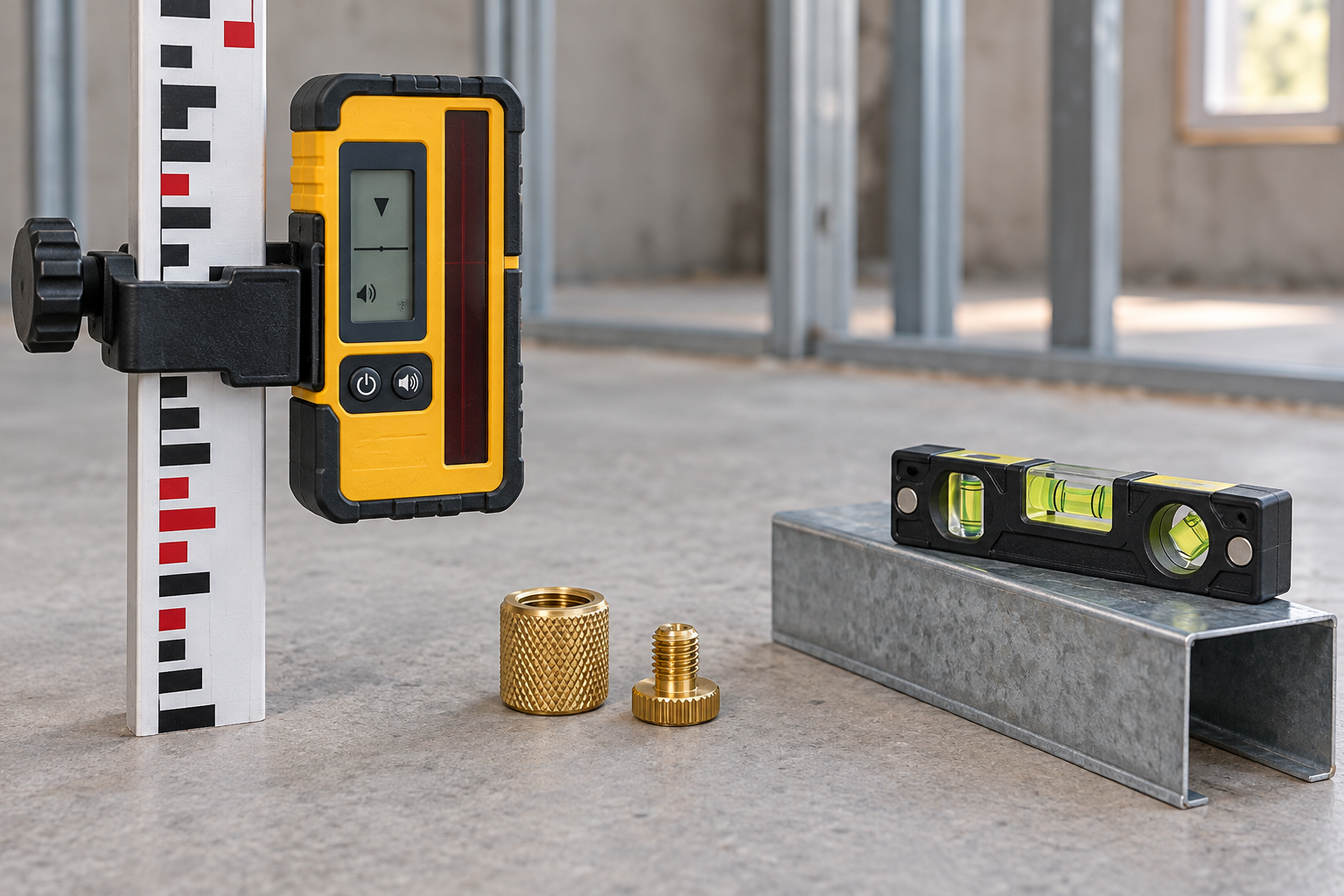
Compare 24-inch magnetic levels with a V-groove for a versatile framing and pipe option. Check the listed length and contact shape rather than assuming every magnetic level is designed for round surfaces.
If the work is mostly conduit, a compact magnetic torpedo level with a V-groove is easier to carry and place between fittings. Its short length is a real limitation: use it to set individual sections, not as proof that a long run is straight.
When a cheaper level is fine
A basic magnetic level is sufficient for occasional stud work, hanging short conduit drops, or rough positioning before final adjustment. Pay more when the level will see daily use, needs to survive drops, or must stay accurate over long framing runs. A tougher frame may resist dents, but no price tier makes a level immune to damage or guarantees accuracy after a hard fall.
Do a quick accuracy check when the tool is new and after a drop. Put it on a flat surface, note the bubble position, then turn it end-for-end without changing the surface. The reading should match. Repeat on a vertical face to check the plumb vial. If the readings disagree, do not compensate by guessing; return or replace the level.
A long 48-inch magnetic box level can be a better second purchase if you regularly align full-height studs or check a longer conduit run. It gives a longer reference than a torpedo level, though you still need a secure hold and a clean surface.
How to avoid common alignment errors
For a stud, attach the level to the web or flange where it sits flush, then adjust the stud until the bubble is centered. Check near the top and bottom if the stud is bowed or twisted; a centered reading at one point does not prove the full member is straight. Fasten only after rechecking, since driving a screw can pull the stud out of position.
On conduit, place the level along the pipe and support it so gravity does not roll the tool off the curved surface. Check each section after making a bend or tightening a coupling. A magnetic level can cling to one side while the pipe is still twisted, so rotate the level to confirm contact and compare adjacent sections. For longer runs, use a longer level or check several overlapping positions rather than trusting one short reading.
Magnets can also collect steel chips, which hold the tool off the surface and spoil the reading. Wipe the magnetic edge regularly. If the level slides, do not assume stronger magnets will fix the problem: clean the contact area, remove loose debris, and make sure the level is not perched on a seam or fastener. For repeated conduit installations, a purpose-shaped conduit level is more convenient; for mixed framing work, a 24-inch box level is usually the more useful first buy.