What's inside
As an Amazon Associate I earn from qualifying purchases. This post may contain affiliate links at no extra cost to you.
For drilling holes through framing lumber, the choice between a ship auger and a standard auger bit comes down to hole size, drilling speed, chip removal, and the drill you have. Both are made for wood, but their cutting geometry and intended use differ. A ship auger is usually the better choice for repeated, deep holes in framing; a standard auger bit can be a cheaper, sensible option for occasional holes in accessible studs and joists.
As an Amazon Associate we earn from qualifying purchases at no extra cost to you.

Our Top Picks
 SOMADA 1-Inch x 12-Inch Auger Drill Bit for1"x12" Silver11.8 x 1 x 1 inches0.99 PoundsCheck on Amazon


What the Names Mean
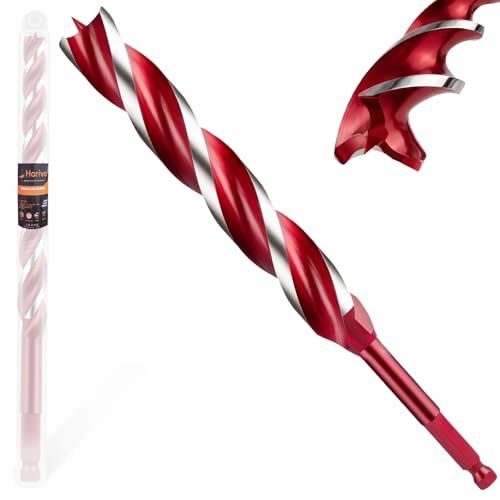
“Standard auger bit” can refer to several wood-bit designs. Here, it means the common spiral auger bit with a lead screw at the tip, a cutting lip, and a flute that carries chips out of the hole. Ship augers are a heavier-duty style, typically built with a longer shank and a more open flute for clearing chips from deep holes. Both are distinct from flat spade bits, which remove wood differently and tend to leave rougher holes.
Actual designs vary by manufacturer, so check the bit’s stated diameter, usable length, and compatibility with your drill. A long bit is not automatically a ship auger, and a bit’s label alone does not tell you how well it will clear wet or resinous wood.
Ship Auger vs Standard Auger
| Factor | Ship auger | Standard auger bit |
|---|---|---|
| Best fit | Repeated, deep holes; tougher framing work | Occasional holes in accessible lumber |
| Chip clearing | Generally better in deep holes | Can clog sooner, especially in wet wood |
| Length and reach | Often available in longer versions | Varies; short versions are common |
| Cost | Usually higher | Often lower |
| Drill demand | Can put a heavy load on the drill | Still demanding at large diameters, but smaller bits are manageable |
| Typical hole quality | Clean when sharp and used correctly | Also clean in sound wood when sharp and not forced |
When a Ship Auger Is the Better Buy
Choose a ship auger when you need to bore a run of holes through thick framing, drill close to the bit’s full working length, or make holes where stopping repeatedly to pull out packed chips would slow the job. Its more open flute is useful because wood chips need a route out of a deep hole. If the flute fills, the bit binds, overheats, or stalls instead of cutting smoothly.
This does not make a ship auger immune to clogging. Wet, treated, or resinous lumber can still pack chips around the bit. Back the bit out periodically to clear them rather than leaning harder on the drill. A sharp bit matters, too: dull cutting edges need more force and are more likely to grab.
Large augers need a drill with enough torque and a suitable side handle. A high-speed drill with a small chuck may not be appropriate for a large bit, even if the shank fits. Follow the drill and bit makers’ guidance on speed and capacity, and hold the tool with both hands. If the bit catches a knot or buried fastener, the drill can twist abruptly and injure your wrist.
For recurring framing work, compare ship auger bits for wood by diameter, usable length, shank style, and whether the intended drill can accept the shank.
When a Standard Auger Is Enough
A standard auger bit is usually fine for a few holes through ordinary, accessible lumber—for example, passing a cable or pipe through a stud where you can drill square to the face and clear chips as needed. If the hole is shallow enough that chips do not accumulate, the ship auger’s extra chip-clearing capacity may not earn back its higher price.
Standard augers are not automatically low-load bits. A large diameter, long bit, knot, or off-center start can still bog down a drill or cause a grab. Let the lead screw draw the bit in; do not force the drill to push it. If the bit wanders, back out and correct the alignment instead of using extra pressure.
For occasional work, a basic wood auger bit can be the economical choice. Match its length to the lumber and access you actually have. Buying extra reach you will rarely use adds cost and can make a bit harder to control.
Match the Bit to the Hole and Drill
First check the hole diameter required by the plan, cable, or pipe. Then confirm that the hole is permitted in the framing member. A bit that can physically cut a large hole does not mean that hole is structurally acceptable; rules vary with joist type, member size, and hole location. Check the applicable building guidance or ask a qualified professional before drilling structural framing, especially engineered members.
Next check the drill’s stated capacity, chuck, and handle. A cordless drill’s battery voltage alone does not tell you whether it can safely turn a large auger. If the tool lacks a side handle, has a small chuck, or repeatedly stalls, use a more suitable drill rather than pushing through. For several large holes, a drill designed for high-torque boring is a better match than a light-duty driver.
How to Drill Without Binding
Mark the center and keep the bit square to the face. Start at a controlled speed, maintain a firm two-handed grip, and let the cutter work. Pull the bit back occasionally to clear chips, particularly in deep holes. Reduce pressure if the drill slows sharply or the bit starts to chatter. Stop if you hit metal; a nail or screw can damage the cutting edge and make the bit grab.
Before drilling, check both sides of the framing for wiring, plumbing, and fasteners. Use suitable detection tools where needed, and do not assume a stud bay is empty. A clean, correctly sized hole is useful only if it is safe to make and does not compromise the structure.
Which One Should You Buy?
For frequent, deep boring through framing, choose a ship auger sized for the job and paired with a drill built to handle its torque. For a few modest holes in accessible lumber, a standard auger is usually adequate and costs less. In either case, sharpness, chip clearing, drill capacity, and safe hole placement matter more than the name printed on the bit.