What's inside
As an Amazon Associate I earn from qualifying purchases. This post may contain affiliate links at no extra cost to you.
Cabinet hardware installation usually involves two different drilling jobs: boring the large recess for a concealed hinge cup and drilling small, accurate pilot holes for screws. A self-centering hinge bit and a brad-point bit can both help with the second job, but they are designed for different kinds of holes. Choosing the wrong one can leave screws off-center, tear out the cabinet finish, or weaken the mounting area.
As an Amazon Associate we earn from qualifying purchases at no extra cost to you.


Our Top Picks
 Bosch CC2430 Clic-Change 1/4in Self-Centering Drill Bit Set3 in0 x 0 x 0 inches0 PoundsCheck on Amazon
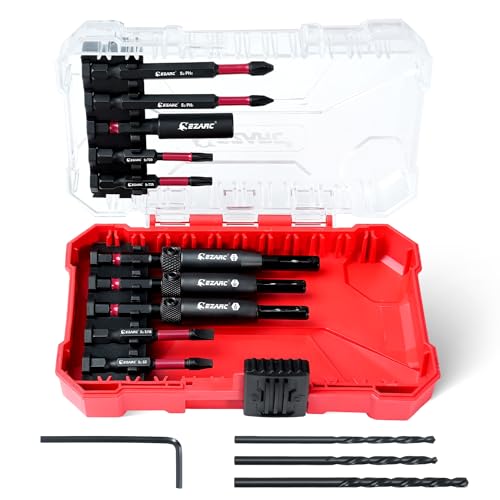
 Snappy 3pc Self Centering Hinge Drill Bit Set5/64", 7/64", 9/645.65 x 6.9 x 0.85 inches0.3 PoundsCheck on Amazon


What Each Bit Is Designed to Do
A self-centering hinge bit, often called a hinge drill bit or Vix-style bit, fits through a hinge’s countersunk mounting hole. Its spring-loaded guide nose centers the cutter in that hole as you press the tool against the hinge. The result is a pilot hole aligned with the hinge, even when you are drilling through an awkward overhead cabinet door or a dark mounting plate.
Most hinge bits are intended for small pilot holes, commonly around 2 mm to 3 mm (roughly 5/64 to 1/8 inch). They are not cup-boring tools. For a European-style concealed hinge, the 35 mm hinge cup requires a separate 35 mm concealed hinge boring bit, usually a Forstner-style cutter or a hinge jig system.
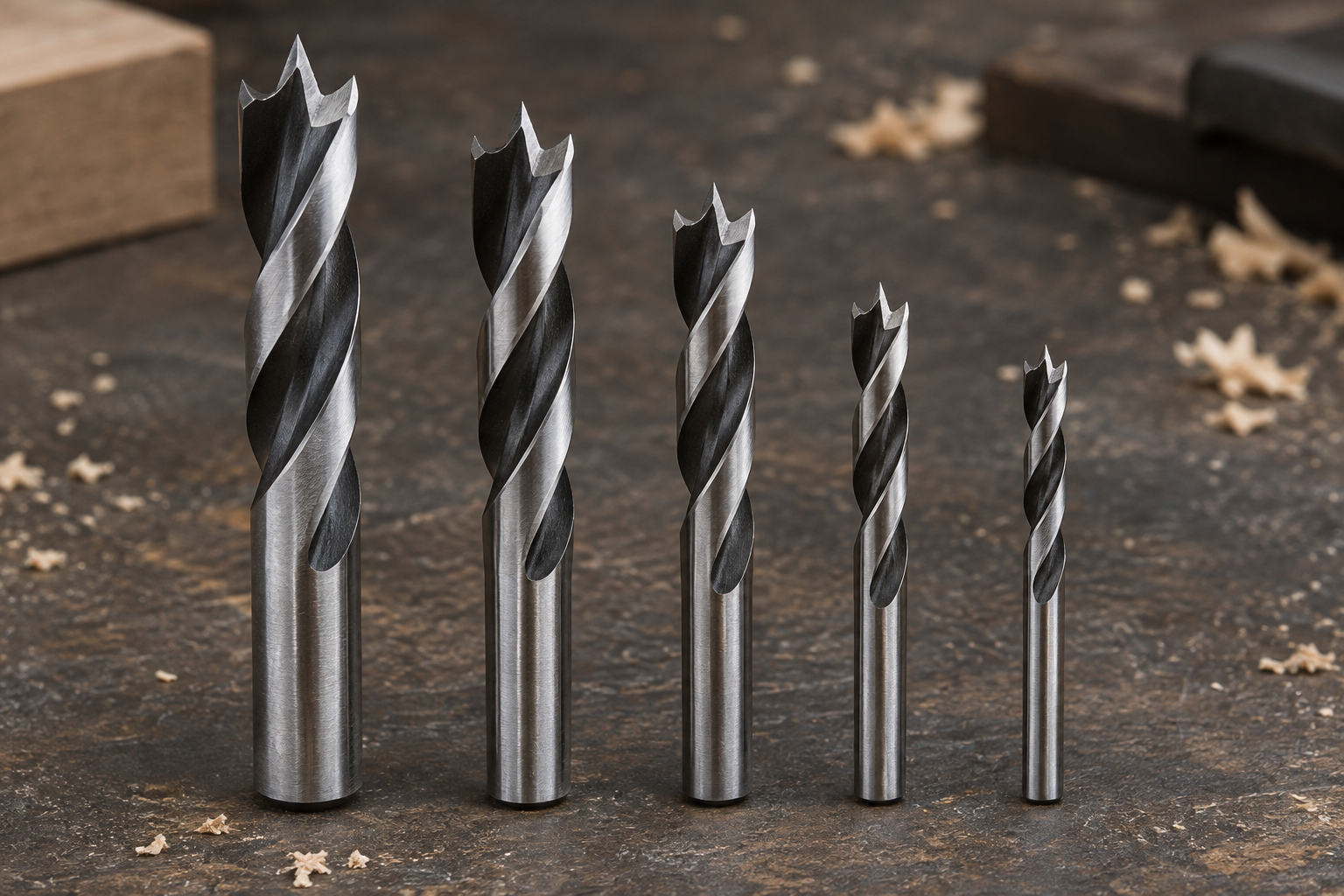
A brad-point bit is a general-purpose wood drill with a sharp center spur and outer cutting spurs. The center point starts the hole without wandering, while the outside spurs score the edge before the main flutes remove material. It is useful for drilling clean pilot holes in cabinet doors, face frames, plywood, and solid wood.
Self-Centering Hinge Bit vs. Brad-Point Bit
| Feature | Self-centering hinge bit | Brad-point bit |
|---|---|---|
| Primary job | Drilling pilot holes through hinge mounting holes | Drilling accurate general-purpose holes |
| Alignment | Centers automatically in the hinge hole | Centers on its own point, but requires careful layout |
| Typical hole size | About 2–3 mm | Available from small pilot sizes upward |
| Best material | Wood doors and cabinet panels | Solid wood, plywood, MDF, and particleboard |
| Best use | Hinge screw holes | Knob, pull, latch, and general pilot holes |
| Main limitation | Limited to compatible hinge holes and shallow pilot holes | Can drift if the layout or bit angle is wrong |
| Typical cost | Low to moderate | Low, especially in sets |
When a Self-Centering Hinge Bit Is the Better Buy
Buy a self-centering hinge bit when you are installing or replacing multiple concealed hinges and want repeatable screw alignment. The benefit becomes obvious on a run of cabinets: place the hinge in position, put the guide nose through each mounting hole, and drill. There is no need to mark the center of every countersunk hole with a ruler or awl.
It is particularly helpful when the hinge has little flat surface around the screw holes. A regular drill bit can skate on the sloped countersink and start a hole several millimeters off center. That can pull the hinge out of position or make the screw head sit against one side of the countersink.
Use the bit in a drill or driver at a moderate speed and apply light pressure. The spring-loaded guide should remain seated in the hinge hole. Drill only as deep as needed for the screw’s pilot section. On a typical 18 mm cabinet door, a 10 mm to 12 mm pilot depth is often sufficient, but check the hinge screws and door thickness first. Drilling too deeply can break through the finished face.
A hinge bit is not a universal replacement for a brad-point set. Its guide diameter and cutter size are fixed, and the guide may not fit every hinge design. Some hinges use unusually small, elongated, or non-countersunk mounting holes.
When a Brad-Point Bit Is the Better Buy
Choose brad-point bits for knobs, handles, catches, magnetic latches, and other hardware that does not provide a built-in centering guide. They are also the better choice when you need several pilot diameters. A cabinet hardware project may call for a 2 mm pilot for a small screw, a 3 mm or 1/8-inch pilot for a larger wood screw, and a larger clearance hole for a through-bolt.
For knobs and pulls, accurate layout matters more than the bit style. Measure from the door edges, mark both holes with a sharp pencil or awl, and use a square or template. A cabinet hardware installation jig is worthwhile when installing several identical pulls. The brad point starts cleanly on the mark, but it cannot correct a measurement error.
Brad points also work well for pilot holes in face frames and solid wood. In plywood, they generally leave a cleaner entry than a standard twist drill. In veneered MDF or melamine, however, the surface can still chip if the bit is dull or pushed too aggressively. Use a sharp bit, moderate speed, and back the workpiece with scrap where the bit exits.
Common Failure Modes
The most common hinge-bit mistake is using it to bore the hinge cup. A small self-centering bit cannot remove the required 35 mm recess, and forcing it into that job will ruin the bit. Use a dedicated hinge boring bit and a depth stop or jig instead.
The most common brad-point mistake is drilling a hinge screw hole freehand through the hinge plate. Even a sharp brad point can move when its center spur hits the edge of the countersunk opening. The hinge bit is faster and more reliable for this specific task.
Another problem is using an oversized pilot hole. The screw should cut firmly into the cabinet material rather than spin in a loose hole. For softwood, the pilot diameter is often close to the screw’s solid shank diameter. For hardwood, use the manufacturer’s guidance or test on scrap. A hole that is too small can split a narrow stile; one that is too large reduces holding power.
What to Buy for a Typical Cabinet Job
If you are installing only knobs or pulls, a small brad-point drill bit set is the more useful purchase. It covers different screw sizes and remains useful for other woodworking tasks.
If you are mounting concealed hinges, add a self-centering hinge drill bit. The cheaper option is fine when you are installing one or two hinges and can mark carefully, but the time saved and improved alignment justify the small cost on a full kitchen.
For the best results, use both: a hinge bit for hinge mounting screws, a brad point for general hardware holes, and a separate 35 mm boring bit for concealed hinge cups. They overlap only slightly, and each does its intended job with fewer damaged doors and misplaced screws.