What's inside
As an Amazon Associate I earn from qualifying purchases. This post may contain affiliate links at no extra cost to you.
Cleaning the bottom of a dado is one of those jobs where a sharp chisel can be enough—but a router plane makes the result more predictable. The choice depends on how much material remains, how wide the dado is, and whether the bottom must be uniformly flat rather than merely clean enough for a shelf or divider.
As an Amazon Associate we earn from qualifying purchases at no extra cost to you.


Our Top Picks



What the job requires
A dado bottom usually needs three things: loose fibers removed, high spots brought down, and a reasonably flat surface at a consistent depth. A chisel handles the first two quickly. It is less reliable at the third because its cutting edge is guided mostly by your hands and by the existing walls.
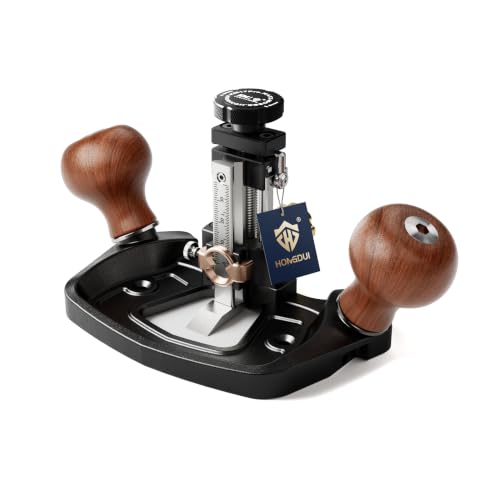
A router plane uses a cutter set below a flat sole. The sole rides on the surrounding surface while the cutter trims only high spots. That makes it a depth-control tool rather than simply a slicing tool. It is especially useful when the dado is wide enough to accept the plane and when the bottom has dips or uneven router marks.
Router plane vs. chisel at a glance
| Factor | Router plane | Chisel |
|---|---|---|
| Best use | Flattening and controlling depth | Removing waste, corners, and loose fibers |
| Typical cut | Very light, often 0.1–0.3 mm per pass | Light to moderate, depending on the wood |
| Speed on rough waste | Slow | Fast |
| Depth consistency | Excellent once adjusted | Dependent on hand control |
| Minimum dado width | Depends on the plane and its sole | Works in almost any width |
| Learning curve | Moderate | Low for basic cleanup |
| Cost | Higher | Lower |
When the chisel is enough
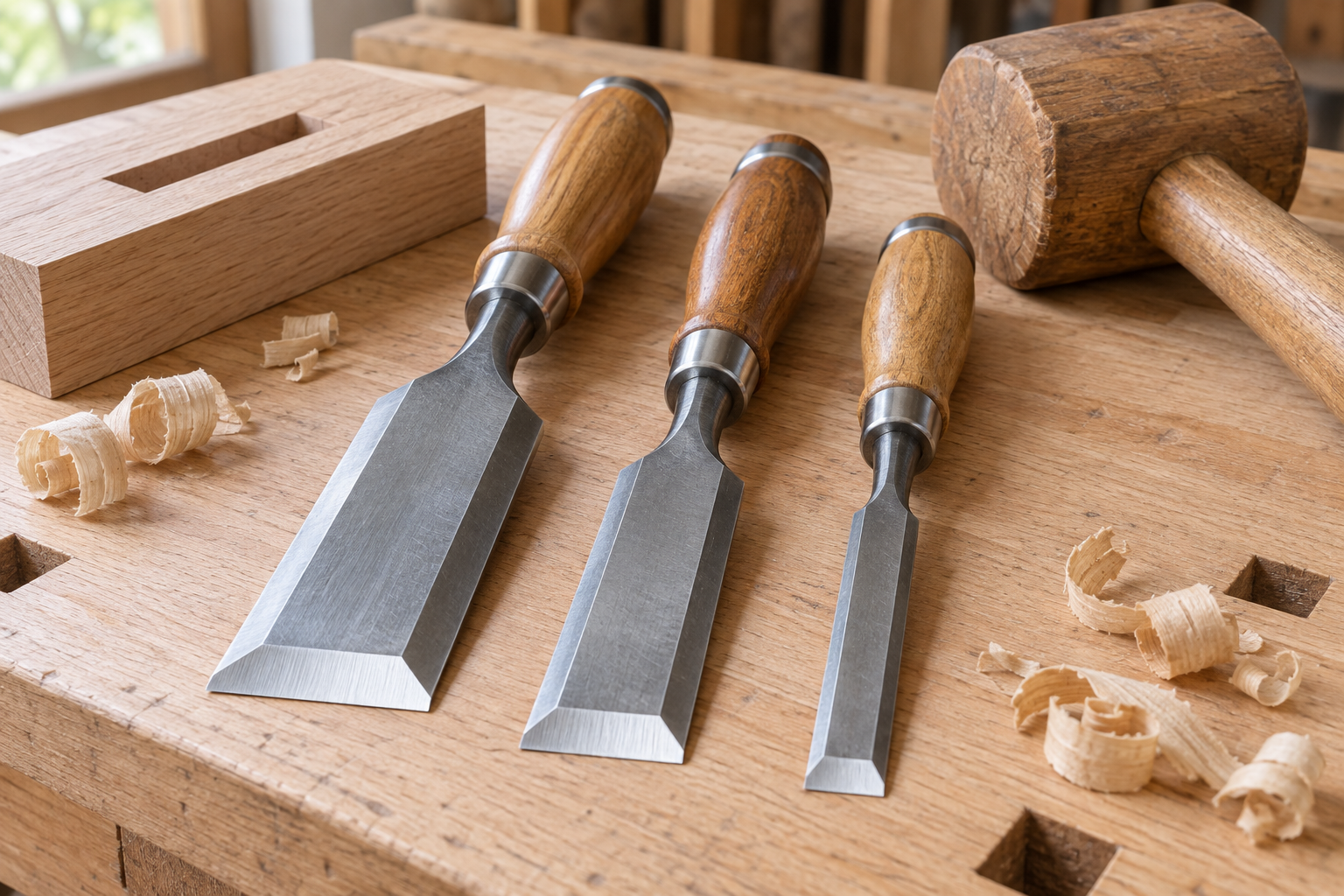
Use a chisel if the dado is already close to depth and the remaining problem is localized. A sharp 3/4-inch or 1-inch chisel will cover many shelf dados in one or two passes. Pare with the bevel down for controlled shaving, keeping the back of the chisel flat against the bottom. Work across the grain or at a slight skew rather than driving directly along the grain, which can tear out long fibers.
For a dado cut with a router, first remove ridges left between passes. A chisel can knock down those ridges, then a straightedge or small square can reveal whether the bottom is actually flat. If the board being fitted will hide the surface and the joint has no visible gaps, there may be no practical benefit in buying another tool.
A chisel is also the better choice for narrow dados. Many router planes have a broad sole that will not sit securely in a groove narrower than the plane body. You can sometimes register one edge of the sole on the work, but that gives up much of the tool’s stability.
A good starting point is a sharp bench chisel set. You do not need a large set for this job; a suitable width, a flat back, and a durable edge matter more than extra sizes.
When a router plane wins
A router plane is the better choice when the dado must be uniform along its length or when the bottom is more than a few tenths of a millimeter uneven. Set the cutter so it barely projects below the sole, then take several light passes. The plane will remove high spots while leaving low spots untouched, giving you a clear indication of when the surface is level.
This is particularly useful for a stopped dado, where access is limited and you cannot easily run a sanding block or a power router through the entire cut. It is also useful after hand-cutting a dado, when the walls may be accurate but the floor has small variations.
The router plane is not a roughing tool. If the bottom has a large ridge, hardened glue, or more than about 1 mm of excess material across much of the joint, retract the cutter and remove the bulk with a chisel first. Trying to force a deep cut makes the plane chatter, stalls the cut, and can bruise the reference surface around the dado.
If you are buying one specifically for joinery, compare router planes for woodworking by sole width, cutter adjustment, and replacement cutter availability. A tool with a narrow enough sole for your dados is more useful than a larger plane with a smoother finish or extra accessories.
A reliable cleanup method
Start by checking the dado with a small straightedge. Mark high spots with a pencil. Remove loose splinters and glue with a chisel held nearly vertical, taking care not to widen the walls. If the dado is rough, flatten the largest ridges first with the chisel.
For router-plane work, support the stock firmly and set the cutter for a shaving you can barely feel with a fingernail—roughly 0.1 to 0.2 mm. Make passes along the grain where possible. At a stopped end, take the final cuts toward the end wall carefully; levering the plane against that wall can chip the corner.
Keep checking depth with a straightedge spanning the dado and with the mating board. Do not assume a shiny bottom is flat. A polished high spot can still hold the mating piece above the rest of the joint. When the pencil marks disappear evenly and the test piece sits without rocking, stop cutting.
Edge condition and common failures
Most poor results come from a dull edge or an overly aggressive cut. A dull chisel compresses fibers and may leave a crater when it finally bites. A dull router-plane cutter requires force, which increases chatter and makes the sole harder to control. Hone the cutting edge before starting; a basic woodworking sharpening stone is enough for occasional work.
Also watch the dado edges. A chisel used as a pry bar can bruise or widen them, while a router plane can ride on a raised edge and falsely indicate that the bottom is flat. Clean the reference surfaces and verify the joint from several points along its length.
Which tool should you buy?
Choose the chisel if you clean up only a few dados, work mostly in narrow grooves, or need a general-purpose tool for many other tasks. It is the cheaper option and, with a sharp edge and careful paring, can produce a perfectly serviceable joint.
Choose a router plane if you routinely build cabinets, cut stopped dados, or need repeatable bottom depth across multiple parts. It costs more and works slowly, but its sole and adjustable cutter remove much of the guesswork. For many woodworkers, the practical answer is not either-or: use the chisel to remove waste and the router plane for the final controlled flattening.