What's inside
As an Amazon Associate I earn from qualifying purchases. This post may contain affiliate links at no extra cost to you.
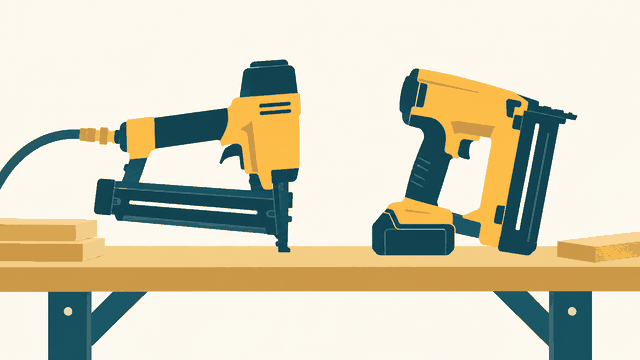
A pin nailer and a brad nailer can both fasten small trim without the broad damage caused by a hammer, but they leave different holes and hold with different force. For delicate wood trim, the choice comes down to whether the piece needs reliable mechanical grip or a nearly invisible fastening mark.
As an Amazon Associate we earn from qualifying purchases at no extra cost to you.


Our Top Picks
 DEWALT ATOMIC Compact Series™ 20V MAX* Brushless CordlessOne Size12.35 x 4.84 x 9.7 inches0 poundsCheck on Amazon
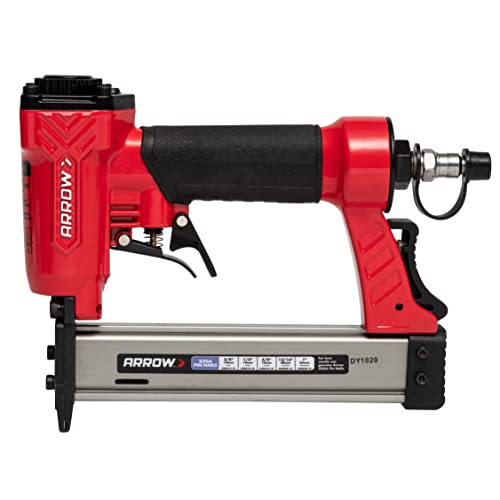 Arrow PT23G 23 Gauge Compact Pneumatic Pin Nailer8.25 x 2 x 10 inches8.25 x 2 x 10 inchesCheck on Amazon


The fasteners do different jobs
A pin nailer drives headless 23-gauge pins, commonly from about 3/8 to 1-3/8 inches long, depending on the tool. The tiny pin leaves a hole that often needs little or no filling, especially in clear-finished wood. Its thin shank causes little splitting, but it has limited holding power and can pull out of soft or springy trim.
A brad nailer generally drives 18-gauge nails, often in lengths from about 5/8 to 2 inches. The larger shank and small head provide a more dependable hold. The trade-off is a visible hole that usually needs filler, plus a greater chance of splitting narrow stock if a nail lands too close to an edge.
Pin nailer vs. brad nailer
| Factor | 23-gauge pin nailer | 18-gauge brad nailer |
|---|---|---|
| Typical fastener | Headless pin | Small-head brad |
| Holding strength | Low; best for light parts or temporary clamping | Moderate; better for trim that must stay put |
| Surface mark | Very small, often hard to see | Larger; usually requires filling |
| Splitting risk | Low, though not zero in brittle wood | Higher near edges and on thin pieces |
| Good uses | Small glazing strips, narrow applied molding, trim returns | Base shoe, casing, small baseboards, general finish trim |
| Common limitation | May not hold a bowed piece against the wall | Can leave a visible hole or split delicate stock |
When a pin nailer is the better choice
Use a pin nailer when the wood is too narrow or fragile for a brad hole, or when a clean finished surface matters more than maximum nail strength. It works well for narrow decorative strips, small returns, and trim glued in place. Pins can hold a piece while adhesive cures without leaving a conspicuous mark.
Do not expect pins to pull a gap closed. A 23-gauge fastener has little head area and can slip through a soft piece under pressure. If a molding bows away from the wall, first correct the fit or use adhesive where appropriate; a pin alone may not keep it seated. For a pin nailer, compare 23-gauge pin nailers by their supported pin lengths and whether the tool accepts angled or straight collations that match your work.
When a brad nailer is worth the larger hole
Choose a brad nailer for trim that needs to stay attached without relying mainly on glue. It is the more practical all-around option for small casing, base shoe, and similar work, especially when fastening into framing or a solid backing. The longer brad options can reach through the trim into the substrate, but a longer nail does not help if it misses the backing.
Keep brads away from edges. On narrow trim, test the nail position on scrap and leave enough wood on both sides of the shank; the exact safe distance depends on the species, grain, and thickness. A brad driven close to an edge can split the piece or emerge through its face. Browse 18-gauge brad nailers if you need one tool for a wider range of light finish work.
Set depth, placement, and backing first
Before fastening visible trim, test on an offcut of the same material. Adjust the depth so the fastener sits just below the surface without crushing the wood. A pin driven too deep can still leave a small crater; a brad driven too deep may tear the surface around its head. If the tool has a depth adjustment, make small changes and test again.
For a delicate part, place fasteners into solid backing when possible and avoid knots, end grain, and obvious grain defects. On a long run, distribute fasteners rather than clustering them near one end. Hold the work firmly against its backing as you fire: a fastener cannot correct a poor fit. Wear eye protection, keep your hand clear of the nose, and disconnect the air hose or remove the battery before clearing a jam.
Which one should you buy?
If you install ordinary interior trim and want one finish nailer, an 18-gauge brad nailer is usually the more useful purchase. It offers stronger retention and handles more jobs; filler can hide its larger holes. A pin nailer is the specialist choice for very small, delicate, or prefinished pieces where a brad would split the wood or leave too much visible damage.
You may not need either tool for a one-off repair. If the trim is short, well supported, and can be clamped while adhesive sets, glue and careful hand fastening may be enough. Conversely, if the piece is under tension or must carry load, neither a tiny pin nor a small brad is a substitute for a fastener sized and placed for the substrate. Choose the pin for a near-invisible mark, the brad for stronger hold, and let the material and fit—not the tool’s appearance—decide.