What's inside
As an Amazon Associate I earn from qualifying purchases. This post may contain affiliate links at no extra cost to you.
Our Top Picks
 Makita XRJ05Z 18V LXT Lithium-Ion Brushless Cordless ReciproNo Size4.61 x 18.94 x 8.62 Inches7.8 poundsCheck on Amazon
 Makita XRJ08Z 18V LXT® Lithium-Ion Brushless Cordless Compact14.4 x 4 x 6 inches1 PoundsCheck on Amazon
 SEESII Reciprocating Saw Cordless with 2 x 4.0Ah13.77 x 10.62 x 3.54 inches7.7 poundsCheck on Amazon

Quick verdict
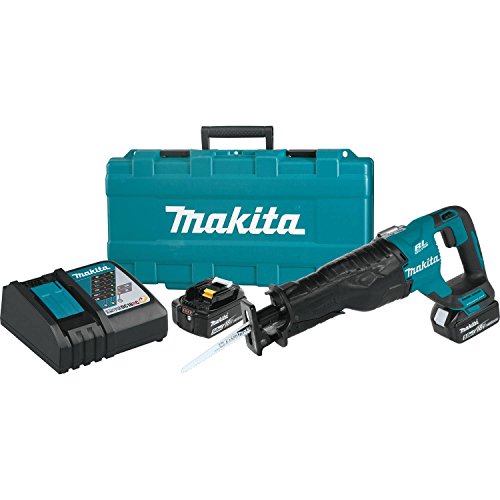
The Makita XRJ05 and Bosch GSA18V-125 are both 18V-class cordless reciprocating saws aimed at demanding cutting, but they suit different priorities. The Makita is the more straightforward choice for general remodeling: it is compact for its class, has a two-speed selector, and uses Makita’s common 18V LXT battery platform. The Bosch stands out for its orbital action, which can speed up rough cuts in wood, and its adjustable shoe.
Neither is automatically the better buy. If most of your work is demolition, where speed through framing lumber matters more than a clean edge, the Bosch’s orbital setting is useful. For mixed work, tighter access, or a shop already invested in LXT batteries, the Makita is easier to justify. Check the exact kit contents and current specifications before buying: bare-tool listings and regional versions can differ.
As an Amazon Associate we earn from qualifying purchases at no extra cost to you.


Key differences at a glance
| Feature | Makita XRJ05 | Bosch GSA18V-125 |
|---|---|---|
| Battery platform | 18V LXT | 18V Bosch Professional |
| Stroke length | 1-1/4 in. | 1-1/4 in. |
| Strokes per minute | 0–2,800 | 0–2,500 |
| Cutting action | Two-speed selection; no orbital action | Orbital action can be switched on for faster, rougher wood cutting |
| Tool-free blade change | Yes | Yes |
| Best fit | General remodeling and LXT users | Fast rough cuts and users who value an adjustable shoe |
These figures describe tool capability, not guaranteed job speed. Blade type, battery charge, material, and cutting technique can matter as much as the small difference in maximum stroke rate. Both tools accept standard reciprocating-saw blades, so you are not locked into a proprietary blade system.
Cutting performance in remodeling
The Makita’s 1-1/4-inch stroke and 2,800 strokes per minute make it capable of fast work in wood, plastic, and metal with an appropriate blade. Its two-speed selector is handy when you want a more controlled pace for metal pipe, trim, or cuts near finished surfaces. It does not have the Bosch’s orbital mode, so it is less focused on maximizing speed in rough wood demolition.
The Bosch’s orbital action moves the blade more aggressively through wood. That can make a noticeable difference when cutting studs or opening up framing, but it also makes the cut rougher and can increase vibration and blade wear. Switch to a straight cutting action for metal, plastic, or work where control matters. The 1-1/4-inch stroke is the same as the Makita’s; Bosch trades some maximum stroke speed for the option to change the cutting action.
For either saw, the wrong blade is a common cause of slow cuts, bent blades, and overheating. Use a long demolition blade when cutting through lumber that may contain nails, and a blade suited to the metal’s thickness for pipe or fasteners. Keep the shoe firmly against the work when possible. Letting the saw hang unsupported puts extra load on the blade and makes it easier to twist or snap.
Handling and access
Reciprocating saws are not precision tools, and both can feel tiring during extended overhead work. Their weight depends on the battery fitted, so compare complete, ready-to-use setups rather than bare-tool figures. A large-capacity battery can extend runtime but adds weight at the back of the handle; a smaller pack is easier to maneuver in a wall cavity or above a ceiling.
The Bosch’s adjustable shoe helps expose a fresh section of blade as the teeth wear and gives another way to position the tool against the work. The Makita has a two-speed control and a familiar, compact layout that suits quick cuts in confined spaces. In a tight opening, neither feature replaces planning the cut: check for wiring, plumbing, and hidden fasteners, and avoid pushing the blade beyond what the space allows.
Batteries, kits, and value
Battery platform is often the deciding factor. If you already own compatible LXT packs and chargers, the Makita bare tool can be the sensible purchase. If your batteries are Bosch Professional 18V, the same logic points to the GSA18V-125. Do not assume a tool-only price tells the whole story: a new battery, charger, and case can make a seemingly cheaper saw the more expensive package.
For occasional home renovation, either tool may be more saw than you need. A less expensive cordless reciprocating saw is fine for a few cuts through lumber or pipe, provided it accepts common blades and has enough power for the material. Browse cordless reciprocating saws if you do not need the performance or platform features of these two.
Which one should you buy?
Choose the Makita XRJ05 if you already own LXT batteries, want a capable all-purpose saw, or expect a mix of wood, metal, and plastic cutting. Its higher maximum stroke rate does not guarantee faster cuts in every material, but the two-speed selector gives you a simple way to temper the tool for controlled work.
Choose the Bosch GSA18V-125 if your remodeling involves frequent rough cuts in framing and you will use its orbital setting, or if its adjustable shoe suits your work. That advantage is less compelling if you mostly cut metal, make occasional small cuts, or already have a different Bosch 18V saw that meets your needs.
Before buying, compare the full kit price and inspect the included blade. A stock blade may be adequate for a first test cut, but it is rarely the right choice for every demolition task. For dependable results, budget for blades matched to the materials you actually cut; a set of reciprocating-saw demolition blades is often a more useful upgrade than paying extra for a larger battery you may not need.