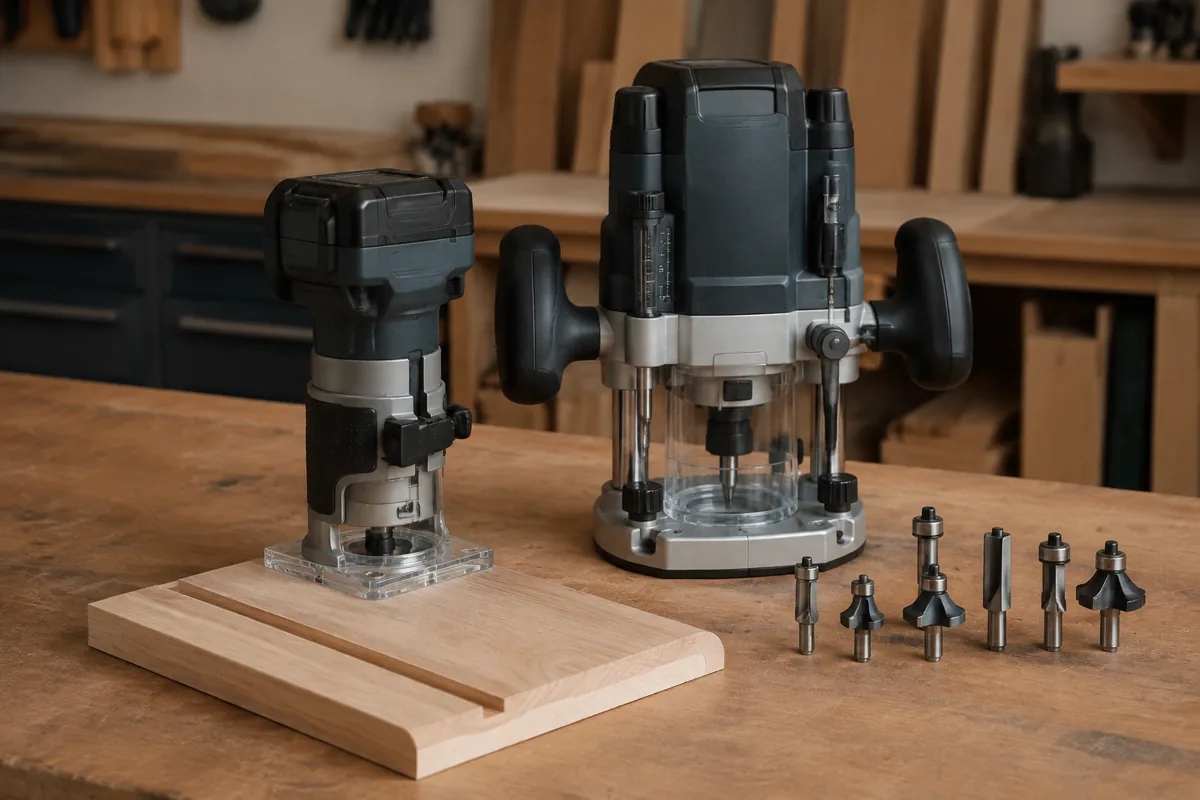
What's inside
As an Amazon Associate I earn from qualifying purchases. This post may contain affiliate links at no extra cost to you.
Both the Makita RT0701C and DeWalt DWP611 are compact, corded trim routers with a 1.25-horsepower motor and a 1/4-inch collet. Either can handle edge profiling, laminate trimming and small roundovers. The practical difference for many users is how the motor housing moves and locks when setting bit height: Makita uses a separate rack-and-pinion adjustment mechanism, while DeWalt uses a ring-style depth adjustment. Which feels easier depends on whether you value controlled movement or quick, simple changes.
As an Amazon Associate we earn from qualifying purchases at no extra cost to you.


Our Top Picks

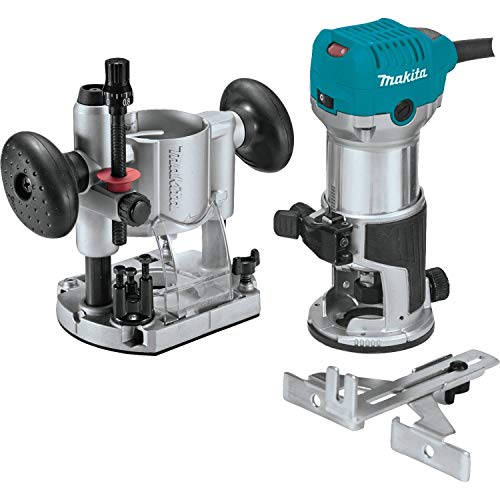


At a glance
| Feature | Makita RT0701C | DeWalt DWP611 |
|---|---|---|
| Motor | 1.25 hp; variable speed | 1.25 hp; variable speed |
| Speed range | 10,000–30,000 rpm | 16,000–27,000 rpm |
| Depth adjustment | Rack-and-pinion mechanism with clamp | Depth-adjustment ring with clamp |
| Collet | 1/4 inch | 1/4 inch |
| Lighting | No built-in work lights | Dual LED work lights |
| Best fit | Frequent, deliberate bit-height changes | Quick setup and better visibility at the cut |
How the depth adjustment differs
On the Makita, a rack-and-pinion mechanism moves the motor housing up or down as you turn the adjustment control. The movement is predictable and easier to meter than simply sliding the housing by hand. That helps when you are sneaking up on a final depth, such as when making several shallow passes in hardwood or fitting a hinge recess. Once the height is set, tighten the clamp before routing; an adjustment mechanism is not a substitute for a locked housing.
The DeWalt’s adjustment ring offers a more direct setup. Loosen the clamp, turn the ring to raise or lower the motor, then secure the housing. It is straightforward for routine edge work, and the ring gives your hand a clear control point. It can feel faster when making a larger adjustment, though fine setting still takes care: check the bit against the workpiece or a straightedge rather than trusting a turn of the ring to correspond to a precise cut depth.
Neither design gives you the repeatability of a plunge router with a depth stop. If a job calls for several carefully matched depths, measure the setup and make a test cut in scrap. A change as small as 1/32 inch can be visible in a shallow profile or cause a shoulder to sit proud.
Which is easier to set?
For controlled adjustments, the Makita has the edge. Its geared movement is useful for small corrections because the housing advances in a deliberate way instead of relying on a smooth slide. It is a good choice if you often adjust depth between passes, work to a marked profile, or want a little more control while dialing in a cut.
The DeWalt is easier to approach if you prefer a simple ring adjustment and want a router that feels quick to set for common trim work. Its two LEDs also illuminate the bit area, which helps when judging alignment on a dark work surface. That visibility does not improve depth accuracy, but it can reduce setup mistakes around a pencil line or template edge.
In either case, unplug the router before changing bits. Seat the shank fully, then pull it back slightly before tightening the collet; do not bottom the shank against the collet nut. After setting depth, make sure the base and motor are secure, and check that the bit clears the base through the full rotation.
Performance and trade-offs
Both routers have variable-speed control, but their ranges differ. The Makita runs from 10,000 to 30,000 rpm, while the DeWalt runs from 16,000 to 27,000 rpm. The Makita’s lower minimum can be helpful with some larger-diameter bits, where running at top speed may be inappropriate. Always follow the bit maker’s speed guidance; a small trim router is not meant for oversized cutters.
The DeWalt’s LEDs are its clearest convenience advantage. The Makita is often the more appealing value if you do not need built-in lighting and want its geared depth adjustment. Neither is a plunge router, and neither uses a 1/2-inch collet. For deep grooves, large panel-raising cutters or frequent depth changes that require a stop, consider a plunge router instead.
A common failure mode with both tools is allowing the base or motor clamp to remain slightly loose. The bit can shift under load, leaving an uneven edge or a cut deeper than intended. Another is trying to remove too much material in one pass. With a small bit, a light pass is often clean; with a wider profile, several passes reduce strain, chatter and the chance of burning the wood.
Which one should you buy?
Choose the Makita RT0701C if depth control is your priority and you expect to make frequent, small height adjustments. Its rack-and-pinion action is the more controlled approach, and the wider speed range adds flexibility for suitable bits. It is also the sensible pick if you already have compatible Makita bases or accessories, but verify compatibility before buying an extra base.
Choose the DeWalt DWP611 if you want a straightforward ring adjustment, value the LEDs, or find it at a better price. For rounding over cabinet edges, trimming laminate and other everyday jobs where you set the height once and work steadily, the DeWalt is not a compromise that should put you off. A compact trim router is a practical choice for those tasks, and the cheaper of these two is fine if its adjustment style suits you.
Before ordering, compare the included base and accessories in the exact package. Kits can differ, and a bare tool may not include the guide or base you expect. If you routinely use templates, a router guide-bushing set may be more useful than paying extra for a feature you rarely use. For the narrow question of easier bit-depth adjustment, the Makita is the better pick for measured, incremental changes; the DeWalt is easier for quick, uncomplicated setup.