What's inside
As an Amazon Associate I earn from qualifying purchases. This post may contain affiliate links at no extra cost to you.
Our Top Picks


The best choice for cutting pressure-treated 2x lumber
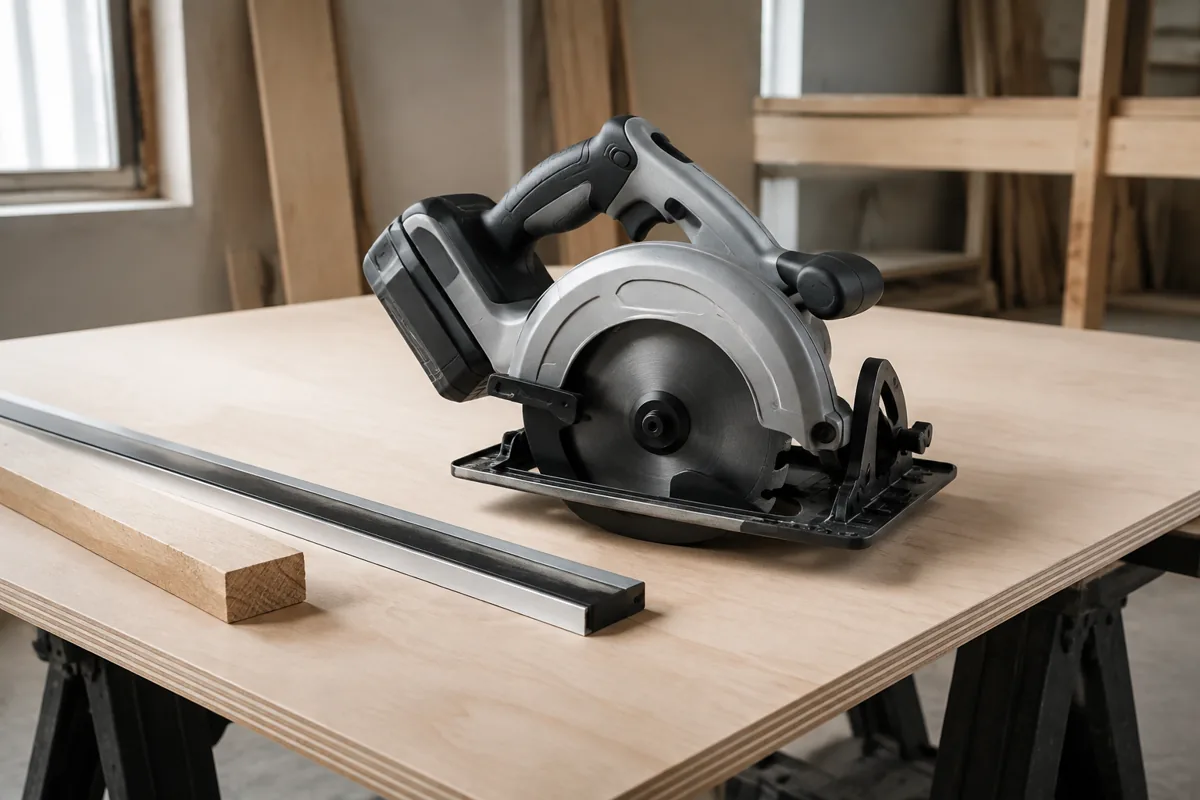
For most homeowners and deck builders, the best cordless circular saw for pressure-treated 2x lumber is a 7-1/4-inch, 18V or 20V saw with a brushless motor, a 24-tooth carbide framing blade, and a battery of at least 5.0Ah. That setup cuts standard 1-1/2-inch-thick lumber easily and has enough blade depth to cut a 2x in one pass.
Buy a rear-handle saw if you regularly make long, straight cuts in framing stock and prefer its balance. Choose a conventional sidewinder if you want a lighter, more compact saw for general work. A 6-1/2-inch saw is a reasonable cheaper or lighter option, but check its depth capacity: some models cannot quite cut a 2x cleanly at a full 45-degree bevel.
As an Amazon Associate we earn from qualifying purchases at no extra cost to you.


What matters with wet, treated lumber
Pressure-treated boards are often damp, heavy, and inconsistent in density. They can bog down a weak saw more readily than dry framing lumber, especially during a long cut or when the blade is dull. A high-capacity battery helps maintain performance; a 5.0Ah pack is a useful starting point, while a 2.0Ah pack may run out sooner and feel less capable under sustained load. Battery voltage alone does not guarantee cutting power, so compare the complete saw-and-battery system.
Use a sharp carbide blade intended for framing. A 24-tooth blade generally clears wet chips quickly and cuts faster than a fine-finish blade. If tear-out matters, make a shallow scoring pass first or use a sharper blade with more teeth, accepting a slower cut. For repeated cuts, a spare blade is more useful than forcing a dull one through the stock.
Look for a sturdy shoe, readable bevel scale, dependable blade brake, and easy depth adjustment. The shoe rides on the board; if it flexes or catches on a rough edge, the cut can wander. A brake reduces the time the blade spins after you release the trigger, but it does not make the saw safe to set down before the blade stops.
Compare the main saw types
| Saw type | Best for | Trade-off | What to check |
|---|---|---|---|
| 7-1/4-inch sidewinder | Most deck, fence, and framing cuts | Heavier than compact saws | Depth capacity, shoe stiffness, battery size |
| 7-1/4-inch rear-handle | Long cuts and frequent framing work | Bulkier and often more expensive | Balance, visibility, comfort in your cutting stance |
| 6-1/2-inch circular saw | Occasional straight cuts and lighter carry | Less depth margin, especially on bevels | Whether it cuts a 2x at 45 degrees |
| Compact saw with smaller blade | Trim and light-duty cuts | May require multiple passes on thick stock | Maximum cut depth and blade availability |
A 7-1/4-inch blade commonly offers about 2-1/2 inches of cut depth at 90 degrees, enough for a nominal 2x board that measures 1-1/2 inches thick. Bevel capacity is lower, so check the manufacturer’s specifications before expecting a single-pass 45-degree cut. A 6-1/2-inch blade may manage a square cut but leave little margin for an angled one.
How to choose without overbuying
If you already own batteries in a cordless tool platform, start there. A bare saw can be the best value, provided you have a sufficiently large compatible battery and charger. If you are buying into a system, compare the cost of the saw, battery, and charger rather than judging the tool-only price. For occasional deck repairs, a standard brushless sidewinder kit is usually more practical than paying extra for a rear-handle design.
Browse brushless 7-1/4-inch cordless circular saws if you want the broadest choice for repeated 2x cuts. If you have a compatible battery platform and prefer a lighter tool, compare 6-1/2-inch cordless circular saws, but verify the bevel depth before buying.
Paying more for a premium saw makes sense if you cut treated lumber most days, need consistent performance through long runs, or value a better shoe and more precise adjustments. For a handful of cuts on a small project, a budget saw is fine if it has enough depth, a sharp blade, and a suitable battery. Slow down rather than forcing it when the motor audibly bogs.
Make the cut safely and cleanly
Support the board so the offcut cannot pinch the blade as the cut closes. Clamp short pieces, and keep both hands on the saw during the cut. Set the blade depth just beyond the board—roughly 1/8 inch of tooth projection below the work is a useful target. More exposed blade increases the hazard without helping the cut.
Keep the shoe flat against the lumber and let the saw reach full speed before entering the cut. Feed steadily; if the motor slows sharply, ease off rather than pushing harder. Pinching, binding, a wandering cut, or a hot battery are signs to stop and check the support, blade sharpness, and cut alignment. Disconnect the battery before changing blades or clearing packed chips.
Wear eye and hearing protection, and follow the treatment-chemical handling instructions on the lumber. Do not burn treated offcuts. For repeated cuts, a clamped straightedge or a circular-saw guide improves accuracy more than trying to steer by eye. A basic guide is often enough; a track saw is unnecessary for rough framing cuts.