What's inside
As an Amazon Associate I earn from qualifying purchases. This post may contain affiliate links at no extra cost to you.
Our Top Picks
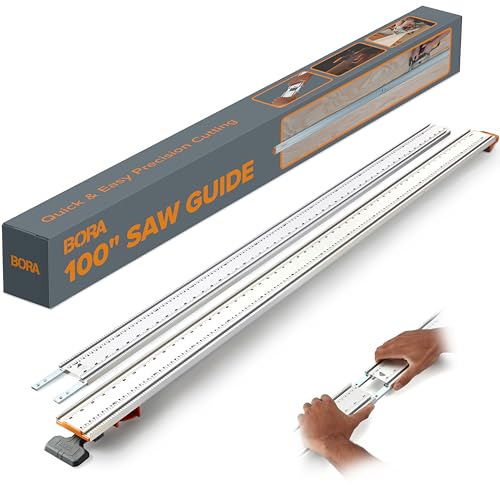

Short answer: the Bora is easier to align for repeat cuts
If your main goal is to position a straightedge quickly and clamp it securely, the Bora NGX Clamp Edge is generally the more straightforward guide. Its built-in clamping action fixes the rail to the workpiece without separate clamps hanging below the edge. The Kreg Accu-Cut is easier to start accurately when you need a guide rail attached directly to the saw, especially for breaking down sheet goods. That convenience comes with a setup step: the first cut trims its adhesive guide strip to match your saw.
Neither one automatically makes a cut square or eliminates splintering. The right choice depends on whether you value fast positioning on different workpieces or a saw-and-rail setup that travels together.
As an Amazon Associate we earn from qualifying purchases at no extra cost to you.


How the guides work
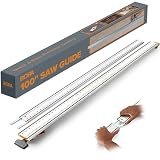
The Bora NGX is an edge-clamping straightedge. You place its fence against a marked cut line, then tighten the integrated clamp to grip the panel. The saw runs against the guide edge. This makes it useful for ripping plywood, trimming doors, or cutting sheet goods when you want to set the guide separately from the saw.
The Kreg Accu-Cut uses a guide rail with a saw sled. The circular saw sits on the sled, which runs along the rail. An adhesive strip on the rail helps resist movement and provides a zero-clearance edge after it is trimmed to your saw’s blade path. It is a system-style setup, but the saw is still a regular circular saw—not a plunge saw with a fully enclosed track.
At a glance
| Factor | Bora NGX Clamp Edge | Kreg Accu-Cut |
|---|---|---|
| Alignment method | Position fence on cut line; clamp to workpiece | Position adhesive-backed rail; run saw in sled |
| Setup before first cut | Check saw clearance and fence position | Fit saw and trim the guide strip to the blade path |
| Best fit | Frequent straightedge positioning on varied stock | Breaking down sheet goods with a guided saw |
| Common alignment error | Measuring from the wrong part of the saw’s base | Rail shifts or is placed beside, rather than on, the cut line |
| Portability | Long rail is awkward to store and handle | Rail and sled are portable, but take up space as a set |
Which is easier to align?
For repeated cuts where you can measure and set a fence, the Bora usually takes less fuss. Mark the cut, account for the distance from the saw blade to the saw base’s guide edge, position the rail, and clamp it. The important measurement is not simply the blade-to-mark distance; it is the offset between the blade and the edge that rides against the Bora fence. Confirm that offset with a test cut. A few millimeters of error can spoil a cabinet side or leave a panel too narrow.
The Kreg can be easier for a beginner making a long cut in a large panel because the sled keeps the saw aligned with the rail. But the rail has to be placed carefully. If it is not positioned with its trimmed edge exactly on the intended blade line, the cut will miss the mark. On the first use, trimming the guide strip is a one-time setup; after changing saws or altering the setup, check the edge again. Dust, worn adhesive, or a dirty panel can also make the rail creep.
Whichever system you choose, make a test cut on scrap and measure both ends. A guide can keep a saw straight while still producing the wrong-size part.
Accuracy, cut quality, and failure modes
The Accu-Cut’s trimmed guide strip gives a useful visual reference for where the blade will cut and helps support the surface fibers beside the blade. That can reduce tear-out on plywood, particularly when the good face is positioned appropriately for the saw’s blade rotation. It does not guarantee a chip-free edge: a dull or coarse blade, excessive feed speed, or unsupported offcut can still tear the veneer.
The Bora’s exposed fence edge is simple and durable, but it does not provide the same close-fitting, replaceable zero-clearance edge along the blade path. Use a sharp plywood blade and support the full panel. Keep the saw base firmly against the fence through the whole cut; if it twists away near the end, the cut can wander even though the rail itself has not moved.
Both guides need room for the saw and its cord, and both require a stable work surface. Support a full 4-by-8-foot sheet on foam insulation, a sacrificial cutting surface, or a well-planned support arrangement. Do not let the offcut drop and pinch the blade. Clamping or sticking a guide to a panel is not a substitute for keeping hands clear of the saw path.
Which one should you buy?
Choose the Bora if you often move a straightedge between different boards or panels, want integrated clamping, and are comfortable calculating the saw-base offset. It is especially appealing when you already own a saw and want a quick way to guide straight cuts without fitting that saw to a sled. For occasional cuts, a securely clamped straightedge can be enough, so compare the rail’s length and clamping range with the panels you actually cut.
Choose the Accu-Cut if most of your work is breaking down plywood and you want the saw to ride in a dedicated sled. Its guide strip makes blade placement easier to see, and the rail-and-sled arrangement can feel more controlled on long cuts. Make sure your circular saw fits the sled and that the rail length covers your usual cut. A short rail may not span a full panel in one pass.
If neither design suits your work, compare a circular saw guide rail for your saw type or a clamp-on straightedge guide. Check actual usable length, compatibility, and how the system secures to your material—not just the advertised maximum cut length.
A quick alignment check before cutting
Use a tape measure or square to mark both ends of the cut, then position the guide against both marks. Check the saw’s blade-to-guide offset on a scrap piece, and make sure the base can travel without hitting clamps or rail hardware. For the Kreg, press the rail onto a clean, flat surface and verify the trimmed edge follows the intended line. For the Bora, tighten the clamp enough to prevent movement without bowing the rail or damaging the workpiece.
Make a shallow test pass if the material and setup allow it, then measure the result. That small check is faster than discovering the guide was off after a full-length cut.