Key takeaways
- A jobsite saw buys portability and fence accuracy, a contractor saw buys mass and quiet running: here is which one fits your space, your stock and your budget.
What's inside
As an Amazon Associate I earn from qualifying purchases. This post may contain affiliate links at no extra cost to you.
Both saws rip a 2×4 and both crosscut trim, so the jobsite table saw vs contractor saw decision is not really about the cut. It is about weight, where the saw lives between jobs, how much of the price goes into the fence instead of the motor, and whether you can even buy one this month without arranging freight. Get that wrong and you either fight a folding stand in a garage that never moves, or you own a few hundred pounds of cast iron that cannot follow you to a job.
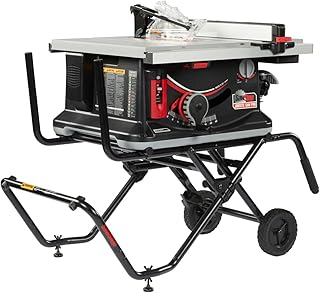
Naming muddies it further, because retailers will call anything with legs a contractor saw. We are using the traditional definitions. A jobsite saw is a direct drive portable: universal motor, alloy or composite top, folding or wheeled stand, built to be lifted. A contractor saw is the older stationary pattern, a belt driven induction motor hanging off the back of a cast iron top on an open leg stand, built to be set up once and left there.
As an Amazon Associate we earn from qualifying purchases at no extra cost to you. Product prices and availability are accurate as of the date shown and are subject to change.


| Factor | Jobsite table saw | Contractor saw |
|---|---|---|
| Design brief | Portability and fast setup | Smooth, quiet, repeatable cuts |
| Motor | Direct drive universal, loud, instant | Belt driven induction, quieter, longer lived |
| Dust | Shrouded blade and one port for a shop vac | Open underside, wants a bag or collector |
| Selection | Wide, corded and cordless, stocked everywhere | Thin and shrinking, often special order or used |
| Price behavior | Deep seasonal discounts and stand bundles | Stable, freight sensitive, strong used market |
| Warranty pattern | Multi year limited from power tool brands | Varies by maker, dealer and parts support matter |
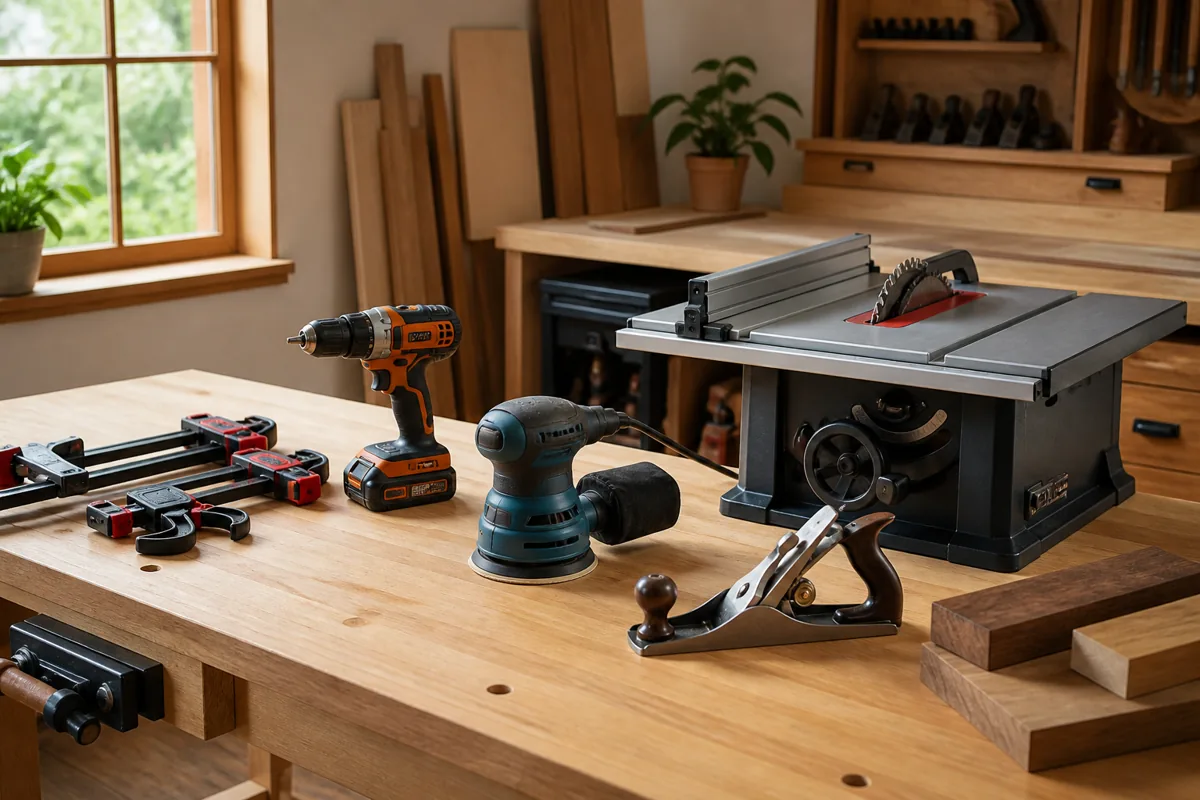
Jobsite table saw vs contractor saw: two opposite design briefs
A jobsite saw is engineered around the moment you pick it up. The universal motor is compact and spins up instantly, the top is light alloy or filled composite, and the money a stationary saw spends on iron goes into the fence and stand instead. That is why the better portables carry rack and pinion fences that move both rails together and land square without fiddling.
A contractor saw is engineered around the cut, and mass is the feature. Cast iron soaks up vibration, the induction motor shrugs off sustained load, and the belt drive keeps motor buzz away from the blade. Everything else is logistics: it is heavy, the open bottom leaks dust into the room, and the trunnions usually hang from the table rather than the cabinet, so alignment takes patience.
Worth knowing before you spend: the blade closes most of the gap on cut quality. A sharp thin kerf 40 to 50 tooth blade on a good portable beats a stationary saw running the dull blade it shipped with.
Rack and pinion jobsite saw
If you cannot decide, start here. Portables with rack and pinion fences deliver repeatability that used to require a stationary machine. Compare rip capacity to the right of the blade, because that number is the real difference between models in this class.
Range and availability: the contractor category is shrinking
The jobsite category is crowded and healthy. Compact benchtops, full size portables on rolling stands, and cordless models on the big battery platforms such as DeWalt FlexVolt, Milwaukee M18 and Makita XGT. It all ships to your door, with several credible options at every tier.
The classic contractor saw has been squeezed out. Makers largely replaced it with the hybrid, an enclosed cabinet base holding a lighter induction motor, because a closed base actually collects dust and cabinet mounted trunnions are easier to adjust. If you want the open stand pattern specifically, expect a thin selection, special orders, freight, and a used market where most of these saws now change hands.
Cordless jobsite saw
Makes sense if you already own the battery platform and work in unfinished or outdoor spaces. Skip it if the saw will sit beside an outlet forever, since you pay a premium for freedom you will not use.
Price behavior, warranty and the costs nobody quotes
Jobsite saws are consumer power tools, so they follow retail sale cycles. Spring, Father’s Day, the summer Prime event and Black Friday are when portables get discounted and bundled with stands, and cordless versions are usually better value inside a battery and charger kit than bought bare. Stationary saws run on another rhythm: stable pricing, real shipping and liftgate costs, and used cast iron that holds value stubbornly.
Warranty splits the same way. Power tool brands generally attach a multi year limited warranty to jobsite saws plus a short satisfaction window, backed by service centers. Stationary makers vary, and what matters there is parts availability and dealer support five years out, so read the specific listing rather than trusting a category rule.
One more line item: a portable wants a better blade and a shop vac, while a contractor saw wants a mobile base, dust collection and outfeed support.
Dust, noise and safety hardware
Dust is the strongest argument against a traditional contractor saw in an attached garage or finished basement. The open bottom drops fine dust into the room and a shop vac cannot move enough air through it. Jobsite saws shroud the blade and give you one port a vacuum can handle. Noise runs the other way, since induction motors hum and universal motors scream.
On safety, keep the hardware on the saw. New saws sold in the US ship with a riving knife, blade guard and anti kickback pawls, and the riving knife is the most effective anti kickback part on the machine. Plenty of used contractor saws predate that standard and came with a splitter only, so budget for an aftermarket riving knife or accept the limitation knowingly. Flesh detecting saws exist in both categories at a premium.
Who should buy which
Buy the jobsite saw if it travels, if the shop shares space with a car, if you mostly cut sheet goods, framing lumber and trim, or if you need it this week. Buy the stationary pattern if the saw stays put, you rip hardwood regularly, you already own dust collection, and you value quiet running over portability. Still torn and have the floor space? The hybrid is the sensible modern version of the contractor saw.
- ✔ Moves to the work, or outside for dusty rips
- ✔ Rack and pinion fences give stationary accuracy at portable money
- ✔ Widest selection and genuine seasonal discounts
- ✔ Fits a garage that still has to hold a car
- ✘ Universal motors are loud and bog in thick hardwood
- ✘ Light tops flex and vibrate more than cast iron
- ✘ Small table, so outfeed and side support are on you
- ✘ Tight rip capacity on entry tier models
Cast iron stationary saw
Only worth it if the saw gets a permanent home. You are buying mass, quiet running and a smoother feed in hardwood, and accepting freight, assembly and a dust collection project. Compare enclosed base hybrids in the same search results before committing.
Frequently asked questions
Is a contractor saw more accurate than a jobsite table saw? Not automatically. A modern rack and pinion fence is often more repeatable than an old rail fence, and blade choice matters more than either. The stationary saw wins on stability under load, so long rips in thick stock stay flatter and feel more controlled.
Can a jobsite table saw rip hardwood? Yes, within reason. Use a thin kerf blade, feed slower, and let the motor recover between cuts. If ripping thick hardwood is daily work rather than an occasional job, an induction motor saw is the right tool.
Is a used contractor saw a better buy than a new portable? Often on paper. Check the trunnions, arbor bearings and fence, budget for a riving knife on older machines, and be honest about moving it. A new portable brings a warranty, a full guard set and next day availability.
Neither category wins in the abstract. The portable is the right first table saw for most people working in shared space, and the stationary pattern earns its keep once the saw stops moving and the stock gets thicker. Decide where the saw will live, then shop.
Check prices on Amazon →