What's inside
As an Amazon Associate I earn from qualifying purchases. This post may contain affiliate links at no extra cost to you.
Melamine chips because its hard resin surface is brittle while the particleboard or MDF core is relatively soft. A general-purpose blade can cut the panel, but its teeth often break the top coating as they enter or leave the sheet. The right blade reduces this damage; it does not eliminate the need for proper support, a steady feed, and a well-adjusted saw.
Choose the right tooth count
For a 7-1/4-inch circular saw, start with a blade in the 60-tooth range. A 40-tooth blade can work for occasional cuts, but it removes more material per tooth and is more likely to chip the melamine. An 80-tooth blade usually leaves a cleaner edge, though it cuts more slowly and can load up with resin if you force the saw.
| Blade type | Best use | Cut quality | Trade-off |
|---|---|---|---|
| 24-tooth framing blade | Rough construction cuts | Poor on melamine | Fast and cheap, but commonly chips both faces |
| 40-tooth general-purpose blade | Occasional panels and mixed materials | Acceptable with careful technique | More affordable, but not the cleanest edge |
| 60-tooth fine-finish blade | Most melamine and laminate sheet work | Very good | Slower feed and higher purchase price |
| 80-tooth melamine or laminate blade | Visible cabinet edges and repeated work | Excellent when properly supported | Slowest option and more sensitive to pitch buildup |
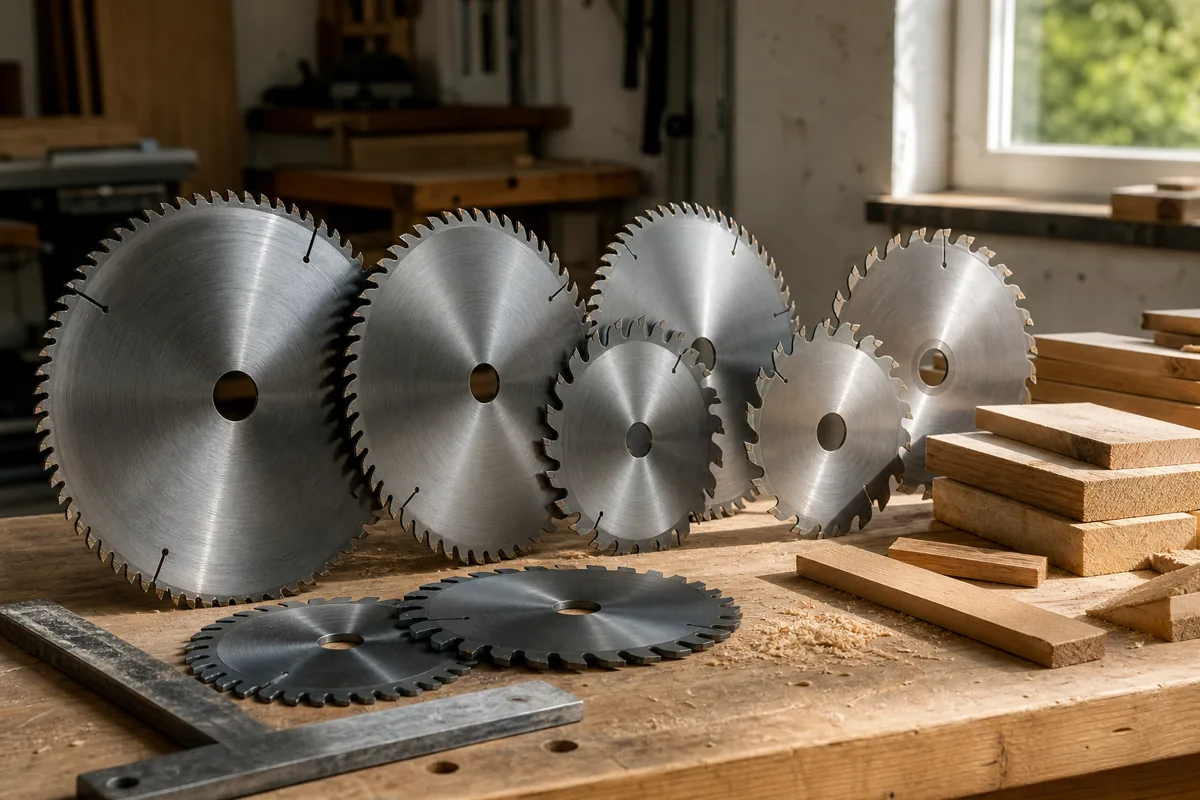
Tooth count alone is not enough. Look for a blade specifically described for melamine, laminate, plywood, or fine panel work, such as these 60-tooth melamine saw blades. They typically have carbide teeth shaped and arranged to reduce breakout, rather than simply adding teeth to a standard blade.
Look for TCG teeth and durable carbide
Triple-chip grind, usually marked TCG or triple-chip, is a strong choice for melamine. The tooth pattern alternates between a cutting tooth and a trapezoidal tooth. The trapezoidal tooth trims the edge instead of aggressively digging into the coating. This is particularly useful on hard laminates and melamine-faced board.
Alternate-top-bevel blades can also produce clean cuts, especially in plywood and solid wood. For melamine, however, a quality TCG blade is generally the safer purchase when the edge will be visible. Choose carbide with a reasonably wide top face and a flat, consistent grind. Very cheap blades may claim a high tooth count but have poorly finished teeth that leave a rough, chipped edge.
If you cut only one or two sheets, a mid-priced TCG laminate or melamine blade is usually enough. A premium blade makes more sense for cabinet installation, repeated production cuts, or jobs where replacing a chipped panel costs more than the blade.
Match the blade to your saw
Confirm the diameter, arbor size, and maximum rated speed before buying. Most standard 7-1/4-inch circular saws use a 5/8-inch diamond or round arbor, while some compact saws use smaller blades and different arbor sizes. The blade must be rated for at least the saw’s no-load speed. Never install a blade that is too large or use a reduction ring that does not fit tightly and correctly.
Thin-kerf blades remove less material and require less power. They are useful on a lower-powered cordless saw, but thin blades can deflect if you push sideways or let the panel pinch the cut. A full-kerf blade is usually more stable on a powerful corded saw, provided the saw can drive it without slowing excessively.
Check the blade’s kerf against the saw’s riving knife, if fitted. A riving knife that is thicker than the blade kerf can bind in the cut. Also check that the saw’s base is flat and that the blade has no bent teeth or resin deposits.
Set up the cut to prevent chipping
On a standard circular saw, the blade teeth enter the panel from the underside and exit through the top. Because the exit side usually chips more, place the finished face down when cutting with a conventional saw. If your saw cuts upward from below, this puts the visible face against the saw shoe.
Use a straightedge or guide rail. A guided saw is easier to hold at a constant angle than a freehand saw, and a square cut reduces side loading on the teeth. Support the sheet continuously on both sides of the cut with rigid foam insulation or closely spaced supports. If the panel sags, the kerf can close behind the blade and tear the surface.
Apply painter’s tape along the cut line if the surface accepts it without leaving adhesive. Tape helps hold the coating together, but it is not a substitute for a suitable blade. Score the line first with a sharp utility knife when making a short, highly visible cut. Cut through the melamine cleanly without pressing so hard that the knife slips into the finished area.
Use the correct cutting technique
Set the blade depth only about 3 to 6 millimeters below the panel. Excessive blade exposure increases the length of tooth contact and can worsen breakout. For a typical 19-millimeter panel, about 22 to 25 millimeters of total blade depth is enough.
Let the motor reach full speed before entering the panel. Keep the saw shoe flat and advance at a steady rate. Pushing too slowly can polish or heat the melamine; pushing too quickly overloads the teeth and causes chipping. If the motor note drops sharply, reduce feed pressure rather than forcing the cut.
Make test cuts in an offcut first. Inspect both faces and the first 100 millimeters of the cut, where many blades chip as they settle into the material. If the edge is still poor, try a higher tooth-count TCG blade, reduce the feed rate, or use a fresh blade. A blade that has been dragged through nails, abrasive board, or dirty flooring may look sharp while producing a chipped finish.
When a cheaper blade is enough
A 40-tooth combination blade is fine for hidden cabinet parts, shelf bottoms, or cuts that will be covered by edge banding. It is also sensible when you are cutting a single inexpensive panel and can hide the rough edge with trim. Spend more on a 60- or 80-tooth TCG blade when both faces are visible, the edge receives iron-on or adhesive edge banding, or you need several consistent cuts without repeated test fitting.
For the cleanest results on expensive cabinet panels, a track saw with a matching fine-finish blade can be easier to control than a handheld circular saw. It costs more, but its guide, plunge action, and stable base reduce the technique problems that cause most melamine chips.