What's inside
As an Amazon Associate I earn from qualifying purchases. This post may contain affiliate links at no extra cost to you.
Our Top Picks

Quick verdict
For heavy framing, the Bosch GKS18V-68C is the better choice for most buyers who want a cordless rear-handle saw without managing two batteries. It delivers serious cutting power from one 18V battery, has a slightly more compact setup, and includes useful connected-tool features.
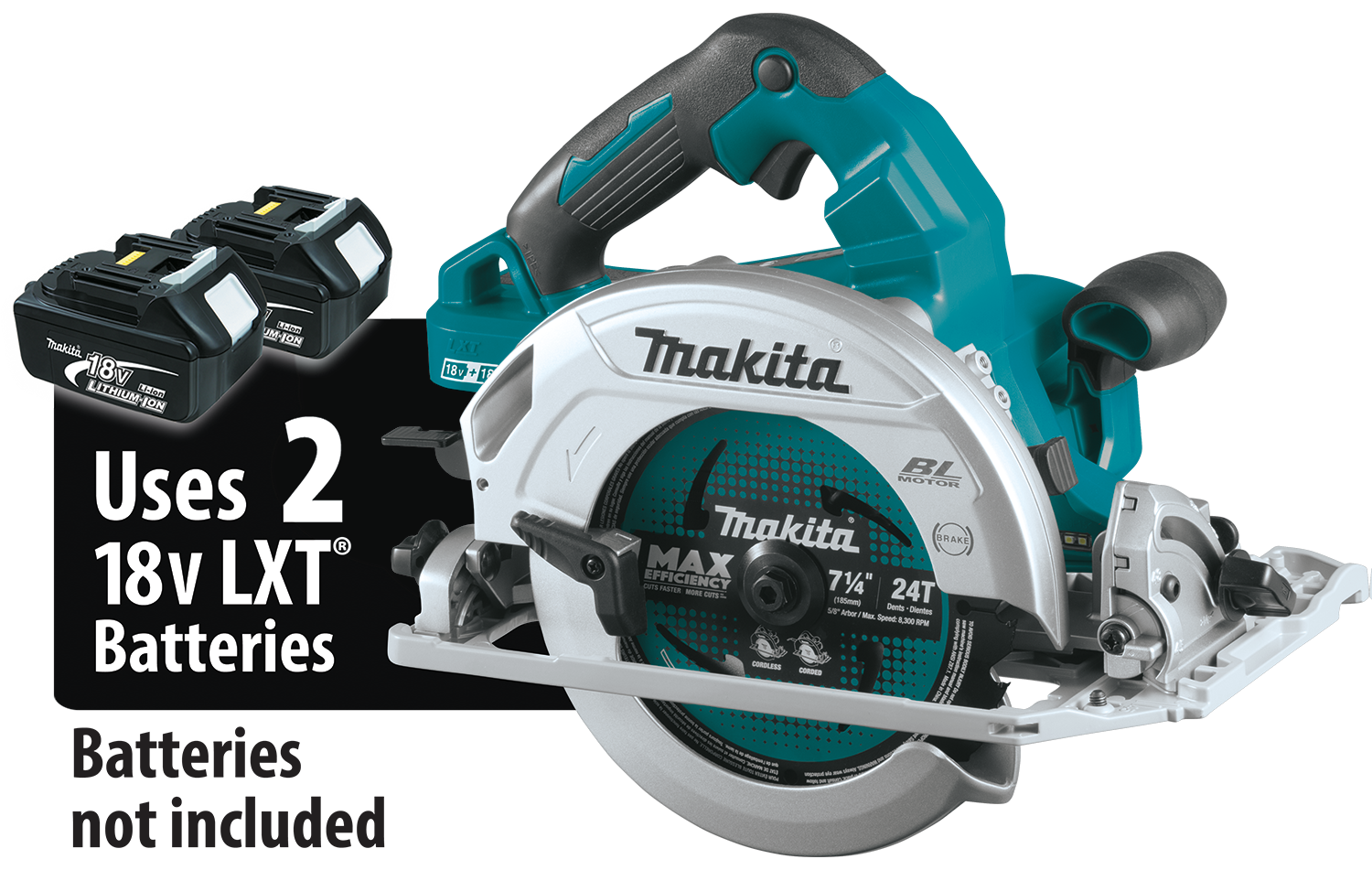
The Makita XSH08 is still an excellent saw. It runs smoothly, has strong cut-line visibility, and is a sensible pick if you already own several Makita 18V LXT batteries. Its main disadvantage is that it requires two batteries for every job. That adds cost, weight, charging logistics, and another possible failure point.
As an Amazon Associate we earn from qualifying purchases at no extra cost to you.


Either saw is appropriate for repeated cuts in dimensional lumber, roof sheathing, rim boards, and beams. Neither is as convenient as a small sidewinder for occasional 2×4 work.
Bosch GKS18V-68C vs Makita XSH08 specifications
| Feature | Bosch GKS18V-68C | Makita XSH08 |
|---|---|---|
| Battery system | One 18V battery | Two 18V LXT batteries |
| Blade size | 7-1/4 inches | 7-1/4 inches |
| Maximum cutting depth at 90° | About 2-5/8 inches | About 2-5/8 inches |
| Bevel range | Up to 50° | Up to 48° |
| No-load speed | 5,000 rpm | 5,100 rpm |
| Dust port | Yes | Yes |
| Notable feature | BITURBO motor and connectivity | Automatic Speed Change and dual-battery LXT platform |
Cutting performance in heavy framing
Both saws have enough capacity to cut a 2x dimensional board in one pass at 90 degrees, including a 2×12. They can also handle common double-stud assemblies and most roof sheathing without feeling underpowered. A 7-1/4-inch blade gives roughly 2-1/8 inches of depth at 45 degrees, so angled cuts through thick material may require a second pass or a different saw.
The Bosch has the stronger argument when the cut is long, the lumber is wet, or the blade is dull. Its BITURBO motor is designed to produce corded-level output when paired with a high-output Bosch battery. In practice, that means less bogging when you push through dense LVL, pressure-treated lumber, or stacked material. It is not immune to overload: forcing the shoe sideways, using a damaged blade, or cutting too aggressively can still trigger the electronic protection.
The Makita is not a weak alternative. Its two-battery design provides substantial power and the saw maintains a steady feel through framing lumber. It can be especially attractive for crews already invested in Makita’s LXT platform. However, the performance depends on two healthy, adequately charged batteries. A mismatched pair or one battery with a weak cell can reduce runtime and create confusing shutdowns.
Handling, balance, and visibility
Rear-handle saws are easier to control on long cuts because the handle layout encourages a straight push. They are also larger than compact circular saws, and the rear grip can be awkward in tight stud bays or when cutting from a ladder. Use both hands and keep the shoe fully supported; do not balance the saw on a narrow offcut.
The Bosch feels balanced with a high-output battery, but that battery adds noticeable bulk. Its controls are straightforward, and the brake stops the blade quickly after releasing the trigger. Bosch’s connectivity features can be useful for changing settings or locating a tool, but they are not a reason by themselves to buy the saw.
The Makita has excellent sightlines around the front of the shoe and a familiar, smooth trigger response. Its blade-left layout suits many right-handed users because the cut line remains visible without leaning over the saw. The trade-off is the two-battery pack: the saw can feel heavier during overhead sheathing cuts, particularly after a full day of work.
Battery runtime and ownership cost
Battery runtime varies more with blade sharpness, material, and cutting technique than with the advertised amp-hour number. As a practical example, a 5.0Ah-class battery may make dozens of crosscuts in ordinary 2x lumber, but long rips in wet treated stock can consume it quickly. Carry at least one charged spare for production framing.
The Bosch’s one-battery requirement makes the initial setup cheaper if you do not already own either platform. A proper high-output pack is important; a small older pack may run the saw but will not deliver the same sustained performance. Search for Bosch 18V high-output battery kits rather than buying the bare tool without budgeting for batteries.
The Makita needs two batteries, so a new buyer should budget for a Makita 18V LXT two-battery setup. If you already have two matched LXT packs and a charger, that cost largely disappears. The Makita is also a reasonable cheaper option when purchased as a bare tool for an existing LXT user.
Blades, dust, and common failure modes
Use a sharp framing blade with the correct kerf for the saw. A dull or pitch-loaded blade increases current draw, slows the cut, and can make either saw shut down. For cleaner plywood work, use a higher-tooth-count blade, but expect slower cutting and reduced runtime. Never use a blade with missing carbide teeth or visible warping.
Both saws accept dust extraction, which matters when cutting indoors. A vacuum will not eliminate airborne dust during framing, but it reduces the pile around the cut and helps keep the lower guard and shoe cleaner. Check that the lower guard moves freely before every work session. Sawdust packed around the guard is a more immediate safety problem than a small difference in motor power.
Which saw should you buy?
Buy the Bosch GKS18V-68C if you want maximum one-pass cutting authority from one battery, are starting a Bosch cordless system, or regularly cut engineered lumber and wet stock. It is the more flexible platform for a user who does not want to keep two batteries paired and charged.
Buy the Makita XSH08 if you already own several matched LXT batteries, value its smooth handling and visibility, or find the bare tool substantially cheaper. For normal residential framing, it is not a compromise in basic capacity. The extra battery requirement is the main inconvenience, not a lack of cutting ability.
For either model, spend part of the budget on a quality blade, a spare battery set, and eye and hearing protection. Those choices will affect productivity and cut quality more than a small difference in no-load speed.