What's inside
As an Amazon Associate I earn from qualifying purchases. This post may contain affiliate links at no extra cost to you.
Our Top Picks
 Milwaukee 48-22-0325 Compact Wide Blade Magnetic Tape Measures7.6 m300 x 1 x 0 inches1 poundsCheck on Amazon



What Long Solo Measurements Demand
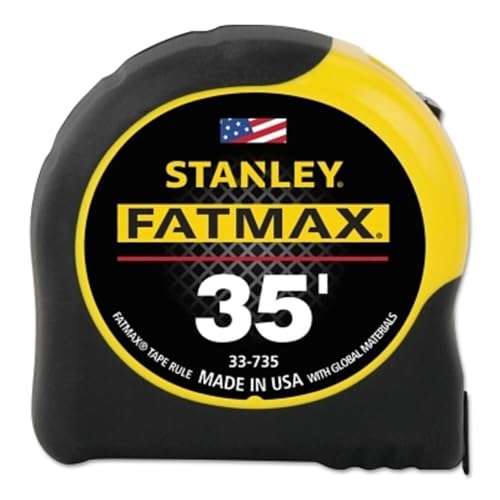
Measuring a long wall, laying out a deck, or checking a room diagonal alone is less about the tape’s printed maximum length than how far its blade reaches before folding. That unsupported reach—often called standout—depends on blade width, stiffness, how the tape is held, and whether the blade is new and straight. A tape advertised for long measurements still needs support once it bends or twists.
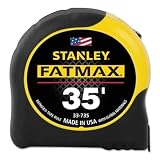
The Stanley FatMax and Komelon PowerBlade are both broad-bladed tape measures aimed at users who want more reach than a compact, narrow-bladed tape provides. The FatMax is known for a wide blade and protective coating; PowerBlade models are sold in different lengths and configurations, so check the exact product listing rather than assuming every version has identical blade width or standout. For solo work, compare the length you need, the blade’s feel, the lock, and how easily you can hook the end onto a corner.
As an Amazon Associate we earn from qualifying purchases at no extra cost to you.


Quick Comparison
| What to compare | Stanley FatMax | Komelon PowerBlade |
|---|---|---|
| Long solo reach | Wide blade is intended to stay extended farther than a standard narrow tape; actual reach varies with handling and condition. | Wide-blade design also targets extended reach; performance varies by version and blade condition. |
| Blade protection | Many FatMax versions use a thick protective coating. It can take wear, but cuts, grit, and kinks still damage a blade. | PowerBlade versions use protective blade coatings; check the particular model’s description for construction details. |
| Handling | The wider blade can be easier to read but makes the case and blade feel bulkier than a compact tape. | Likewise, expect a wider blade than on a basic pocket tape; case size and weight depend on length and version. |
| Best fit | Frequent layout work where reach and a recognizable, widely stocked option matter. | Buyers comparing a wide-blade tape on price, length, or available features. |
| Important limitation | No tape can hold a long, straight span reliably when the blade is twisted, caught, or pushed beyond its stable reach. | The same: a strong blade helps, but setup and support matter more than a headline claim. |
Blade Reach and Stability
A wider blade generally resists bending better than a narrow blade, which is why both lines suit solo layout better than an ordinary compact tape. But there is no single dependable standout number for every FatMax or PowerBlade: length, blade dimensions, wear, and the direction of the pull all affect the result. Treat manufacturer reach figures as best-case specifications, not a promise that the tape will span that distance straight in every job.
For a practical test, extend the blade slowly over a flat floor and note where it first buckles. Keep the case level and pull in a straight line; a sideways twist can make a tape collapse earlier. On a real job, avoid forcing the blade to its limit. Set a temporary block, clamp, or helper at an intermediate point if the measurement must stay accurate across a long span. If the blade bends, the end hook shifts, or the tape drifts off the intended line, reset rather than reading a doubtful mark.
Hook and Lock in Use
The end hook needs a little movement to compensate for its thickness: it shifts when measuring from the outside edge and pulls the other way when hooked over an edge. That movement is normal. A bent hook, loose rivets, or packed-in debris can make it inaccurate. Check it against a known measurement before relying on a long layout, especially after a drop.
The lock is useful for holding a reading while you mark, but it does not make an unsupported blade more stable. If the lock slips, or the blade jerks as it retracts, stop and inspect it. Keep fingers clear of the hook and let the blade return under control; a fast, uncontrolled rewind can damage the hook or cut skin. Both brands’ offerings vary by model, so handle the exact tape before buying if lock placement and case grip matter to you.
Durability and Value
Protective coatings help a blade withstand ordinary abrasion, but they cannot prevent every failure. Dragging the tape over sharp masonry, retracting mud or sawdust into the case, and letting the blade snap back can wear the coating, jam the mechanism, or kink the steel. A kink is more serious than cosmetic damage: the crease creates a weak point, and the tape may fold there repeatedly. Replace a badly kinked blade rather than trusting it for a long unsupported reach.
The FatMax is a sensible pick if you use a long tape often and can get the length and features you want at a reasonable price. PowerBlade is worth comparing when its exact version costs less or better suits your preferred length. Neither deserves a premium solely because its packaging promises extra reach. For occasional room measurements, a less expensive wide-blade tape measure may be enough; careful technique matters more than brand in that use.
Which One to Buy
Choose by the longest span you actually measure, not the longest tape on the shelf. A 25-foot tape is a common practical choice for rooms and general site work; longer versions are useful when the job routinely exceeds that distance, but they add bulk and can be harder to control. Check the stated blade width, overall case size, measurement markings, and return policy for the specific FatMax or PowerBlade listing. Do not assume two tapes in the same product family have the same blade or standout.
If solo reach is the priority, compare the FatMax and PowerBlade in the length you need and favor the one that feels steadier in a straight, controlled extension. If the price gap is substantial and you only measure a few long spans each month, the cheaper wide-blade option is fine. For repeated precision work, carry a second tape or use a laser distance measurer for the long span, then confirm critical dimensions with a tape at the edges. That avoids treating either blade as a rigid beam, which it is not.