What's inside
As an Amazon Associate I earn from qualifying purchases. This post may contain affiliate links at no extra cost to you.
DeWalt’s DCF845 and Bosch’s GDR18V-200C are compact brushless impact drivers aimed at the same work: driving structural screws, fastening hardware, and removing stubborn bolts without the length and weight of a full-size impact. Both are capable tools, but they take different approaches. The DeWalt emphasizes speed, compactness, and a familiar three-speed trigger. The Bosch adds connected-tool controls and a slightly more controlled feel, provided you already use Bosch’s 18V battery platform.
As an Amazon Associate we earn from qualifying purchases at no extra cost to you.


Our Top Picks
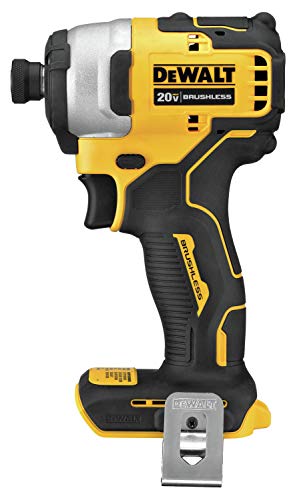
 DEWALT DCF850B 20V Cordless Brushless Compact 1/4'' Impact6.5 x 3 x 9 Inches2.18 poundsCheck on Amazon


At a glance
| Specification | DeWalt DCF845 | Bosch GDR18V-200C |
|---|---|---|
| Battery platform | DeWalt 20V MAX | Bosch 18V |
| Maximum torque | Up to 1,825 in-lb | Up to 200 Nm (about 1,770 in-lb) |
| No-load speed | 0–1,000 / 2,800 / 3,250 rpm | Up to about 3,400 rpm |
| Impact rate | Up to about 3,800 ipm | Up to about 4,000 ipm |
| Chuck | 1/4-inch hex quick-release | 1/4-inch hex quick-release |
| Tool length | About 4.99 inches | About 5.0 inches |
Torque figures are not directly comparable across brands or test methods, and neither tool should be treated as a torque wrench. Fastener size, bit quality, battery charge, and material all affect the result.
Power and speed in actual work
The DCF845 has enough output for common framing and remodeling work. It drives long construction screws into lumber quickly, handles ledger and structural screws within its intended range, and removes many automotive and equipment fasteners. Its top speed is useful when you are running a large number of smaller screws, while the lower settings reduce the chance of stripping a screw head or snapping a small bit.
The Bosch GDR18V-200C is close on paper, with a rated 200 Nm of torque. In use, it is also a serious compact driver rather than a light-duty installation tool. It handles deck screws, cabinet hardware, self-tapping screws, and many medium-size bolts without trouble. The Bosch’s impact action feels controlled, but it does not provide a dramatic power advantage over the DeWalt.
For repeated lug-nut removal, large structural fasteners, or heavily rusted bolts, step up to a dedicated high-torque impact wrench. An impact driver’s 1/4-inch hex chuck limits the available sockets and bits, and trying to force it through jobs meant for a 1/2-inch impact wrench can overheat the tool, damage adapters, or leave a fastener only partly tightened.
Size, handling, and controls
Both drivers are short enough for work between studs, inside cabinets, and behind brackets. The difference in length is effectively negligible. The DeWalt feels compact in the hand and has a bright work light around the chuck, which helps when the bit blocks the light from a single LED.
The Bosch has a conventional control layout and a three-speed electronic selector. Its connected capability is the larger distinction: with Bosch’s connectivity system and app, you can adjust settings and create customized operating modes. That can be useful for a contractor who wants repeatable behavior across fastener types. It is unnecessary for someone who simply needs a driver that starts, stops, and changes speed from the trigger.
Neither model eliminates the need for careful trigger control. Even the lowest setting can bury a small wood screw or damage soft brass hardware if you hold the trigger too long. For finish work, a clutch-equipped drill-driver is usually easier to control because it can stop applying torque instead of continuing to hammer.
Battery cost and platform choice
Battery ownership should decide this comparison more than a small difference in published torque. If you already own DeWalt 20V MAX batteries and a charger, the DCF845 is usually the cheaper purchase and the easier addition. The same logic applies to the Bosch if your shop already uses Bosch 18V packs.
Buying into a platform for one tool changes the calculation. Compare the price of a kit with battery and charger, not just the bare tool. A compact 2.0Ah or 2.0Ah-class pack keeps either driver light for overhead work; a larger 4.0Ah or 5.0Ah battery extends runtime but makes the tool less comfortable in tight spaces. For occasional household repairs, a cordless impact driver kit is often better value than buying a bare tool and separate battery.
Bits, sockets, and common failure modes
Use impact-rated bits and adapters. Standard chrome sockets can crack under impact loading, and ordinary screwdriver bits may twist or shear at the shank. A worn bit also causes cam-out, which rounds the screw recess and damages the workpiece. Keep the bit square to the fastener and use the lowest speed that completes the job.
Both drivers can overdrive screws in soft pine, split narrow boards, or strip self-tapping screws in thin sheet metal. Long structural screws can also heat the motor and battery when driven continuously. If the tool slows noticeably, smells hot, or the battery cuts out under load, stop and let it cool instead of repeatedly pulling the trigger.
For socket work, use a quality impact-rated socket adapter set. Even then, do not use either impact driver to apply final torque to wheel lugs, cylinder-head bolts, or other safety-critical fasteners. Tighten those with a calibrated torque wrench.
Which one should you buy?
Choose the DeWalt DCF845 if you want a fast, compact driver with strong general-purpose performance, already own DeWalt batteries, or want the simplest controls. It is the better default for most tradespeople and serious DIY users, especially when kit pricing is favorable. The cheaper option is perfectly fine when your work is mainly screws, light framing, shelving, and occasional bolt removal.
Choose the Bosch GDR18V-200C if you already use Bosch 18V tools, value connected-tool customization, or prefer Bosch’s handling and control system. Its smart features make sense for repeatable production work, but they do not make it substantially more powerful than the DeWalt. If app connectivity will sit unused, spend the difference on better bits, an extra battery, or a proper torque wrench.
For the tightest spaces, either driver is a sound compact choice. For maximum fastening power, buy an impact wrench instead. For delicate assembly, buy a drill-driver with a mechanical clutch. Matching the tool to the fastener is more important than the small difference between these two impact drivers.