What's inside
As an Amazon Associate I earn from qualifying purchases. This post may contain affiliate links at no extra cost to you.
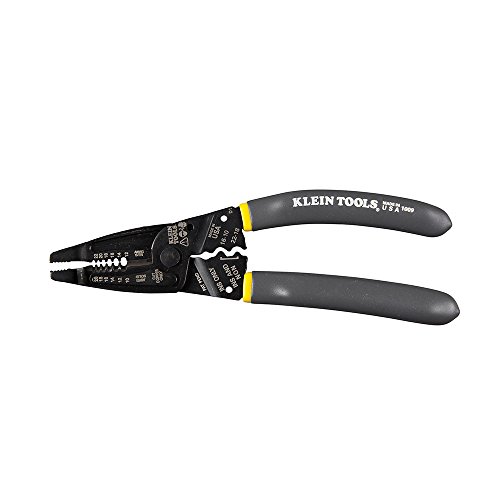
For repetitive electrical work, the difference between a good wire stripper and a merely adequate one shows up in your hands before it shows up on the job. The Klein 11055 and Ideal Stripmaster take different approaches. The Klein is a compact, conventional stripper with fixed stripping holes and a cutter. The Stripmaster is an automatic stripper that clamps the insulation, pulls it off, and resets for the next wire.
That makes the choice fairly straightforward: the Klein is inexpensive, simple, and useful for varied service work. The Stripmaster is faster and less tiring when you are stripping the same wire size repeatedly. It costs more, and its performance depends heavily on using the correct blade set.
As an Amazon Associate we earn from qualifying purchases at no extra cost to you.


Our Top Picks
 Klein Tools K11095 Klein-Kurve Wire Stripper and CutterOne Size7.35 x 2.33 x 0.61 inches0.35 poundsCheck on Amazon
 Klein Tools 11061 8-Inch Self-Adjusting Wire Stripper/Cutterone size8.25 x 4 x 1.3 inches0.8 PoundsCheck on Amazon
 Klein Tools 11063W 7-Inch Heavy-Duty Automatic Wire Cutter/StripperPack of 16.62 x 5.25 x 5.25 inches0.75 PoundsCheck on Amazon
Klein 11055 vs Ideal Stripmaster at a glance
| Feature | Klein 11055 | Ideal Stripmaster |
|---|---|---|
| Stripping method | Manual, fixed-gauge holes | Automatic pull-off action |
| Best use | General electrical maintenance and occasional work | Repetitive stripping and production wiring |
| Typical wire range | Common versions cover roughly 8–22 AWG solid and 10–22 AWG stranded wire | Depends on the installed blade set |
| Cutting function | Built-in wire cutter | Usually requires a separate cutter or compatible accessory |
| Adjustment | Select the correct gauge hole | Install the correct blade and adjust the stop if needed |
| Main weakness | Slower and more hand motion per wire | Higher cost and less flexibility between wire sizes |
Where the Klein 11055 makes more sense
The Klein 11055 is a standard manual stripper, but that is not a criticism. Its fixed holes give you direct control over the cut. Put the wire in the marked gauge slot, squeeze, and pull. For common building wire, control-panel work, repairs, and mixed-size harnesses, it is quick enough and difficult to misunderstand.
Its integrated cutter is useful for trimming conductors before stripping. The tool is also compact enough to stay in a pouch without taking up much room. There is no blade cartridge to lose, no spring-loaded stripping head to maintain, and no setup beyond choosing the correct hole.
The trade-off is repetition. Every wire requires the same squeeze-and-pull motion, and the tool does not automatically remove the insulation. Stripping a dozen conductors is easy. Stripping several hundred can leave your thumb and forearm tired, particularly if the insulation is thick, cold, or slightly oversized.
Manual strippers also punish incorrect gauge selection. A hole that is too small can nick the copper, especially on stranded conductors. A hole that is too large may crush the insulation without cutting it cleanly. If you see bright copper scoring or individual strands being cut, stop using that setting. A damaged conductor can fail later under vibration or a terminal screw.
For general maintenance, a Klein 11055 wire stripper is usually the better value. It is also the safer choice if you regularly move between several wire gauges and do not want to change tooling.
Where the Ideal Stripmaster earns its price
The Ideal Stripmaster is designed around repetition. Instead of manually pulling the insulation off, its jaws grip the wire while the stripping blades separate and remove the insulation in one stroke. Once the wire length stop is set, the operator can feed, squeeze, release, and repeat.
That action reduces hand travel and makes consistent strip lengths easier. On a bench job involving the same conductor size, the time savings are noticeable after only a few dozen wires. It is particularly useful for control panels, lighting assemblies, machine wiring, and other work where a worker may strip hundreds of conductors in a shift.
The correct blade is critical. Stripmaster tools are commonly sold with or matched to blade sets for particular insulation types and wire-size ranges. A blade intended for thin PVC insulation is not automatically suitable for tougher jacket material, appliance wire, or specialty cable. If the blade does not cut cleanly, operators often compensate by squeezing harder. That can deform the conductor, damage the tool, or produce inconsistent strip lengths.
Replacement blades add to the ownership cost, but they also make the Stripmaster more adaptable than a fixed manual stripper when the work is standardized. Check the exact Stripmaster version and blade range before buying; the handle alone does not tell you what wire it will strip efficiently.
For repeated work, compare the current price of the Ideal Stripmaster with the price of its replacement blades. The purchase is easier to justify when one blade set covers most of your daily work.
Speed, consistency, and fatigue
The Stripmaster has the advantage when all the wires are similar. It can produce a more repeatable strip length and requires less wrist movement. That matters more than raw stripping speed because inconsistent lengths create extra trimming and rework at the terminal.
The Klein wins when the job changes constantly. Switching from 12 AWG solid wire to 18 AWG stranded wire is nearly instant: use the appropriate marked opening. With a Stripmaster, you may need a different blade, a new setting, or a second tool. That interrupts the workflow and increases the chance of using an unsuitable blade.
Neither tool should be used to strip energized conductors. Both can also fail to strip cleanly when the wire is dirty, badly nicked, or outside the tool’s intended range. Pulling harder is not a proper adjustment. Clean the wire, verify the gauge, and use a blade or stripper designed for the insulation.
Which one should you buy?
Choose the Klein 11055 if you do residential repairs, occasional rewiring, service calls, or mixed-gauge work. It is the sensible low-cost option, and for a few dozen strips at a time, the automatic mechanism of the Stripmaster may not save enough labor to matter. A manual wire stripper and cutter is also easier to replace if it is lost or damaged on a jobsite.
Choose the Ideal Stripmaster when stripping is a repeated production step, the wire size and insulation are predictable, and hand fatigue or inconsistent strip lengths are costing time. If you routinely strip hundreds of wires, the higher initial price can be reasonable. If you strip ten wires, it is mostly an expensive convenience.
Before ordering, measure the actual wire you use, including its insulation type and size. Match that information to the stripper or blade specification, then budget for spare blades if the tool will be used daily. That check matters more than brand preference: the wrong blade turns an automatic stripper into a fast way to make damaged conductors.