Best Ratcheting Wrench Set for Working on Small Engine Fasteners

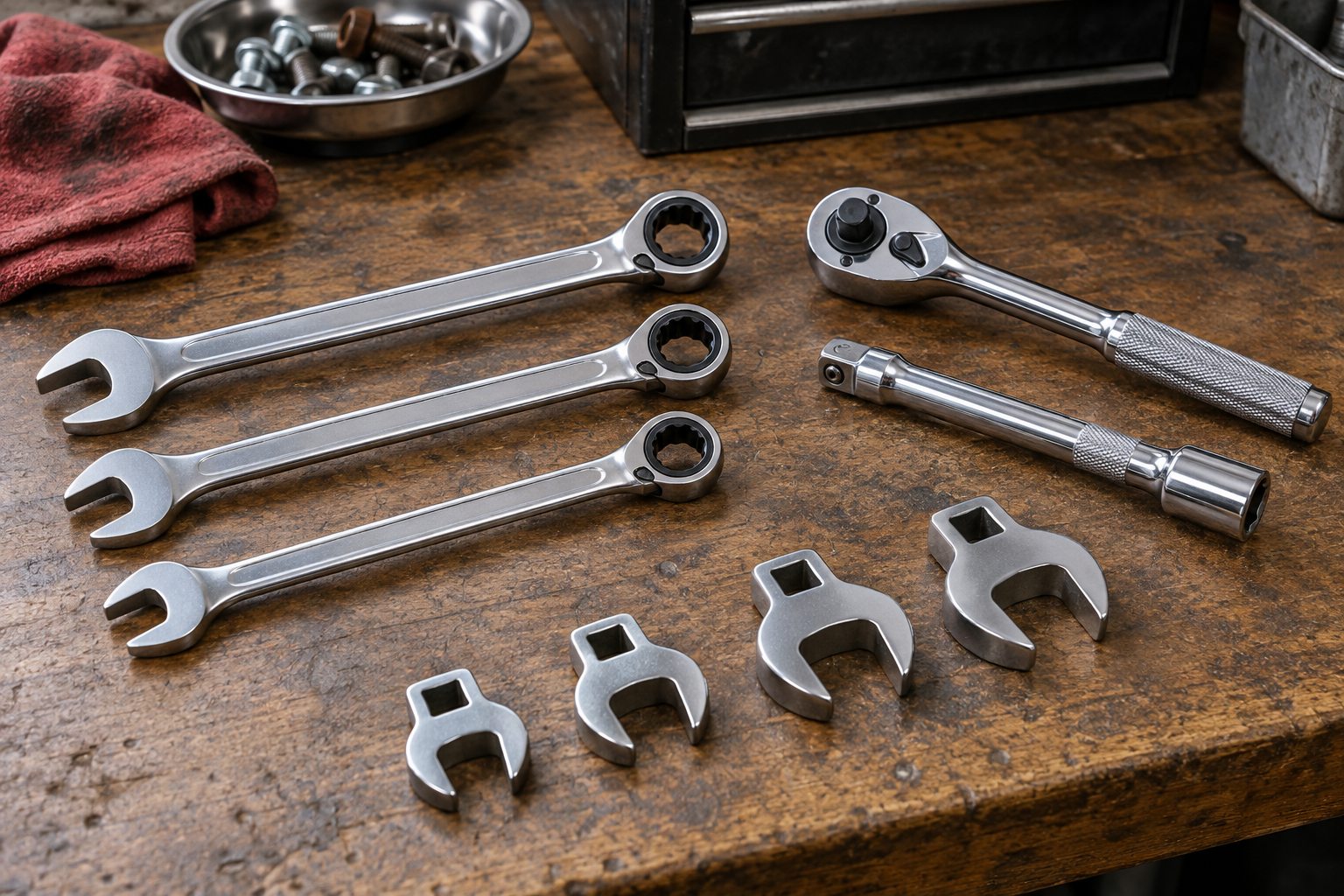
AI-generated editorial illustration of ratcheting wrenches and crowfoot heads

Small-engine fasteners are where an ordinary wrench set starts to show its weaknesses. Lawn mowers, pressure washers, snow blowers, generators, and chainsaws use a mix of small hex bolts, recessed nuts, long studs, and fasteners surrounded by plastic or sheet metal. A ratcheting wrench can save time, but only if it fits the fastener closely … Read more

Combination Wrench vs Ratcheting Combination Wrench: Which Is More Useful for Field Repairs?

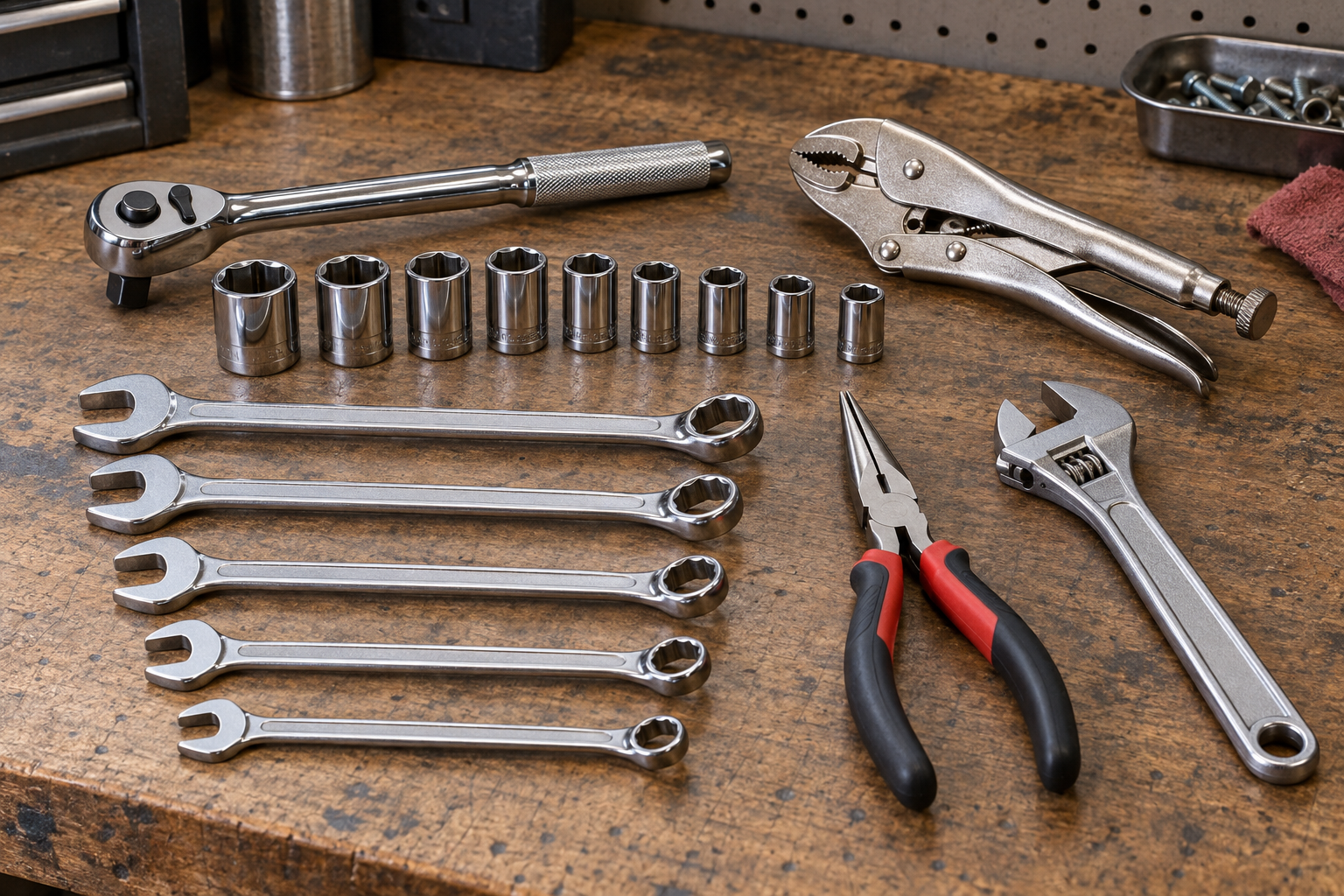
AI-generated editorial illustration of socket wrench pliers assortment

Choosing between a standard combination wrench and a ratcheting combination wrench comes down to access, reliability, and how much time you can afford to spend on each fastener. Both tools have an open end and a box end, but the box end works very differently. A standard wrench must be lifted and repositioned after every … Read more

Fine-Tooth vs Coarse-Tooth Ratchet: Which Works Better in Restricted Clearance?

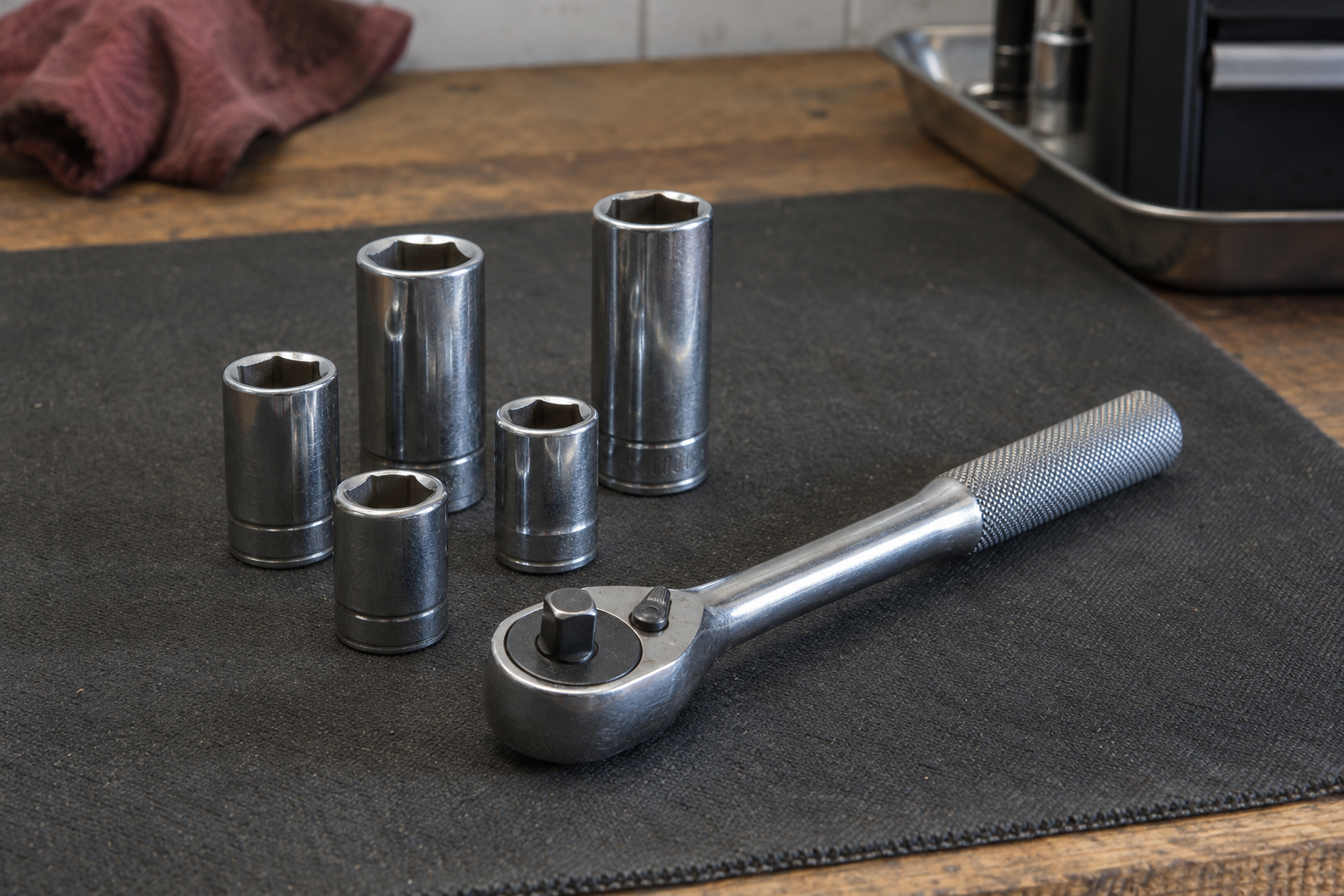
Editorial illustration: ratchet wrench beside an assortment of sockets.

In restricted clearance, a fine-tooth ratchet usually works better—but only when the fastener is accessible enough for the ratchet head to sit squarely on it. A fine-tooth mechanism needs less handle movement to engage the next tooth, so you can work in tighter arcs. That advantage comes with smaller, more delicate teeth and a higher … Read more

Six-Point vs Twelve-Point Socket: Which Grips Rounded Fasteners Better?

Editorial illustration: ratchet wrench beside an assortment of sockets.

A six-point socket is usually the better choice for gripping rounded fasteners. Its six internal flats contact more of the bolt head, spreading force across the strongest areas instead of concentrating it near the corners. A twelve-point socket is more convenient in tight spaces, but its extra points leave less material supporting a worn fastener. … Read more

Order backlinks