What's inside
As an Amazon Associate I earn from qualifying purchases. This post may contain affiliate links at no extra cost to you.
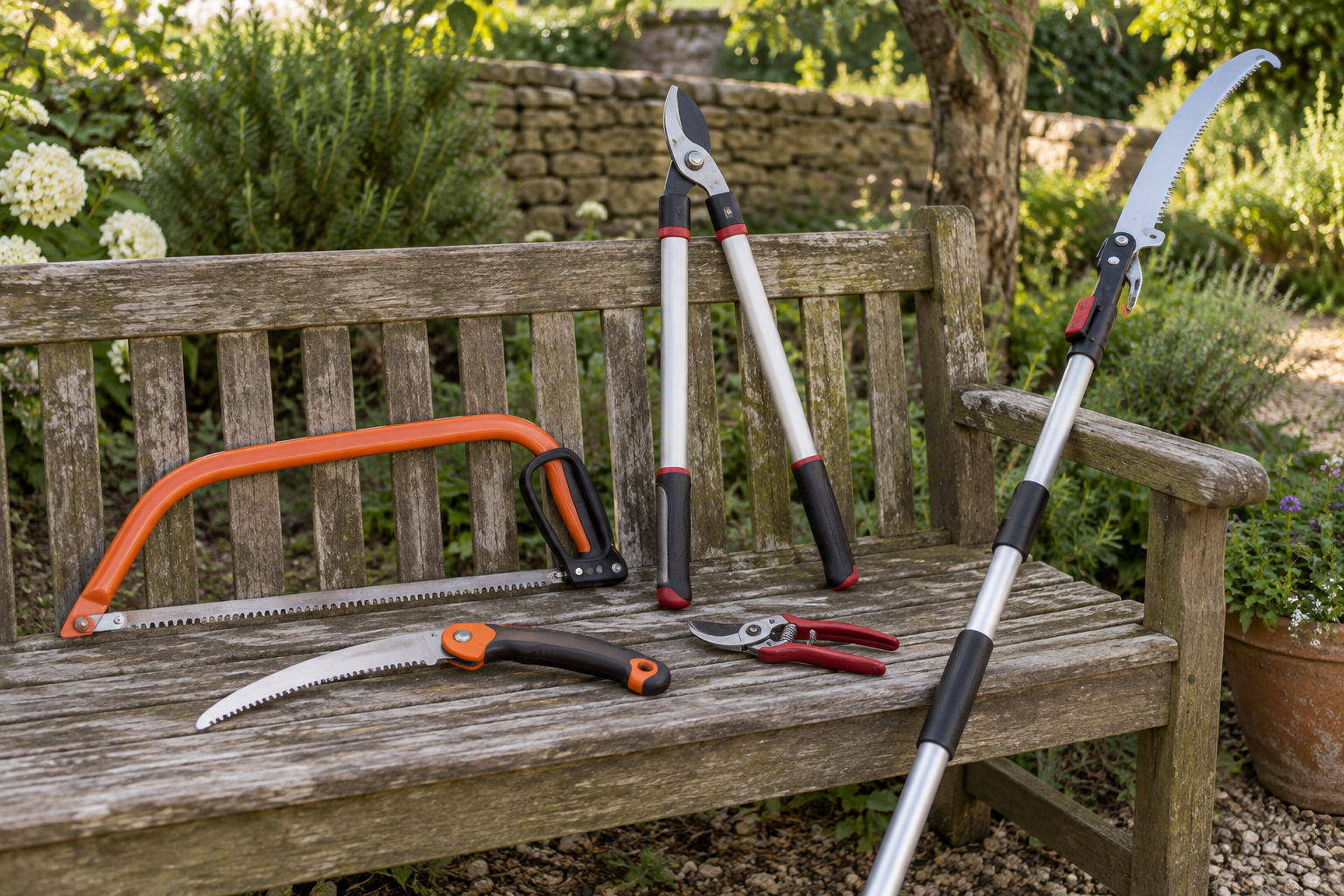
For cutting thick green branches, a bow saw and a folding pruning saw can both work well—but they suit different jobs. The important distinction is not just blade length. A bow saw gives you more cutting speed and better clearance around a large branch. A folding pruning saw is smaller, easier to carry, and more useful when you are climbing a ladder or moving through dense growth.
As a practical rule, use a folding pruning saw for branches up to about 3 inches in diameter. Choose a bow saw when branches are regularly 3 to 6 inches thick, or when you have several cuts to make. Either tool can cut larger wood, but the work becomes slower and more tiring, and a chainsaw may be the safer choice for heavy limbs.
As an Amazon Associate we earn from qualifying purchases at no extra cost to you.



Our Top Picks
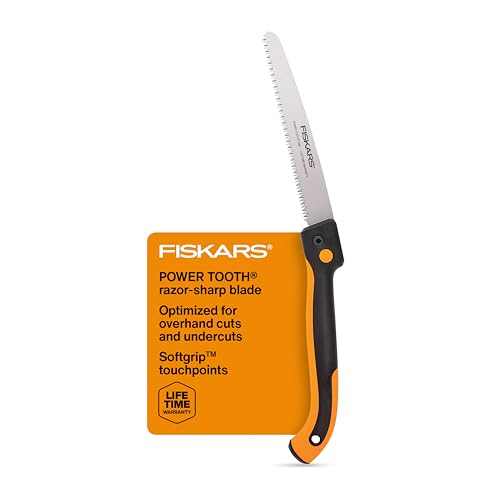 Fiskars 10" Folding Pruning Saw with Dual Position10"4.88 x 1.25 x 14.75 inches0.1 poundsCheck on Amazon


Quick comparison
| Feature | Bow saw | Folding pruning saw |
|---|---|---|
| Best branch size | About 2 to 6 inches | About 1 to 3 inches |
| Typical blade length | 21 to 30 inches | 6 to 12 inches |
| Cutting speed | Fast on repeated, thicker cuts | Fast on small cuts; slower on large branches |
| Portability | Awkward to carry and store | Compact and easy to carry |
| Blade replacement | Usually inexpensive and straightforward | Often less convenient; depends on the handle design |
| Main weakness | Needs room to swing and can snag in dense branches | Short stroke and tiring on thick wood |
When a bow saw is the better choice
A bow saw is the better tool when cutting speed matters. Its long, narrow blade gives you a long stroke, so each push and pull removes more material. The rigid frame keeps the blade tight and helps prevent it from wandering in a branch. On a 4-inch green limb, a sharp 24-inch blade can make a clean cut in a fraction of the time required by a short folding saw.
The frame also keeps your hands away from the cut and gives you two-handed control. That is useful when the branch is under moderate tension or when you need to maintain a straight cut. A coarse blade with roughly 5 to 7 teeth per inch is generally effective on fresh green wood. It clears wet chips well and is less likely to clog than a fine-tooth blade.
The drawbacks are physical size and access. A 24-inch bow saw needs a clear arc around the branch. It is awkward inside a shrub, between closely spaced limbs, or while working from a ladder. The exposed blade can also catch on nearby branches as you reposition it. For occasional yard work, a 24-inch bow saw for green wood is usually the most economical choice for larger branches.
When a folding pruning saw is the better choice
A folding pruning saw is easier to carry, control, and store. The blade folds into the handle, which reduces the chance of damaging the teeth in a tool box or cutting yourself while walking through a garden. It is also much easier to use one-handed for small branches, although two-handed control is preferable whenever the position allows it.
Most useful pruning saws have a curved blade and large, hardened teeth. The curve helps keep the saw engaged with a branch, while the tooth spacing removes green chips without packing up. A 7- to 10-inch blade is a good general-purpose size. For branches around 2 inches thick, it is often faster to grab a folding saw than to set up a larger bow saw.
Its limit is the short stroke. On a 4-inch branch, your hand travels a much shorter distance, so you need many more strokes and must keep the blade aligned. The handle can become tiring, and a low-quality folding joint may develop play. If you want a compact tool for regular pruning, compare folding pruning saws with large teeth, not small fine-tooth camping saws.
Match the blade to the branch
Green branches are softer than dry hardwood, but they contain moisture and fibrous material that can clog a blade. A blade that is too fine cuts slowly. A blade that is too coarse may grab aggressively and tear the bark as it exits the branch.
For branches from 1 to 3 inches, a curved pruning blade with about 6 to 8 teeth per inch is a practical range. For a bow saw used on larger limbs, 5 to 7 teeth per inch works well. Tooth count is not the only factor: tooth shape, sharpening quality, and the ability to clear chips matter just as much.
Do not force a dull saw. A dull blade produces heat, binds in the kerf, and encourages you to twist the handle. That can bend the blade, damage a folding mechanism, or cause the saw to jump out of the cut. Replacement blades are often cheaper than trying to rescue a worn or damaged one; see replacement bow saw blades for green wood if you already own a suitable frame.
How to cut a thick green branch
First, check for overhead hazards, spring-loaded limbs, and branches that could fall toward you. Do not cut a limb under obvious tension while standing in its likely release path. For a branch larger than about 3 inches, make an initial relief cut on the underside, roughly 6 to 12 inches from the final cut. Saw upward about one-quarter of the way through, then make the main cut from the top, slightly farther out. This prevents the branch from tearing downward and stripping bark from the trunk.
Support the branch if possible, but do not hold it close to the blade. Use long, controlled strokes rather than short, frantic ones. Keep the saw straight in the kerf and let the teeth do the work. When using a folding saw, lock the blade fully before cutting and check that the handle has no side-to-side movement.
For the final pruning cut, avoid leaving a long stub, but do not cut flush against the trunk. Cut just outside the branch collar, the slightly swollen area where the limb joins the trunk. A bow saw makes this easier on thick limbs; a folding saw is usually better for reaching the collar in crowded growth.
Which one should you buy?
Buy a folding pruning saw if you maintain a small garden, carry tools between properties, or mostly cut branches under 3 inches. It is the cheaper and more versatile option for light pruning, and its compact size means you are more likely to have it available when needed.
Buy a bow saw if you cut firewood-sized branches, clear storm damage, or routinely remove limbs 3 to 6 inches thick. The faster strokes justify its extra size. If you need both portability and capacity, keeping a folding saw for small work and a bow saw for larger limbs is a sensible combination rather than forcing one tool to do everything.