
What's inside
As an Amazon Associate I earn from qualifying purchases. This post may contain affiliate links at no extra cost to you.
Our Top Picks
 SKIL 5” Random Orbital Sander with Cyclonic Dust5 inches7.87 x 4.8 x 5.51 inches3.44 PoundsCheck on Amazon

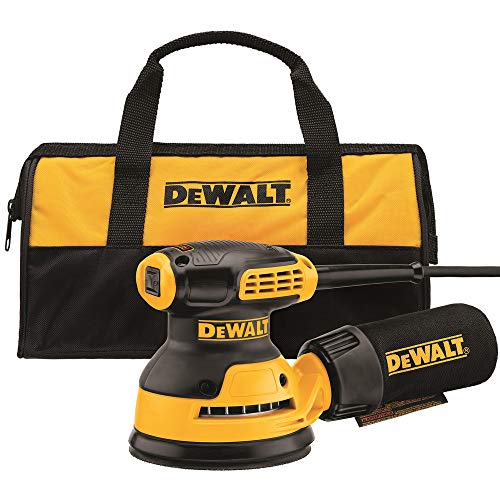
Best Random Orbital Sander for Removing Finish from Hardwood Floors
A random orbital sander can remove finish from hardwood floors, but it is a spot-repair and detail tool—not a sensible replacement for a rental floor sander on an entire room. It works well for removing finish along edges, flattening small damaged areas, stripping a stair tread, or refinishing a room that is too small to justify a drum or orbital floor machine.
For this job, the best choice is a 5-inch variable-speed random orbital sander with a dust port, a comfortable two-hand grip, and a reliable hook-and-loop pad. A 6-inch model removes material faster, but its larger discs cost more and can be harder to control around corners. A basic corded 5-inch unit is usually the best value for occasional floor work.
As an Amazon Associate we earn from qualifying purchases at no extra cost to you.


Quick picks
| Best for | What to buy | Main trade-off |
|---|---|---|
| Most homeowners | 5-inch corded variable-speed model, 3 to 5 amps | Needs an extension cord |
| Large repair areas | 6-inch corded random orbital sander | Higher disc cost and more aggressive removal |
| Stairs and detail work | Compact 5-inch model with a low-profile body | Slower on wide boards |
| Dust-sensitive interiors | Any compatible sander connected to a shop vacuum | Requires a vacuum adapter and hose |
What to look for in a floor-stripping sander
Power matters, but control matters more. A sander that spins aggressively can cut through finish quickly and still leave swirl marks or low spots if you press down. Look for a variable-speed range of roughly 8,000 to 12,000 orbits per minute. Use the lower setting near edges and on thin veneer; use the higher setting for removing a thick polyurethane film from solid wood.
A 3- to 5-amp corded motor is sufficient for most repair jobs. Battery models are convenient on stairs and in rooms without a nearby outlet, but stripping finish consumes batteries quickly. If you already own a battery platform, a cordless tool can be reasonable. Otherwise, a 5-inch corded variable-speed random orbital sander generally delivers more work for less money.
Do not overvalue advertised “dust collection.” The small cloth bag supplied with most sanders catches some debris but will not keep a room clean. A standard shop vacuum with a fine-dust or HEPA filter is much more effective. Check that the sander has a usable dust port and that an adapter is available before buying.
The pad should be flat and should hold discs securely across its entire surface. A worn pad lets the disc wobble and makes tracking marks more likely. Replacement 5-inch pads and discs are inexpensive and widely available. Six-inch abrasives remove more material per pass, but the selection is smaller and the cost per disc is often higher.
The abrasive matters more than the motor
Start with 40- or 60-grit abrasive only when the finish is thick, hard, or heavily built up. On a normal polyurethane-coated floor, 60 or 80 grit is a safer starting point. Move to 100 or 120 grit after the finish is gone, then stop at 150 or 180 grit if you are preparing for a new finish. Going finer than that before coating can polish the wood and reduce adhesion, depending on the finish manufacturer’s instructions.
Use quality aluminum-oxide or ceramic discs with open coating or good clog resistance. Cheap discs can load with softened finish in less than a minute, especially if the floor is warm. When the abrasive stops cutting, replace it rather than pressing harder. Excess pressure overheats the finish, clogs the disc, and can leave a circular depression.
Keep the sander moving before the disc touches the floor. Work with the grain for the final passes, even though the random orbit pattern allows some cross-grain movement during stripping. Overlap each pass by about one-third of the disc width. A 5-inch sander typically removes finish from roughly 10 to 20 square feet per hour once setup, vacuuming, and disc changes are included. Thick finish or uneven boards can reduce that considerably.
How to remove finish without damaging the floor
First, remove furniture, sweep thoroughly, and set protruding nails below the surface. Test the sander in a closet or near a wall. If the finish turns gummy, switch to a coarser, more clog-resistant disc and increase ventilation. If the wood itself is turning gray or the sander is leaving deep rings, reduce pressure and check the disc.
Sand in overlapping passes and inspect the floor after every few minutes. The goal is to remove the finish evenly, not to expose bare wood immediately everywhere. A random orbital sander can follow small variations in the boards, but it will also create shallow dips if you hold it in one place. Keep both hands on the tool when possible and let its weight provide most of the pressure.
At walls and inside corners, the round pad cannot reach the last inch. Use a detail sander, a sharp scraper, or careful hand sanding rather than tilting the orbital sander onto its edge. Tilting removes the pad’s support and can gouge the floor. For those areas, a detail sander and sharp floor scraper are more useful than a more powerful orbital sander.
When a random orbital sander is the wrong tool
If you need to strip more than about 50 to 100 square feet, renting a floor sander is usually faster and cheaper in labor. A square or orbital floor sander covers a much wider path and stays flatter over long boards. A drum sander is faster still, but it can cut grooves quickly when stopped or operated incorrectly.
Do not use a random orbital sander to correct major cupping, crowning, or height differences between boards. It lacks the cutting speed and broad reference surface needed for that work. A floor machine, professional refinisher, or replacement of severely damaged boards may be the better answer.
Buying recommendation
For most homeowners, buy a 5-inch random orbital sander with a dust port, variable speed, and a corded motor. Spend less on extra electronic features and more on quality abrasives, a vacuum connection, and replacement pads. A cheaper fixed-speed model is fine for a single small repair if it has a flat pad and dependable hook-and-loop grip. Choose the 6-inch size only when you regularly handle larger repair areas and can accept the higher abrasive cost.
Wear hearing protection, eye protection, and a properly fitted dust mask or respirator rated for fine wood dust. Old floors may contain unknown coatings, lead-containing paint contamination, or other hazards; stop if the dust or finish is suspect. Vacuum thoroughly between grits. Any loose abrasive left on the floor can create scratches that the next sanding stage will not easily remove.