What's inside
- Top 3 Picks
- Quick Comparison
- How We Chose
- 1. DASBET Valve Spring Compressor C Clamp Service Kit – Best for Budget Bench Rebuilds
- 2. SCUARI Spring Compressor Tool – Best for Motorcycle and ATV Top Ends
- 3. OEMTOOLS 25220 Overhead Valve Spring Compressor – Best for On-Car Work Without Pulling the Head
- 4. OMT Valve Spring Compressor for Motorcycle, ATV, Car and Small Engine – Best for Mixed Small-Engine Shops
- 5. Large Valve Spring Compressor Tool for Overhead Valve Engines – Best Overall for Full-Size Automotive Heads
- 6. 66784 Stud Mount Valve Spring Compressor Remover and Installer Tool – Best for Stud-Mount Rocker Engines
- 7. OMT LS Valve Spring Compressor Tool – Best for LS Spring Swaps in the Car
- 8. 67605 Valve Spring Compressor Tool – Best Budget LS Compressor
- How to Choose the Right Valve Spring Compressor
As an Amazon Associate I earn from qualifying purchases. This post may contain affiliate links at no extra cost to you.
The best valve spring compressor for most people is the Large Valve Spring Compressor Tool for Overhead Valve Engines from Orion Motor Tech: its wide-frame jaw and hardened screw handle stock through mild-performance automotive springs up to roughly 1.6 in outside diameter — including many dual-spring setups — whether the head is on the bench or still on the engine. If you need to swap springs with the head bolted to the block, the OEMTOOLS 25220 is the smarter tool, because it mounts to the rocker stud and compresses one spring at a time without disturbing the head gasket. On a tight budget, the DASBET C Clamp Service Kit covers occasional single-head rebuilds and small-engine work for a fraction of the cost. LS engines are their own case entirely: the OMT LS Valve Spring Compressor and the 3mirrors 67605 both bolt to the rocker pedestal and are the fastest route to a spring change in a Camaro, Corvette, or full-size truck. Everything below is judged on jaw range, pressure capability, material strength, and what actually wears out first.
Our Top Picks
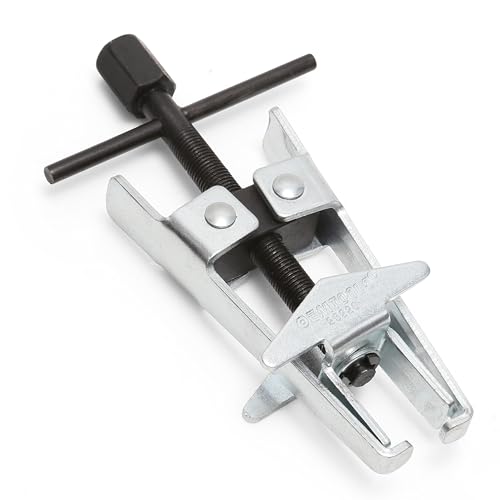 OEMTOOLS 25220 Overhead Valve Spring Compressor ToolOne Size9.7 x 4.5 x 1.6 inches0.95 PoundsCheck on Amazon
 OMT Valve Spring Compressor10pc Valve Spring Compressor13.98 x 8.07 x 2.36 inches4.6 poundsCheck on Amazon
 Large Valve Spring Compressor Tool for Overhead Valve1pc Valve Spring Compressor5.7 poundsCheck on Amazon


Top 3 Picks
Best Overall: Large Valve Spring Compressor Tool for Overhead Valve Engines (Orion Motor Tech)
This is the one tool on the list that covers the widest band of real-world springs without falling over on the stiff ones. Its large-frame body, wide jaw opening, and hardened threaded screw are built for the kind of spring pressures that stall a cheap C-clamp — stock V8 springs, mild performance singles, and many dual springs with damper. It suits the person who rebuilds a head or two a year and does not want to buy twice.
Best Budget: DASBET Valve Spring Compressor C Clamp Service Kit
A straightforward C-clamp compressor sold as a service kit with pusher adapters for different retainer styles. It is the right answer for a one-time head gasket job on a stock engine, small-engine top ends, and anyone who already has a bench vise and a free afternoon. It will not enjoy 300 lb seat pressure, but for stock springs it does the job.
Best for On-Car Work: OEMTOOLS 25220 Overhead Valve Spring Compressor
When the head stays on the block, the tool has to mount to the engine rather than sit on a bench. The 25220 threads onto the rocker stud and uses lever action to compress one spring at a time, which means no intake gasket, no head bolts, and no coolant mess. It is the mid-range pick for stud-mount overhead valve engines and the classic choice for a valve seal or spring job done in the bay.
Quick Comparison
| Product | Best for | Type / Mounting | Typical spring coverage | Material and thread class | Price tier |
|---|---|---|---|---|---|
| DASBET Valve Spring Compressor C Clamp Service Kit | Occasional bench rebuilds on stock heads and small engines | C-clamp, threaded screw, bench or vise | Single springs up to roughly 1.4 in O.D. | Steel frame, plated screw, plain thrust | Budget |
| SCUARI Spring Compressor Tool | Motorcycle, ATV and small-engine top ends | Small-frame C-clamp with adapters | Small-bore springs, roughly 0.8–1.2 in O.D. | Steel body, plated screw | Budget |
| OEMTOOLS 25220 Overhead Valve Spring Compressor | On-car work without removing the cylinder head | Lever action, threads onto the rocker stud | Retainers in the 1/2 in to 2 in jaw class | Steel body, hardened lever and pivot | Mid-range |
| OMT Valve Spring Compressor for Motorcycle, ATV, Car, Small Engine | Mixed small-engine and light automotive work | C-clamp with interchangeable adapters | Roughly 0.6–1.3 in O.D. across adapter set | Steel body, hardened screw | Mid-range |
| Large Valve Spring Compressor Tool for Overhead Valve Engines | Full-size automotive heads, including dual springs | Large-frame clamp, bench or on-engine | Up to roughly 1.6 in O.D., high-pressure springs | Forged steel frame, hardened screw | Premium |
| 66784 Stud Mount Valve Spring Compressor | Stud-mount rocker overhead valve engines, on-engine service | Stud-mount lever, one spring at a time | Retainers in the 1/2 in to 2 in jaw class | Steel, black oxide finish, hardened pivot | Premium |
| OMT LS Valve Spring Compressor Tool | LS-family engines, spring swaps in the car | Bolts to the LS rocker pedestal | LS springs roughly 1.0–1.3 in O.D. | Steel, plated, hardened hardware | Mid-range |
| 67605 Valve Spring Compressor Tool | Budget LS on-car spring work, 4.8 through 6.2 | Bolts to the LS rocker pedestal | LS springs roughly 1.0–1.3 in O.D. | Steel construction, plated finish | Budget |
How We Chose
This list was built from published product specifications, manufacturer documentation, and the well-documented mechanics of how valve spring work actually happens on different engine families. The first filter was mounting style, because that single decision rules out more tools than price does: a bench C-clamp cannot do an on-car spring swap, and a stud-mount lever cannot help you on a bare head sitting in a vise. The second filter was coverage — the jaw opening, throat depth, and spring outside diameter each tool can physically reach, checked against common stock and performance spring sizes rather than marketing claims.
The third filter was load path and material. A compressor transfers several hundred pounds of spring force into a screw, a pivot, or a lever arm, so we weighted hardened threads, forged or heavy-wall frames, and bearing-supported screws over cosmetic finishes. Finally, we considered the upgrade path and ownership reality: what wears first, whether the tool still works when you move up to stiffer springs, and whether a cheaper tool ends up costing more after a second purchase. No tool here was tested, benchmarked, or owned by us — the ranking reflects specification fit against the jobs each tool is designed to do.
1. DASBET Valve Spring Compressor C Clamp Service Kit – Best for Budget Bench Rebuilds
As an Amazon Associate we earn from qualifying purchases at no extra cost to you.

The DASBET kit is the classic entry point into valve spring work: a heavy C-clamp body with a threaded screw, sold with a set of pusher adapters so the same tool can press on different retainer shapes. It is a bench tool in the purest sense — you take the head off, clamp it or brace it, and wind the screw down until the retainer lifts and the keepers come free. There is nothing clever about it, and that is precisely the appeal for someone doing one head gasket job on a stock engine.
Who it suits: the home mechanic with a single project, a lawnmower or generator engine on the bench, or a spare head being refreshed on a budget. It is also a reasonable first compressor for someone learning the sequence of compressing a spring, tapping the retainer, and fishing out keepers with a magnet — the slow, deliberate pace of a screw-type clamp is actually an advantage while you build the technique.
Key specifications
- Type: C-clamp, manual threaded screw, intended for bench or vise work
- Jaw and throat: wide-frame C-clamp class, roughly 4–5 in of throat depth, leaving 1.5–2.5 in of usable working gap above a typical retainer
- Spring coverage: stock and mild single springs up to about 1.4 in outside diameter
- Retainer coverage: common 7-degree retainer diameters with the supplied pusher tips; some 10-degree retainers depending on adapter fit
- Material: steel frame with a plated threaded screw and a plain (non-bearing) thrust surface
- Price tier: budget
Where it performs well. The screw thread gives excellent fine control — you can compress a spring a few thousandths at a time and stop exactly where you want, which matters when you are trying not to lose a keeper into a head port. The adapter set means one purchase covers a surprising range of retainer styles, and the frame is stiff enough for stock seat pressures in the 80–120 lb range with open pressures around 200–260 lb. For a first rebuild, that covers the overwhelming majority of factory four- and eight-cylinder heads.
Where it runs out of road. The lack of a thrust bearing is the first limitation you feel. Every pound of spring force becomes friction between the screw and the frame, so a 300 lb seat-pressure spring turns a two-second job into a two-minute wrestle. Large-diameter dual springs with a damper may not fit between the jaws at all, and deep, narrow heads can leave too little throat depth to seat the pusher squarely on the retainer. Because it is a bench design, it cannot help you swap springs with the head installed — that job belongs to the stud-mount and pedestal-mount tools further down this list.
Pros
- Lowest entry cost of any tool here, with adapters included
- Fine, controllable screw action that is forgiving for beginners
- No engine-specific mounting hardware to lose or cross-thread
- Works on heads from cars, motorcycles, and small engines alike
Cons
- Plain thrust surface makes stiff springs genuinely hard work
- Bench-only — no on-car spring changes
- Limited jaw opening for large dual springs and tall retainers
- Throat depth can be marginal on deep, narrow combustion chamber heads
Compared with the nearest alternative. The SCUARI tool is the other budget option here, but the two are aimed at different jobs. SCUARI’s frame is smaller and oriented toward motorcycle, ATV, and small-engine top ends, where springs are short and access is tight. The DASBET’s larger C-clamp frame is the better pick for a full-size automotive head on a bench. If you already know you will be doing on-car work, skip both and go straight to the OEMTOOLS 25220 or an LS-specific tool.
2. SCUARI Spring Compressor Tool – Best for Motorcycle and ATV Top Ends

Small engines have small springs, and full-size automotive compressors are often simply too bulky to sit squarely on a motorcycle or ATV head. The SCUARI spring compressor is sized for that world: a compact frame with a threaded screw and adapters proportioned for the retainers you find on single- and twin-cylinder machines, plus small four-stroke utility engines. If your work is measured in cubic centimeters rather than liters, this is the shape of tool you want.
Who it suits: motorcycle and ATV owners doing their own top-end work, small-engine mechanics servicing generators, pressure washers, and go-karts, and anyone whose bench space is already crowded. It is also a sensible second compressor for a shop that already owns a large automotive unit but keeps running into 250cc and 400cc heads that the big clamp cannot reach cleanly.
Key specifications
- Type: compact C-clamp with threaded screw and small pusher adapters
- Jaw and throat: small-frame class, roughly 2–3 in of throat depth, sized for tight single-cylinder heads
- Spring coverage: small-bore springs in roughly the 0.8–1.2 in outside diameter range
- Retainer coverage: small-diameter retainers typical of motorcycle and small-engine valve trains
- Material: steel body with a plated threaded screw
- Price tier: budget
Where it performs well. The compact frame is the whole point. On a single-cylinder head, a large C-clamp tends to foul the combustion chamber edge or the valve guide boss before the pusher reaches the retainer. A small-frame tool sits down inside that space and presses straight. Because small-engine springs are comparatively light — seat pressures in the 40–90 lb range are common — the plain screw is not a hardship, and the fine thread gives good feel when you are working with tiny keepers that are easy to lose.
Where it runs out of road. This tool is not a substitute for an automotive compressor. The jaw opening will not swallow a 1.5 in dual spring, the frame is not built for several hundred pounds of open pressure, and the throat depth is short by design. Trying to use it on a full-size V8 head is a recipe for a slipped pusher, a bent retainer, or a launched keeper. Treat it as a specialist tool for the engines it was sized for.
Pros
- Compact frame reaches retainers that full-size clamps cannot
- Light weight makes it easy to hold steady on a loose head
- Low cost makes it a practical second compressor for a home shop
- Fine screw control suits small, easily lost keepers
Cons
- Not suitable for automotive-scale springs or dual-spring setups
- Short throat depth limits it on deeper heads
- Adapter range is narrower than a full automotive kit
- Bench-only design; no on-engine use
Compared with the nearest alternative. The DASBET kit costs about the same and covers larger automotive springs, but it is clumsier on a motorcycle head. The OMT small-engine compressor sits a tier above both, with a broader adapter set and a slightly more substantial frame that lets it bridge the gap between small-engine and light automotive work. If you genuinely work on both motorcycles and car heads, the OMT is the more efficient single purchase; if you only touch small engines, SCUARI is enough.
3. OEMTOOLS 25220 Overhead Valve Spring Compressor – Best for On-Car Work Without Pulling the Head

Pulling a cylinder head to change valve springs or seals is a lot of unnecessary labor — intake gaskets, head bolts, coolant, timing components, and a torque sequence all come with it. The OEMTOOLS 25220 exists to avoid that. It is an overhead valve spring compressor that threads onto the rocker stud and uses lever action to compress one spring at a time while the head stays bolted to the block. For stud-mount overhead valve engines, that turns a weekend job into an afternoon.
Who it suits: anyone replacing valve stem seals, chasing a broken spring, or swapping springs on an engine with stud-mounted rocker arms — many classic V8s, older inline engines, and a range of import four-cylinders. It is also the tool for the person who wants to replace springs without disturbing a freshly installed head gasket or a carefully set timing chain.
Key specifications
- Type: lever-action overhead valve spring compressor
- Mounting: threads onto the rocker stud; common stud threads in the 3/8 in and 5/16 in classes, with adapters for others
- Jaw: retainer-grabbing jaw in roughly the 1/2 in to 2 in class
- Operation: one spring at a time, on the engine, head installed
- Material: steel body with a hardened lever and pivot
- Price tier: mid-range
Where it performs well. The value here is access. With the rocker arm removed, the tool screws down onto the stud, the jaw hooks the retainer, and the lever compresses the spring far enough to expose the keepers. You are not fighting a bulky C-clamp against a shock tower or a brake booster. The lever geometry also means you can compress a moderately stiff spring with one hand while the other holds a magnet, which is exactly how the job should go. For stock springs on a stud-mount head, this is faster and cleaner than any bench tool.
Where it runs out of road. Two limitations matter. First, it needs a stud to mount to — engines with bolt-down or pedestal-mounted rockers, including the entire LS family, are not compatible, and shaft-mounted rocker assemblies need the shaft removed before the tool has anywhere to sit. Second, because the head stays on, the valves must be held closed by other means: compressed air through the spark plug hole or a length of soft rope fed into the cylinder at top dead center. Forget that step and a valve drops into the cylinder the moment the keepers release. Very tall performance springs can also run out of lever travel before the retainers clear.
Pros
- No head removal — saves gaskets, coolant, and hours of labor
- Lever action leaves one hand free to catch keepers
- Compact enough for tight engine bays
- Reusable across many stud-mount engine families
Cons
- Will not fit pedestal or bolt-down rocker engines, including LS
- Requires air pressure or rope to keep valves from dropping
- Lever travel can be marginal on very tall performance springs
- One spring at a time, so a full set takes patience
Compared with the nearest alternative. The Hihitomorrow 66784 is the premium version of the same idea: a stud-mount lever tool with a heavier body and a black oxide finish. If you do this job regularly, the extra rigidity pays off. If it is a once-a-decade task, the OEMTOOLS 25220 delivers the same function at a mid-range price. And if your engine is an LS, neither one is the right answer — the OMT LS and 3mirrors 67605 are.
4. OMT Valve Spring Compressor for Motorcycle, ATV, Car and Small Engine – Best for Mixed Small-Engine Shops

Most home shops are not specialists. One week it is a riding mower, the next a four-wheeler, and the week after that a friend’s four-cylinder car head on the bench. The OMT valve spring compressor from Orion Motor Tech is built for that pattern: a C-clamp design with an interchangeable adapter set that stretches from small-engine retainers up into light automotive territory. It is the middle of the road in the best sense — broader than a dedicated small-engine tool, less expensive than a full-size automotive compressor.
Who it suits: the generalist home mechanic, small-engine repair shops that occasionally see automotive work, and anyone who wants one compressor that will not be useless the next time the job changes. It is also a reasonable pick for a first-time head rebuild on a small four-cylinder, where the springs are stock and the budget is finite.
Key specifications
- Type: C-clamp with threaded screw and interchangeable pusher adapters
- Jaw and throat: medium-frame class, roughly 3–4 in of throat depth
- Spring coverage: approximately 0.6–1.3 in outside diameter across the adapter set
- Engine coverage: motorcycle, ATV, small engine, and light automotive heads
- Material: steel body with a hardened threaded screw
- Price tier: mid-range
Where it performs well. The adapter range is the selling point. Different retainers need different pusher geometry — press on the wrong spot and the retainer tilts, the keepers bind, and you risk bending a valve stem. Having several adapters on hand means you can match the tool to the retainer instead of forcing a compromise. The medium frame is also a genuine sweet spot: small enough to sit on a single-cylinder head without fouling the casting, large enough to handle a stock four-cylinder automotive spring without running out of jaw. For occasional work at stock pressures, the hardened screw turns smoothly enough that the lack of a thrust bearing is not a dealbreaker.
Where it runs out of road. This is still a bench tool, and it is still a C-clamp. It cannot change springs with the head installed, and it will struggle once you move into genuine performance territory — 300 lb seat pressures, large dual springs with dampers, or unusually tall retainers. The medium frame that makes it versatile also means it is not as rigid as a large-frame or forged unit when the spring fights back. If you already know your next project is a set of dual springs on a V8, this is a stepping stone, not the destination.
Pros
- Broad adapter set covers small-engine through light automotive retainers
- Medium frame balances reach against bulk better than either extreme
- Hardened screw turns smoothly at stock spring pressures
- One purchase covers several very different engine types
Cons
- Bench-only; no on-car spring changes
- Not rigid enough for high-pressure dual springs
- Plain thrust surface adds effort as spring rate climbs
- Jack of all trades — specialists beat it in their own niches
Compared with the nearest alternative. Against the SCUARI, the OMT wins on coverage and frame strength and loses only on price. Against the DASBET, the OMT’s adapter range and slightly stiffer body make it the better long-term buy for anyone who works on more than one engine family. Where it clearly loses is against the Large Valve Spring Compressor Tool: if your work is full-size automotive heads with performance springs, that premium tool is in a different league for jaw opening and rigidity.
5. Large Valve Spring Compressor Tool for Overhead Valve Engines – Best Overall for Full-Size Automotive Heads

This is the tool that stops the cycle of buying a cheap compressor, finding it cannot handle the springs you actually want to run, and buying again. Orion Motor Tech’s large overhead valve spring compressor is built around a wide, heavy frame and a hardened screw, with the jaw opening and throat depth to swallow the bigger springs — including many dual-spring setups with dampers — that small and medium clamps simply cannot reach. It is the best overall pick on this list because it covers the widest range of real jobs without a hard ceiling.
Who it suits: anyone doing serious head work — a V8 rebuild, a set of performance springs on a street engine, or a shop that wants one compressor that will not need replacing. It also suits the person who has already been frustrated by a budget clamp slipping off a stiff spring and is ready to buy the tool once.
Key specifications
- Type: large-frame valve spring compressor, usable on the bench or with the head on the engine where access allows
- Jaw and throat: wide-frame class, with a jaw opening sized for retainers up to roughly 1.6 in spring outside diameter
- Spring coverage: stock through high-pressure single and many dual springs with damper
- Material: forged steel frame with a hardened, heavy-section threaded screw
- Price tier: premium
Where it performs well. Everything about this tool is aimed at the load path. A forged frame resists the flex that makes cheaper clamps walk off a retainer under load — flex is what launches keepers across the shop, and it is the single most common failure mode in budget compressors. The heavier screw section and hardened threads handle the higher torque that stiff springs demand without galling. And the wider jaw opening means you can seat the pusher squarely on a large retainer rather than catching an edge. At 250 lb seat pressure and 600 lb open pressure, the difference between this and a budget clamp stops being a matter of convenience and becomes a matter of whether the job is possible.
Where it runs out of road. Two honest limitations. First, it is physically large — on a tightly packaged engine bay, the frame may not fit between the spring and the inner fender or shock tower, which is exactly the scenario where an on-car lever tool earns its place. Second, it is a general-purpose tool rather than a fitment-specific one: it does not bolt to a rocker pedestal the way the LS tools do, so on an LS engine you are still working with a clamp rather than a purpose-built bracket. For engines where access is generous and springs are stiff, neither limitation matters.
Pros
- Widest spring coverage on this list, including many dual springs
- Forged frame resists the flex that causes slipped pushers
- Hardened heavy-section screw handles high torque without galling
- One purchase covers stock through serious performance work
Cons
- Premium price tier for a hand tool
- Large frame can be awkward in tight engine bays
- Not a fitment-specific bracket, so LS and pedestal engines still need a dedicated tool
- Heavier than a small-frame clamp, which matters on long jobs
Compared with the nearest alternative. The OMT small-engine compressor is the versatile mid-range option, and it is genuinely good at stock pressures across several engine types. The Large Valve Spring Compressor is what you graduate to when the springs get serious: more jaw, more rigidity, more screw. The other premium tool here, the Hihitomorrow 66784, solves a different problem entirely — it is for on-engine work on stud-mount rockers, not for bench work on a bare head. If your head is off and your springs are stiff, this is the one.
6. 66784 Stud Mount Valve Spring Compressor Remover and Installer Tool – Best for Stud-Mount Rocker Engines

The 66784 is a stud-mount lever compressor in the traditional pattern: it threads onto the rocker stud, hooks the retainer, and uses a lever to compress the spring with the head in place. Hihitomorrow’s version sits at the premium end of that category, with a heavier body and a black oxide finish intended to survive repeated use. For engines with stud-mounted rocker arms, it is the tool that makes spring and seal work a routine job rather than a head-off project.
Who it suits: mechanics and serious hobbyists who work on stud-mount overhead valve engines regularly — classic American V8s, older inline sixes, and a range of four-cylinders with adjustable rocker studs. It is also the right tool for someone doing a full set of valve stem seals on an installed engine, where the compressor will be used 16 times in one afternoon and rigidity matters more than price.
Key specifications
- Type: stud-mount lever-action valve spring compressor
- Mounting: threads onto the rocker stud; common stud thread classes, with adapters where needed
- Jaw: retainer-grabbing jaw in roughly the 1/2 in to 2 in class
- Operation: one spring at a time, head installed, valves held by air or rope
- Material: steel body with black oxide finish and a hardened pivot
- Price tier: premium
Where it performs well. Repetition is where this tool separates itself from a mid-range equivalent. A valve seal job means compressing and releasing the same mechanism sixteen times in a row, and every cycle loads the pivot, the threads, and the jaw. A hardened pivot and a stiffer body keep the geometry consistent from the first cylinder to the last, so you are not fighting a lever that has developed slop halfway through the job. The black oxide finish is not just cosmetic either — it holds a light oil film better than bare steel, which matters in an environment where you are constantly handling oily parts.
Where it runs out of road. The same structural limits apply as to any stud-mount lever tool. If your engine uses pedestal or bolt-down rockers — the LS family being the obvious example — there is no stud to thread onto and this tool has nothing to grab. Shaft-mounted rocker assemblies need the shaft removed first. And as with any on-car spring work, the valves must be supported by compressed air or rope; the compressor only handles the spring, not the valve. Very tall springs can also exceed the lever’s travel.
Pros
- Heavier body and hardened pivot hold geometry over repeated cycles
- Black oxide finish resists corrosion and holds an oil film
- No head removal required on compatible engines
- Built for the repetition of a full valve seal job
Cons
- Premium price for a single-purpose tool
- Useless on pedestal, bolt-down, or shaft-mount rocker engines
- Still requires air or rope to keep valves from dropping
- Lever travel limits very tall performance springs
Compared with the nearest alternative. The OEMTOOLS 25220 does the same job at a mid-range price and is perfectly adequate for occasional use on a stock engine. The 66784 is what you buy when the compressor becomes a frequently used tool — the extra rigidity and finish are durability features, not performance features, and they pay off over years rather than minutes. If you are an LS owner, skip both and look at the next two entries.
7. OMT LS Valve Spring Compressor Tool – Best for LS Spring Swaps in the Car

LS engines changed the rules for on-car spring work. Instead of a rocker stud, the LS family uses bolt-down rocker arms mounted on pedestals, which means the traditional stud-mount compressor has nothing to attach to. Orion Motor Tech’s LS valve spring compressor solves that by bolting to the rocker pedestal itself, giving you a rigid, correctly aligned mount that compresses one spring at a time with the head in place. For anyone maintaining a Gen III or Gen IV V8, it is the tool that makes the job straightforward.
Who it suits: LS owners doing valve spring swaps, broken spring replacements, or valve stem seal work without pulling the heads. That covers a huge population of engines — the 4.8, 5.3, 5.7, 6.0, and 6.2 liter variants used across trucks, SUVs, and performance cars, along with the LS1, LS2, LS3, LS6, and related LSX family. It is also the right tool for a shop that sees LS work regularly and wants a repeatable setup rather than a workaround.
Key specifications
- Type: pedestal-mount valve spring compressor for the LS engine family
- Mounting: bolts to the LS rocker arm pedestal using the factory rocker bolt holes (M8 class hardware)
- Spring coverage: LS valve springs in roughly the 1.0–1.3 in outside diameter range
- Operation: one spring at a time, head installed, valves held by compressed air
- Material: steel construction with plated finish and hardened hardware
- Price tier: mid-range
Where it performs well. Pedestal mounting is the whole advantage. Because the tool bolts into the same holes the rocker arm uses, it is perfectly aligned with the valve stem every time — no lever slipping off a retainer, no angled load on the valve guide, no guessing about whether the pusher is seated squarely. That alignment matters on LS engines specifically, because the springs are short, the retainers are small, and the space between the valve cover rail and the spring is tight. The tool also eliminates the improvisation that ruins otherwise good jobs: with a proper mount, you can work through a full set of springs methodically instead of fighting the same alignment problem sixteen times.
Where it runs out of road. This is a fitment-specific tool, and that is both its strength and its limit. It is designed for the LS rocker pedestal pattern and will not fit an engine with stud-mounted or shaft-mounted rockers. Compressed air is effectively mandatory — the LS valve will drop into the cylinder the instant the keepers release if you do not pressurize the cylinder through the spark plug hole. And on LS engines with unusually large aftermarket springs, check that the spring outside diameter falls within the tool’s working range before you start.
Pros
- Bolts to the factory rocker pedestal for perfect alignment
- No head removal needed on any LS-family engine
- Plated finish and hardened hardware suit repeated use
- Covers the whole mainstream LS displacement range
Cons
- LS-specific — no use on other engine families
- Requires compressed air to hold valves closed
- Spring diameter range is narrower than a general-purpose clamp
- Mid-range price for a single-platform tool
Compared with the nearest alternative. The 3mirrors 67605 covers the same LS fitment at a budget price, and for a one-time spring swap on a stock engine it will do the job. The OMT tool is the better buy if you expect to use it more than once — the mid-range tier typically buys you a sturdier bracket and cleaner hardware, which shows up as less flex under load and fewer stripped pedestal bolts over time. Against the general-purpose Large Valve Spring Compressor, the LS tool wins decisively on alignment and access, and loses only on the fact that it cannot be used on anything else.
8. 67605 Valve Spring Compressor Tool – Best Budget LS Compressor
The 3mirrors 67605 is the budget route into LS on-car spring work. It follows the same pedestal-mount concept as the OMT tool — bolt to the rocker pedestal, compress one spring, release the keepers — but at a price point that makes sense for a single job. Its listed fitment covers the mainstream LS displacements: 4.8, 5.3, 5.7, 6.0, and 6.2 liter engines, plus the LS1, LS2, LS3, LS6, and LSX variants used in Camaro, Corvette, and truck applications.
Who it suits: the LS owner replacing a broken spring or doing a one-time set of valve stem seals, who does not want to spend mid-range or premium money on a tool that will sit in a drawer afterward. It is also a reasonable backup unit for a shop that already owns a better compressor and wants a second bracket on hand.
Key specifications
- Type: pedestal-mount valve spring compressor for LS engines
- Mounting: bolts to the LS rocker arm pedestal using factory rocker bolt holes
- Fitment: 4.8, 5.3, 5.7, 6.0, 6.2 liter LS engines; LS1, LS2, LS3, LS6, and LSX variants
- Spring coverage: LS valve springs in roughly the 1.0–1.3 in outside diameter range
- Material: steel construction with plated finish
- Price tier: budget
Where it performs well. The value proposition is straightforward: you get correct pedestal alignment and on-car convenience for the lowest price on this list. Because the tool bolts into the rocker bolt holes, the load path is straight down the valve stem, which is exactly what you want when you are compressing a spring that is already installed at a specific height. For a stock LS spring — typically in the 80–100 lb seat pressure range — a budget bracket is entirely adequate, provided the bolts are torqued properly and the bracket seats flush against the pedestal.
Where it runs out of road. Budget hardware is where the trade-offs show. Threaded holes and bolts in this tier are more sensitive to over-torquing, and a bracket that does not sit perfectly flush will flex slightly under load, which can tilt the pusher off the retainer. The fitment list, while broad, is specific — this is not a universal tool and will not help on a stud-mount or shaft-mount engine. As with every LS compressor, compressed air into the cylinder is required to keep the valves from dropping, and a valve that falls into a cylinder turns a spring swap into a head-off repair.
Pros
- Lowest-cost route to proper LS pedestal alignment
- Covers the mainstream LS displacement range in one tool
- No head removal required
- Sensible choice for a single-job purchase
Cons
- Budget hardware is less tolerant of over-torquing
- Slight flex possible if the bracket is not seated flush
- LS-only fitment with no cross-platform use
- Still requires compressed air to support the valves
Compared with the nearest alternative. The OMT LS Valve Spring Compressor is the direct upgrade: same pedestal-mount concept, mid-range build quality, and hardware that stands up better to repeated use. If you are doing one spring swap on a daily-driven truck, the 3mirrors 67605 is the economical choice and nothing more is needed. If the tool will come out of the drawer every season, the OMT is worth the step up. Both beat a general-purpose clamp on an LS engine, because alignment — not raw jaw size — is what determines whether an LS spring job goes smoothly.
How to Choose the Right Valve Spring Compressor
The category looks simple until you try to buy one. Compressors differ enormously in where they mount, how much spring they can handle, and how long they last, and the wrong choice shows up as a slipped pusher, a bent retainer, or a valve in the cylinder. Work through the criteria below in order — the first one eliminates more tools than all the others combined.