What's inside
As an Amazon Associate I earn from qualifying purchases. This post may contain affiliate links at no extra cost to you.
Our Top Picks


Quick pick: a step bit is not always the right tool
For enlarging a knockout in a thin steel electrical panel, a step bit is a good choice when the new hole is within its rated capacity and you can keep the bit centered. Buy a bit with clearly marked steps, a usable diameter range, and enough cutting depth for the panel wall. If the hole needs to be enlarged by several sizes, is close to other knockouts, or must be very round, a knockout punch is usually the cleaner, more controlled option.
Before buying anything, check the panel maker’s instructions and the fitting’s required hole diameter. “Trade size” is not the hole size: a fitting described as 1/2 inch trade size needs a hole larger than 1/2 inch. Use the fitting or manufacturer’s hole-size specification rather than guessing from the label.
As an Amazon Associate we earn from qualifying purchases at no extra cost to you.


Step bit versus knockout punch
| Tool | Best use | Advantages | Limitations |
|---|---|---|---|
| Step bit | One-off enlargement in accessible, thin sheet metal | Low cost; fits a drill; one tool covers several diameters | Can catch, walk, or make an oversized hole; needs clearance behind the work |
| Knockout punch | Precise holes for conduit fittings, especially larger sizes | Clean, round holes; controlled cutting; little burring | Costs more; requires access for the die and draw stud |
| Rotary burr or file | Small corrections after drilling | Useful for removing a slight high spot or burr | Slow for major enlargement; easy to make an uneven opening |
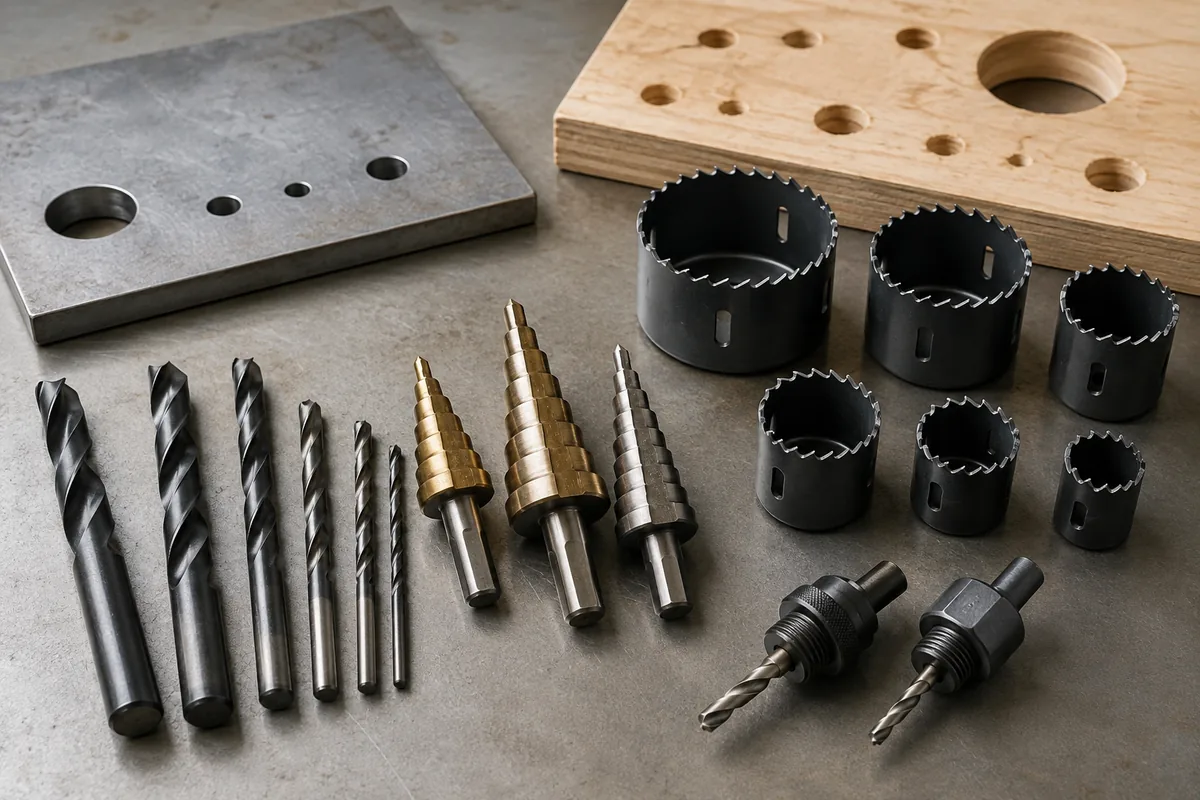
A step bit’s main advantage is convenience, not precision by default. For occasional work on a thin enclosure, a step drill bit for thin sheet metal is often the sensible buy. For repeated panel work or a larger opening, compare it with a conduit knockout punch set.
What to look for in a step bit
Capacity and step sizes: Confirm that the bit reaches the exact hole diameter you need. A bit may have a broad stated range but coarse increments near the size you want. Read the printed step markings and check that the target diameter is available. Do not assume the next step up is close enough for a fitting; an oversized hole can leave too little metal for the connector to seat securely.
Cutting depth: The cutting portion of each step must pass through the panel wall. A step bit can stop cutting cleanly if the panel is thicker than the step’s usable cutting height. Most thin electrical enclosures are a better match for a step bit than thick plate, but verify the material and tool limits.
Material and coating: High-speed steel is adequate for occasional work in mild steel when kept sharp and used at a sensible speed. Cobalt or a suitable coating can help with demanding materials or longer service, but does not excuse forcing a dull bit. Avoid treating a general-purpose bit as suitable for stainless steel unless its manufacturer says so.
Shank and drive: A three-flat shank helps reduce slipping in a drill chuck. A hex shank can make bit changes faster, but check that it fits your drill and is rated for the work. A corded drill or a well-charged cordless drill can do the job; high torque is less important than controllable low speed.
How to enlarge the knockout
Work only on a de-energized enclosure. Have a qualified person verify the equipment is isolated and cannot be re-energized; switching off a breaker is not always sufficient. Follow the panel manufacturer’s rules. If the panel is live, you cannot safely control loose metal debris, or you are unsure what is energized, stop and get qualified help.
Remove the panel cover and, where practical, work on the enclosure separately from installed electrical equipment. Protect components from chips. If the panel cannot be removed, place a barrier behind the work and capture debris with a vacuum or suitable collection method; a magnet alone will not collect nonferrous material. Wear eye protection, secure the work, and keep hands clear of the cutting edge.
Mark the center and use a small pilot hole only if the bit’s instructions call for one. A step bit’s pointed tip can wander on a curved or slick surface, so a center punch can help, but strike gently to avoid denting the enclosure. Hold the drill square to the panel and run it slowly. Use light, steady pressure; excessive speed or force builds heat, dulls the edge, and increases the chance the bit will grab as it breaks through.
Stop at the exact step required. Do not let the bit climb to the next diameter. Withdraw it while it is turning slowly, then deburr both sides of the opening. Remove every chip before reinstalling the cover or fitting. Check that the connector sits flat and its locknut engages properly. A rough edge can damage conductors or compromise a fitting’s bond to the enclosure.
Common mistakes and when to choose another tool
The most common failure is cutting one step too far. Measure the fitting’s specified hole diameter before drilling, and watch the bit markings as the step approaches the panel. Other warning signs are a bit that chatters, a hole that becomes visibly oval, or metal that starts to discolor from heat. Stop rather than trying to correct a badly oversized hole with a file.
Skip the step bit if the enclosure is thick, the required diameter exceeds the bit’s rating, the opening is near an edge or another knockout, or the fitting needs a particularly clean and accurate hole. A knockout punch is usually the better choice for larger conduit openings and repeat jobs. If the knockout is already out of round or the panel metal is damaged, consult the equipment maker or an electrician instead of enlarging it further.
What to buy
For occasional work on thin sheet metal, a reasonably priced, sharp step bit with clear markings and the right diameter range is enough. There is little benefit in paying for a premium set if you need one hole and the cheaper bit meets the material and size requirements. For frequent electrical installation, a punch set can cost more upfront but makes consistent holes with less risk of wandering or oversizing. Match the tool to the hole, verify the fitting dimensions, and let control—not drill power—do the cutting.