What's inside
As an Amazon Associate I earn from qualifying purchases. This post may contain affiliate links at no extra cost to you.
Our Top Picks



What Makes a Good Dovetail Marking Knife
A dovetail marking knife has one job: cut a narrow, repeatable line that a saw or chisel can follow. On hardwood, that line should sever the surface fibers rather than push them aside. A pencil line is too wide, and an awl often leaves a round divot that does not clearly show which side of the mark is waste.
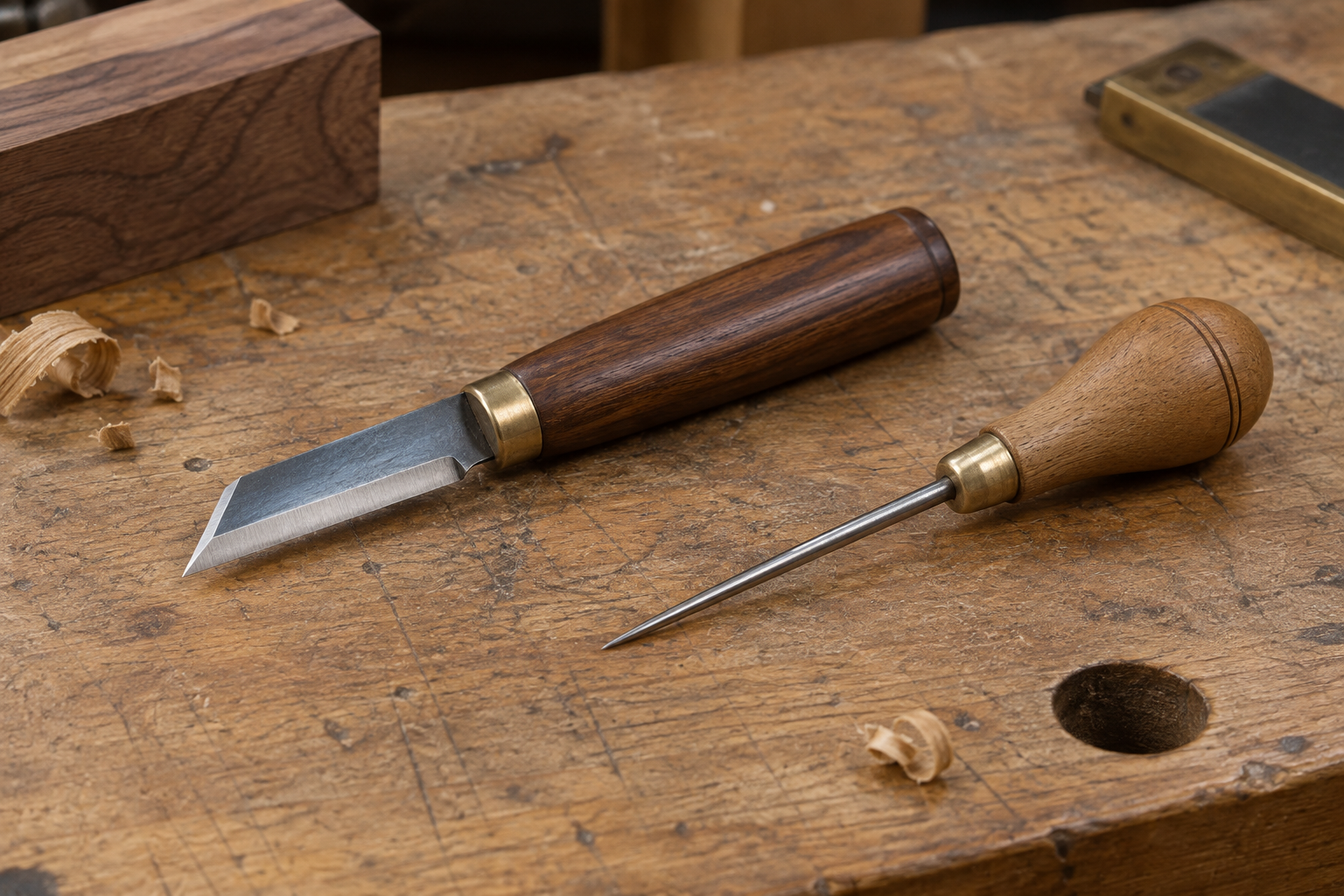
For most dovetail work, the best choice is a thin, single-bevel marking knife with a flat reference side. Put the flat side against the end of the tail or pin, and the bevel faces into the waste. This gives the blade a predictable registration surface. A double-bevel knife can work, but it is less convenient when you need the blade to sit tightly against a reference edge.
As an Amazon Associate we earn from qualifying purchases at no extra cost to you.


The blade should be thin enough to enter a knife wall without widening it. Around 1.5 to 2.5 mm at the spine is a useful range. A blade that is much thicker can still mark accurately, but it requires more care and may leave a line that is unnecessarily broad. The tip should be sharp but not needle-thin. An extremely fine point bends or chips more easily when it hits a hard patch in maple, ash, or figured oak.
Best Overall: A Single-Bevel Marking Knife
For a woodworker who wants one knife for dovetails, tenons, stopped dados, and general joinery, I would buy a quality single-bevel marking knife with a rigid steel blade and a handle that allows a controlled pencil-like grip. A short, stiff blade is easier to steer than a long blade, particularly when marking pins inside a narrow socket.
Look for a flat back or reference face that is genuinely flat, not merely ground to look flat. Hold it against a straightedge and check for rocking. The edge should meet the flat face cleanly along its full length. A hollow-ground back is not automatically a problem, but the area immediately behind the cutting edge must be flat enough to register against the work.
A single-bevel woodworking marking knife is usually the safest purchase for dovetail layout. It provides a clear reference side and is easier to sharpen consistently than a spear-point blade.
Marking Knife Types Compared
| Type | Best use | Advantages | Drawbacks |
|---|---|---|---|
| Single-bevel knife | Dovetails and precision joinery | Excellent registration; clear waste-side line | Usually needs separate left- and right-hand technique |
| Double-bevel knife | General layout and field work | Works from either direction; easy to control | Less positive registration against an edge |
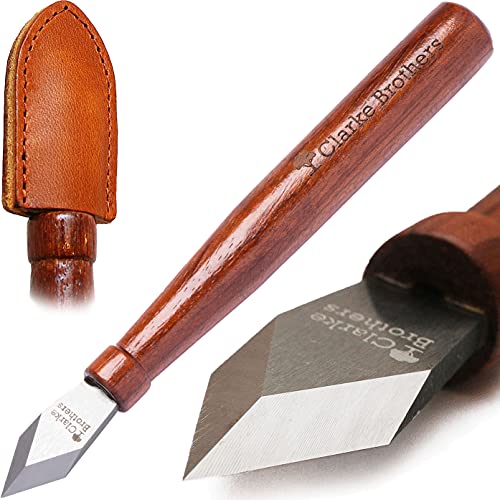
| Blade-style marking knife | Fine, controlled knife walls | Thin edge and good visibility | Can be awkward if the handle is too small |
| Awl or scratch awl | Starting holes and rough layout | Cheap and useful for locating points | Leaves a dot, not a clean wall; poor for saw guidance |
Steel and Edge Retention
Blade steel matters less than the grind, but hardwood exposes weak edges quickly. A basic carbon-steel knife can produce excellent dovetails and is easy to sharpen. Its disadvantage is corrosion: sweat and damp workshop air can stain the blade within a day. Wipe it after use and apply a thin coat of camellia oil or paste wax.
Powder metallurgy or other wear-resistant steels hold an edge longer in abrasive woods such as teak, wenge, and some species of oak. The trade-off is sharpening time. A harder, more wear-resistant blade may need diamond abrasives or more strokes on a coarse stone. For a hobbyist making a few dovetail joints per month, ordinary tool steel is often the better value.
Do not judge sharpness by how easily the knife cuts paper. For layout, the important test is whether it enters the wood without pushing the fibers ahead of the edge. A properly sharpened knife should make a continuous line with light hand pressure. If you need to force it, the edge is dull, the bevel is too steep, or you are cutting across difficult grain.
Handle Shape and Control
A large handle is not automatically better. Dovetail marking is a close, deliberate operation, and a handle roughly 90 to 120 mm long is comfortable for most hands. A bulbous handle gives a secure grip for heavier layout, while a slim pen-style handle offers better fingertip control. Avoid handles with sharp metal collars or oversized pommels that prevent you from placing the blade close to an inside corner.
Balance should favor the hand rather than the tip. A heavy blade can help the knife track, but excessive forward weight encourages digging and makes it harder to stop at the baseline. If you mark several boards at once, a slightly larger handle reduces fatigue and is less likely to slip when your fingers are dusty.
For tight dovetail sockets, a thin-blade marking knife is preferable to a broad marking gauge blade. It can reach into a corner without contacting the adjacent wall.
How to Mark Dovetails Accurately
Start by flattening and squaring the board ends. A knife cannot correct an end that is out of square. Set the tails or pins with a marking gauge, then remove loose fibers from the gauge line with a light pass of the knife. Do not repeatedly saw back and forth in the same line; that widens the mark and creates a vague waste boundary.
When transferring tails to pins, clamp the boards firmly and keep the reference faces aligned. Hold the marking knife nearly vertical and place its flat face against the tail. Make one light scoring pass first, then deepen the line with a second pass if needed. Two controlled passes are safer than one heavy pass, which can follow end grain and wander.
Mark the waste side with a small pencil triangle or scratch mark. This prevents the most expensive failure: cutting on the wrong side of a clean knife line. On a 12 mm-thick pin board, being only 0.5 mm off can noticeably loosen the joint or leave a visible gap.
When a Cheaper Knife Is Enough
A budget knife is fine if its blade is straight, its reference face is flat, and it accepts a clean edge. You do not need exotic steel to make accurate dovetails. A replaceable utility-knife blade can also work for rough cabinet layout, but many utility blades are too flexible and their factory edges are inconsistent. They are better for marking sheet goods than for transferring fine dovetail shoulders.
Spend more when you make frequent hand-cut joints, work mostly in hard or abrasive species, or need a handle that remains comfortable through a full day. Otherwise, put the money toward reliable sharpening stones and a good dovetail saw. The sharpest marking knife cannot compensate for a wobbly saw cut or a board that was not squared before layout.