What's inside
As an Amazon Associate I earn from qualifying purchases. This post may contain affiliate links at no extra cost to you.
Our Top Picks
 Amana Tool Spektra Extreme Tool Life Coated Solid3/8 x 1-1/4 x 3/8 x 3 - 2 Flute3.5 x 0.6 x 0.6 inchesCheck on Amazon
 SpeTool Compression Router Bits 1/4 Inch Shank 11/4" Dia - 1" CL -1/4" Shank3.43 x 0.47 x 6.06 inches0.1 poundsCheck on Amazon
 SpeTool 5PCS Compression Spiral Router Bits with TAC1/4"Dia-1"CL3.43 x 0.47 x 6.06 inches0.1 poundsCheck on Amazon

Best Compression Router Bit for Cutting Melamine on a CNC Router
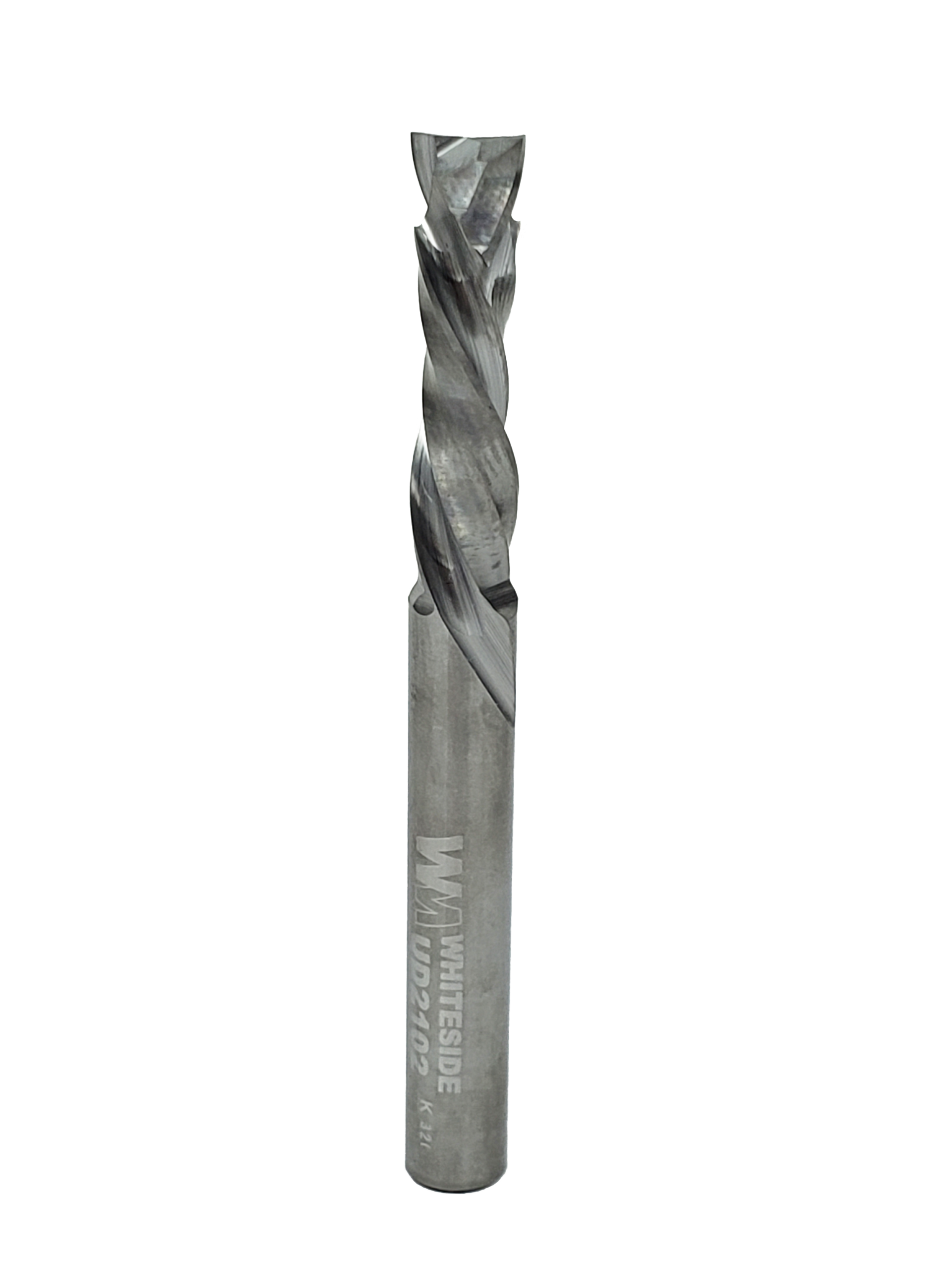
For cutting melamine-faced particleboard or MDF on a CNC router, a two-flute compression bit is usually the best choice. It combines an upcut section at the tip with a downcut section above it. The upcut pulls chips out of the bottom of the panel, while the downcut pushes the top laminate down. When the bit is set to the correct cutting depth, both faces come off cleanly with far less chipping than a standard upcut or downcut bit.
My default choice is a 1/4-inch shank, two-flute, solid-carbide compression bit with a 1/8-inch upcut length. That configuration suits the 1/2- to 3/4-inch melamine sheet commonly used for cabinets and shop furniture. For thicker panels or deeper profiling, choose an upcut section long enough to reach through the bottom laminate without making the downcut section ineffective.
As an Amazon Associate we earn from qualifying purchases at no extra cost to you.


What to buy
Look for a 1/4-inch two-flute compression bit made from solid carbide. Avoid confusing a compression bit with a simple downcut bit. Both push chips downward near the surface, but only the compression design protects the bottom face as well.
A 1/4-inch shank is the practical size for most hobby CNC routers and trim-router spindles. A 1/2-inch shank can be stiffer and better for larger machines, but it is not automatically a better cutting bit. The collet, spindle, and tool holder must support that size, and many compact routers accept only 1/4-inch shanks.
Choose a bit with a short cutting length whenever possible. A 1/2-inch cutting length is appropriate for many 5/8-inch or 3/4-inch sheets. Extra flute length increases deflection and makes it easier to cut below the spoilboard. A solid-carbide bit with a polished or high-quality carbide edge will generally last longer than the cheapest generic cutter, especially when cutting abrasive melamine surfaces.
| Bit type | Top-face finish | Bottom-face finish | Best use |
|---|---|---|---|
| Upcut spiral | Usually clean | Chips and breakout likely | Internal cuts where the top is the priority |
| Downcut spiral | Usually clean | Bottom breakout possible | Shallow pockets and top-face work |
| Compression spiral | Clean when depth is correct | Clean when depth is correct | Through-cuts in melamine sheet goods |
| Compression-coated or premium carbide | Clean and longer-lasting | Clean and longer-lasting | Frequent production cutting |
Why compression bits work
The important measurement is the length of the upcut section at the tip. On a 3/4-inch panel, the toolpath should place the transition between the upcut and downcut portions inside the material, not above the top face or below the bottom face. A common starting point is cutting about 0.010 to 0.020 inch into the spoilboard. That small overcut helps ensure the lower laminate is fully severed.
If the bit only cuts 0.050 inch deep, the upcut tip may never reach the bottom laminate. The bit then behaves mostly like a downcut cutter, and the underside can chip. Conversely, if the compression transition is above the top surface, the top edge can fray. Test the setup on scrap from the same sheet before cutting a full cabinet part.
Compression bits are not magic. A dull edge, poor workholding, excessive runout, or a warped spoilboard can still produce chips. Melamine is also abrasive, and its thin decorative layer can hide a damaged carbide edge until the cut quality suddenly deteriorates.
Starting feeds and speeds
For a sharp 1/4-inch, two-flute compression bit in 3/4-inch melamine, a reasonable starting point is 16,000 to 18,000 rpm, a feed rate of 120 to 180 inches per minute, and a 0.080- to 0.125-inch depth per pass. These are starting numbers, not universal settings. A rigid CNC with a powerful spindle can cut faster and deeper; a light gantry machine may need shallower passes.
Feed per tooth is the useful check. At 18,000 rpm and 150 inches per minute with two flutes, the chip load is about 0.0042 inch per tooth. If the machine is making fine dust instead of distinct chips, it may be rubbing from too slow a feed, a dull tool, or insufficient depth. If the router bogs down, the cut burns, or the edge chips badly, reduce depth per pass first and check that the bit is not extending unnecessarily far from the collet.
Use strong dust collection. Melamine dust is fine and abrasive, and chips left in the kerf can be recut, leaving a rough edge and adding heat. Keep the bit extension as short as the job permits. A clean collet and properly seated shank are just as important as the advertised bit geometry.
Common failure modes
Chipped top edge: The downcut portion may be too short for the panel, the bit may be dull, or the feed may be too aggressive. Confirm that the bit is actually a compression design and not a mislabeled downcut bit.
Chipped bottom edge: The tool may not be cutting deeply enough, or the upcut section may be too short. Increase the final pass to slightly below the sheet thickness, provided the spoilboard is flat and sacrificial.
Burn marks: Reduce rpm or increase feed while maintaining a sensible chip load. Burning can also indicate a loose collet, excessive tool stickout, or a bit that has already lost its edge.
Melamine lifting or panel movement: Improve vacuum coverage or add hold-downs near narrow parts. No compression geometry can compensate for a workpiece that moves during the cut.
Is a premium bit worth it?
A cheap solid-carbide compression bit is fine for occasional projects if it is sharp, correctly sized, and replaced when the edge dulls. For one kitchen or a few workshop cabinets, buying a small multipack can be cheaper than paying for a premium production cutter.
Spend more on a coated compression bit for melamine when you cut sheet goods regularly. A better coating and more consistent grinding can improve wear life and edge consistency, but it will not fix incorrect feeds, poor dust collection, or a misadjusted cutting depth. For occasional CNC use, geometry and correct setup matter more than the brand name.
Buying advice for your machine
Before ordering, verify the shank diameter, cutting length, total length, flute count, and upcut-section length. For most 3/4-inch melamine work, a 1/4-inch, two-flute compression bit with roughly 1/8 inch of upcut at the tip is the safest starting point. Buy one spare, record the settings that produce clean edges, and use a scrap test whenever the panel thickness or material supplier changes.