What's inside
As an Amazon Associate I earn from qualifying purchases. This post may contain affiliate links at no extra cost to you.
A carpenter pencil is only useful when its mark stays visible and its point matches the job. On rough lumber, a blunt or uneven point can turn a 1/16-inch layout mark into a wandering line. The best sharpener is not necessarily the one that produces the sharpest-looking point. It is the one that makes a repeatable point without wasting half the pencil or breaking the graphite.
As an Amazon Associate we earn from qualifying purchases at no extra cost to you.


Our Top Picks


What Makes a Good Carpenter Pencil Sharpener?
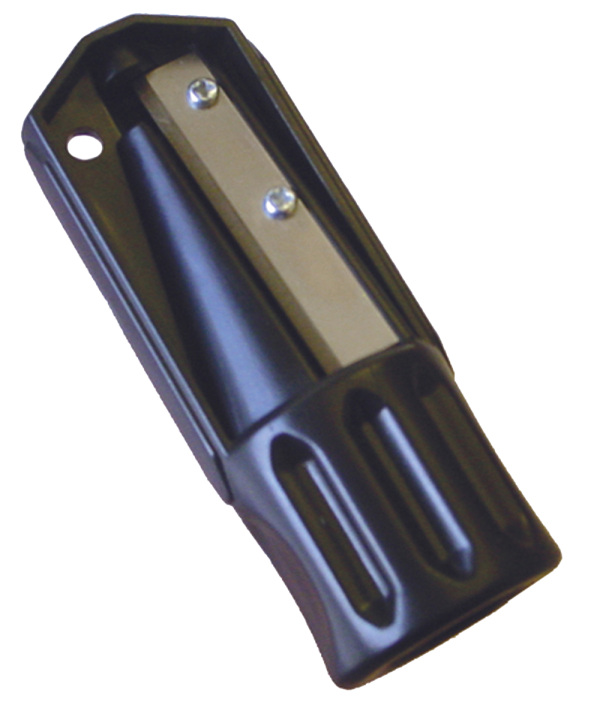
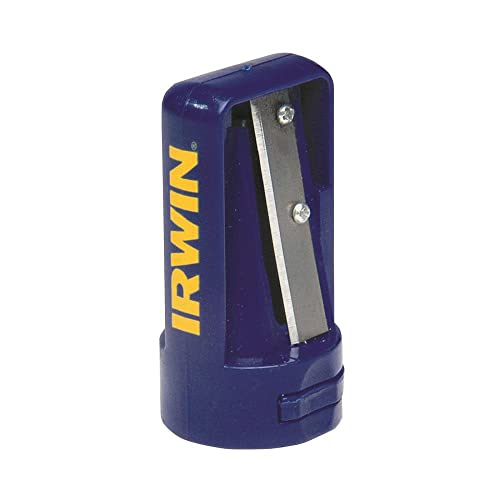
Carpenter pencils are flat, usually about 1/4 inch thick and roughly 1/2 inch wide. A standard round pencil sharpener will not accept them, and forcing one into a regular sharpener can damage both tools. Look for a dedicated carpenter pencil sharpener with a slot shaped for a flat pencil.
The useful features are simple: a replaceable or durable blade, a way to hold the pencil square, and an opening that leaves a broad, usable point. Some sharpeners produce a long chisel point, while others create a shorter wedge. A long point is better for fine layout work, but it exposes more graphite and is easier to snap when marking knotty or gritty lumber.
A sharpener should also remove wood cleanly. If it tears the cedar or leaves a deep step in the pencil, the lead will not be centered. That creates a point that marks heavily on one edge and skips on the other.
The Main Sharpener Types Compared
| Sharpener type | Best use | Advantages | Weaknesses |
|---|---|---|---|
| Dedicated flat-pencil sharpener | Repeatable layout marks | Fast, consistent, compact | Blades dull on dirty lumber; limited point shape |
| Utility knife or marking knife | Custom points and field repairs | Works on any pencil; inexpensive | Slower and less consistent; easier to cut too deeply |
| Sandpaper or abrasive block | Fine control and specialty points | Quiet, precise, no sharp blade required | Slow; creates dust and wears unevenly |
| Multi-size manual sharpener | Mixed pencil sizes | One tool handles several shapes | Can fit loosely; often leaves an irregular point |
Best Overall: A Dedicated Flat Carpenter Pencil Sharpener
For most carpenters, a purpose-built flat sharpener is the best choice. It is quicker than a knife and more consistent than sanding. A good unit can restore a point in three to six turns, provided the pencil is reasonably straight and the blade is sharp.
This is the right choice for repeated work such as laying out stud cuts, stair parts, cabinet components, or sheet goods. Consistency matters more than ultimate sharpness. If every pencil is sharpened to the same wedge, your marks will have similar width and visibility.
Choose a model with a visible blade screw or replaceable blade if possible. A permanently molded sharpener may cost less, but once its blade starts tearing the wood, the entire tool becomes disposable. Keep the sharpener in a pocket or tool pouch rather than loose in a sawdust-filled apron pocket. Grit is the main cause of premature blade wear.
Dedicated sharpeners are usually inexpensive, so the cheaper option is fine for occasional home projects. For daily use, spend a little more on stronger plastic or a metal-bodied design, especially if the sharpener will live in a truck or cold jobsite box. A flat carpenter pencil sharpener with a replaceable blade is the most practical upgrade.
When a Utility Knife Is Better
A utility knife is the most versatile option, but it takes practice. It lets you choose a broad chisel edge for general layout, a narrow edge for detail, or a longer bevel for marking into a corner. It also works when the pencil has an unusual shape or has been crushed at the end.
The trade-off is repeatability. A knife-sharpened pencil may be excellent in experienced hands and poor in someone else’s. Keep the bevel shallow and remove wood in light strokes. Do not try to expose 1/2 inch of graphite in one cut; that long point will usually snap on the first knot or nail hole.
Use a sharp blade and cut away from your body. A dull utility blade requires more force and tends to slip. For a pencil used on rough framing lumber, a short chisel point is generally stronger than a long needle point. A carpenter pencil knife sharpener or dedicated marking knife makes sense if you already sharpen pencils this way and want a controlled, repeatable blade angle.
Sandpaper and Abrasive Options
Sandpaper is underrated for sharpening carpenter pencils. Fold 120- or 150-grit abrasive around a flat scrap of wood, then rub the pencil across it while rotating the pencil slowly. Finish with 220 grit if you need a cleaner point.
This method is slower—about 30 to 60 seconds for a heavily rounded pencil—but it gives excellent control. It is useful for soft graphite pencils, colored layout pencils, and pencils with lead that chips when cut. It also avoids the sudden breakage that can happen with a knife.
Do not use very coarse 60-grit paper unless the pencil is badly damaged. It removes wood quickly but leaves a rough, fragile graphite edge. Replace the abrasive when it loads with graphite; clogged paper polishes instead of cutting.
How to Get Consistent Marks on Rough Lumber
Start by trimming the pencil end square if it is badly angled. Insert it fully into the sharpener and keep steady pressure against the guide. Turn the pencil rather than twisting the sharpener around it when the design allows. Stop as soon as the wood reaches the intended point; extra turns waste 1/8 inch or more of pencil each time.
Test the point on scrap lumber. A good point makes a line that remains visible across grain changes without needing excessive pressure. If the line is too broad, sharpen a narrower chisel edge. If the graphite snaps repeatedly, shorten the point or use a slightly softer marking pencil.
Keep two pencils available: one with a broad, durable point for rough framing and another with a finer point for finish layout. That small separation is more useful than buying an expensive sharpener that tries to do both jobs.