What's inside
As an Amazon Associate I earn from qualifying purchases. This post may contain affiliate links at no extra cost to you.
Our Top Picks
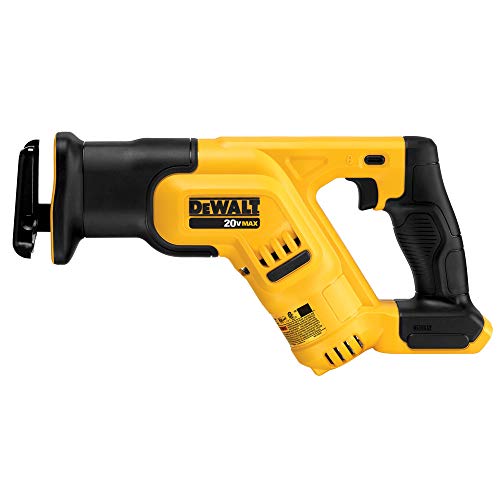
 DEWALT 20V MAX* Cordless Reciprocating Saw KitOne Size14.75 x 3.5 x 7.5 inches7 PoundsCheck on Amazon


The short answer
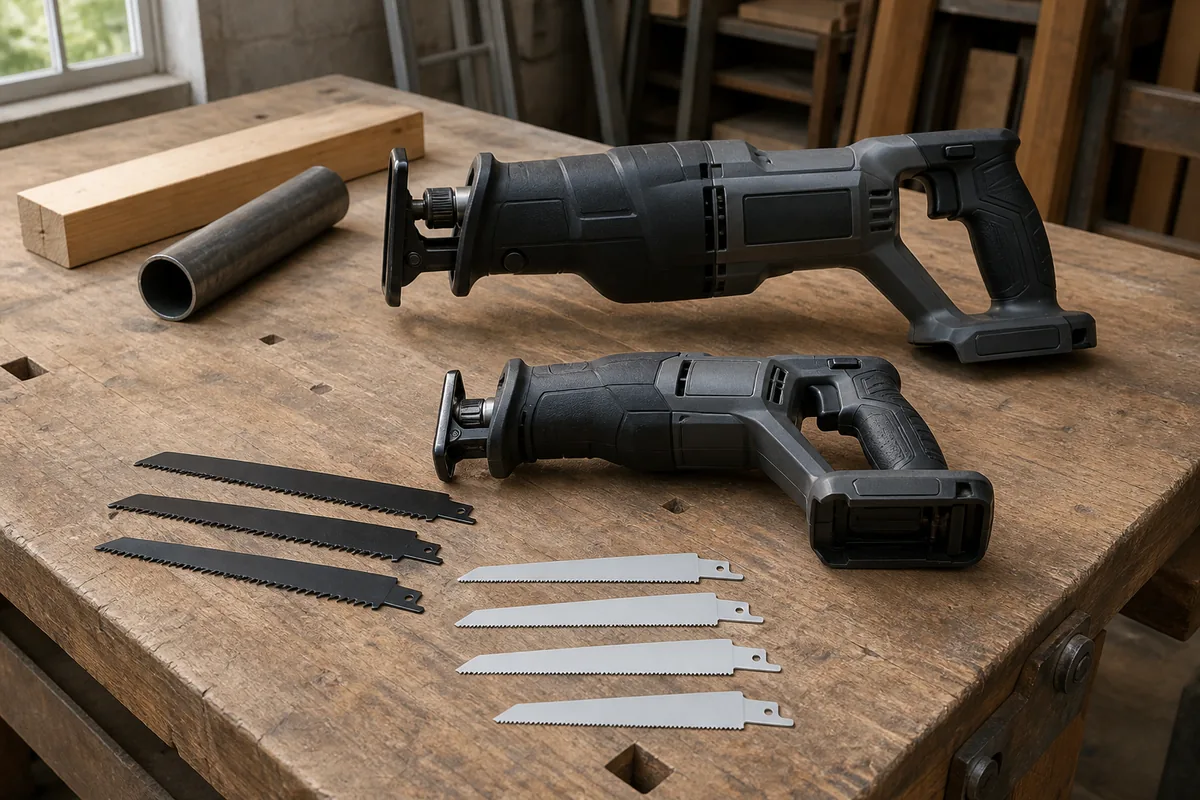
For occasional cuts under a sink, a compact reciprocating saw is usually easier to position and control. Its shorter body and lighter weight matter when you’re working around a cabinet floor, drain trap, shutoff valves, and your own forearm. A full-size recip saw makes more sense if you already own one, need to cut thicker material, or expect to use it for demolition beyond the cabinet.
Neither tool is a substitute for checking what’s behind the cut. A blade that clears the pipe you can see may still reach a supply line, cable, or cabinet wall. Measure the clearance, choose a blade just long enough to cut the workpiece, and protect nearby plumbing before you squeeze the trigger.
As an Amazon Associate we earn from qualifying purchases at no extra cost to you.


What actually fits under a sink
There’s no standard “under-sink” clearance. In a roomy vanity, you may have several inches around the drain. In a crowded kitchen cabinet, the trap, disposal, water lines, and stored supplies can leave only a narrow approach. The saw’s overall length and the space needed to grip and move it can matter more than its advertised cutting capacity.
A compact saw is easier to turn and hold with one hand, though you should use two hands whenever the position allows. Its shorter stroke and smaller body are useful for cutting PVC, plastic fittings, thin metal straps, or small sections of wood. Full-size saws typically have a longer stroke and more power, which can speed cuts through thicker stock but also produce more kick and vibration in a tight space.
“Compact” does not guarantee access. Check the tool’s length with the battery installed, and consider where your hand and the blade clamp will sit. A short saw may still be awkward if the blade must approach a pipe from the side.
Compact vs. full-size at a glance
| Factor | Compact recip saw | Full-size recip saw |
|---|---|---|
| Access | Usually easier to angle in a cabinet | Can be difficult to position near the back or sides |
| Weight and control | Generally lighter; easier to manage in short cuts | More tiring overhead or at arm’s length; more momentum |
| Cutting speed | Good for small pipe, thin metal, and light wood | Usually better for thick lumber, larger demolition, and repeated cuts |
| Risk in tight quarters | Less tool mass, but the blade can still hit hidden lines | More vibration and reach; harder to stop precisely |
| Cost decision | Worth considering if access is the main problem | Often the better buy if you already own one or need broader use |
Choose for the material, not the label
For a small PVC drain section, either saw can work with a fine-tooth blade. A compact model is often the more manageable choice, especially if the cut is close to a cabinet wall. For a thin metal bracket or strap, use a metal-cutting blade and keep the shoe firmly against a stable surface when possible. Don’t use a coarse wood blade against a pipe you intend to keep; it can snag, wander, or damage the pipe before you react.
For a thick cabinet rail, a full-size saw can cut faster, but speed is not always an advantage indoors. If you can remove the workpiece and cut it on a bench, do that instead. If the cut must happen in place, a compact recip saw or a hand tool may give you more control. A compact reciprocating saw is the sensible category to shop when reach and maneuverability are the priority, not maximum demolition output.
Blade choice can make a bigger difference than upgrading saw size. Use a blade intended for the material, with enough length to pass through it without exposing several extra inches of teeth. A blade that is too short may bind; one that is much too long can strike the cabinet, a pipe, or the back of your hand.
Prevent the common under-sink failures
The costly mistake is cutting into a live supply line or drain. Before cutting, identify each pipe and shut off the relevant water supply if there’s any chance of contact. Empty the cabinet, clear the work area, and support the piece you’re cutting so it cannot pinch the blade as the cut closes. If the cut is near electrical wiring or a disposal connection, disconnect power at the breaker or unplug the appliance where appropriate.
Recip saws can grab when the blade binds, especially with thin-walled plastic or metal. Keep a firm grip, brace the shoe against the work when the shape allows, and use short, controlled cuts. Don’t force the tool through a stubborn cut; back out, check for binding, and change the blade or approach. Wear eye protection, since small chips and metal fragments can come back toward your face.
If the target is a pipe you need to preserve, don’t rely on “careful” trigger control alone. Use a physical guard between the blade and pipe, or choose a hand-operated cutter designed for that pipe material. For a clean cut on accessible plastic pipe, a ratcheting PVC cutter or compact hand saw may be cheaper and less risky than buying a power tool.
What to buy—and when not to
Buy a compact saw if you expect repeated work in cabinets or other cramped locations and don’t already have a suitable tool. Check bare-tool versus kit pricing: a battery platform you already own can make the compact option substantially cheaper. A compact recip saw blade set for wood and metal can cover common repair jobs, but match the blade to the actual material rather than assuming one blade handles everything.
Keep a full-size saw if it is already in your toolbox and the job offers enough room to control it. There is little reason to buy a second saw for a single cut. You can also use a hacksaw, PVC cutter, or oscillating tool when the cut is short and precise; these may take longer but are often easier to keep away from nearby plumbing.
For frequent demolition, thick lumber, or cutting from outside the cabinet, a full-size saw earns its extra weight. For routine under-sink repairs, the compact tool is generally the better fit—but only if the blade can reach the work without putting adjacent pipes and wiring in danger.