What's inside
As an Amazon Associate I earn from qualifying purchases. This post may contain affiliate links at no extra cost to you.
Our Top Picks



What a jigsaw guide rail adapter actually does
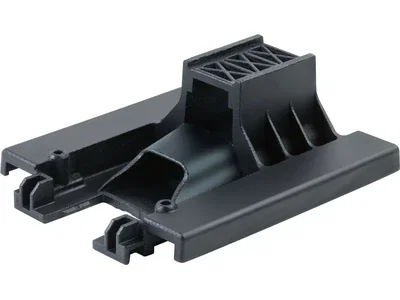
A jigsaw guide rail adapter connects the saw to a straightedge or track so the base stays aligned during a cut. It can help you make a straight, controlled cut in a cabinet panel, but it does not turn a jigsaw into a track saw. The blade can still wander below the shoe, and the cut edge is usually rougher than one made with a circular saw and suitable guide rail.
For typical 18 mm (about 3/4-inch) cabinet plywood, an adapter is most useful when you already own a jigsaw and need a few straight cuts without buying another saw. It is less attractive for repeated cabinet breakdown, where a circular saw with a track or a clamped straightedge is generally faster and gives better results.
As an Amazon Associate we earn from qualifying purchases at no extra cost to you.


Choose the guide system before the adapter
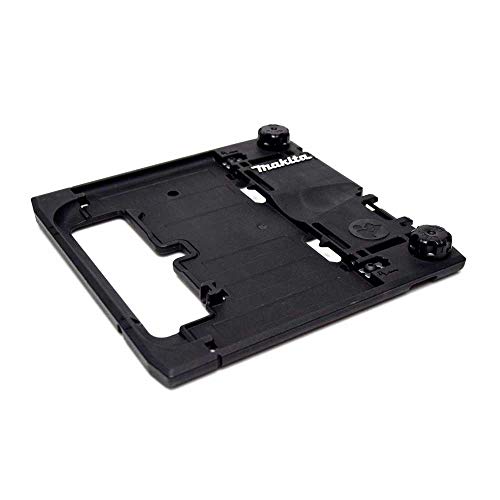
Adapters are not universal. Some are designed to run in the manufacturer’s own rail; others attach to a generic straightedge or guide bar. Check the saw’s base shape, the adapter’s mounting method, and the rail’s slot or edge profile before buying. A rail-compatible adapter may be useless if the track has the wrong profile or the saw’s shoe cannot accept the mounting hardware.
For a one-off cabinet project, a clamped aluminum straightedge and a suitable edge-guiding attachment can be the economical choice. For regular work, a dedicated rail system is easier to set up repeatedly and is less likely to shift mid-cut. Start by comparing jigsaw guide rail adapters against the rails you already own, rather than choosing by price alone.
Adapter and guide options compared
| Option | Best for | Trade-off |
|---|---|---|
| Brand-specific rail adapter | Owners of a compatible saw and rail | Good fit when supported, but limited to a particular system |
| Universal or adjustable adapter | Users with a common shoe shape or mixed equipment | More flexible, but alignment and fit may take extra checking |
| Clamped straightedge | Occasional cuts and tight budgets | Cheap and simple, but setup can be slower and clamps may obstruct the saw |
| Circular saw with guide rail | Repeated long, straight panel cuts | Higher cost and more tool than a small job may warrant |
If you are buying a complete system, check whether the adapter is included with the rail or sold separately. Search for jigsaw track guide rail systems and confirm the exact saw compatibility in the listing or manufacturer documentation. “Fits most jigsaws” is not enough if the adapter relies on a specific shoe width or mounting hole pattern.
What matters when buying
Fit and repeatability: The saw should attach without rocking, and the adapter should not loosen as you feed the tool. Look for adjustment that removes side-to-side play without binding. Too much clearance lets the saw drift; too little can make it stick and pull the cut off line.
Cut capacity: The adapter and rail must allow the shoe to travel the full length of your cut. Check whether the rail’s joining pieces or clamps interfere with the saw. For a 600 mm-wide cabinet side, allow extra track length at both ends so the blade is already moving steadily before entering the panel and can clear it at the exit.
Blade control: A jigsaw blade bends under sideways pressure, especially in thick material or a tight curve. A rail helps guide the shoe, not the blade’s path below the surface. Use a sharp, appropriate blade and a steady feed; forcing the saw to keep up with a pencil line is a common cause of a cut that looks straight on top but wanders underneath.
Dust and splintering: A rail does not guarantee a clean edge. Use a fine-tooth blade suited to plywood, support the waste side, and test the setup on scrap. A zero-clearance insert or splinter guard can help if compatible. Tape may reduce surface tear-out, but it will not correct blade deflection.
Set up for a straighter cut
Mark the finished line, then account for the distance from the blade to the adapter’s guiding edge. Make a short test cut in scrap of the same thickness and measure the result. Do not assume the rail edge sits exactly on the cut line; adapters often offset the saw, and the offset can differ between setups.
Clamp the rail securely at both ends, keeping clamps clear of the saw’s travel. Put the finished face where the blade’s tooth direction gives the cleaner surface for your particular saw, then test on scrap: jigsaw tooth direction and orbital action affect tear-out. Keep the shoe flat on the panel and let the blade reach speed before entering the cut. For a long cut in 18 mm plywood, a moderate, continuous feed is usually safer than pushing hard to finish quickly.
Stop if the blade starts to deflect, the shoe lifts, or the adapter binds. Backing out while the blade is moving can damage the edge or twist the blade; switch off, wait for it to stop, then inspect the setup. If the blade repeatedly wanders despite a straight rail and steady feed, use a circular saw for the panel cut and reserve the jigsaw for notches and cutouts.
Who should buy an adapter?
Buy one if you already have a compatible jigsaw, expect to make occasional straight cuts, and can verify that the adapter matches both saw and rail. A basic clamped straightedge is fine for a small number of cuts, especially if the saw base can follow it reliably. The cheaper setup is not a compromise worth worrying about when the work is limited and you can test the offset first.
Choose a dedicated rail system if you make panel cuts often and value repeatable setup. If cabinet sides, shelves, and backs need consistently straight, clean edges, compare the adapter’s total cost with a circular saw guide rail system. It costs more, but it is the better tool for breaking down full sheets and long cabinet panels.