What's inside
As an Amazon Associate I earn from qualifying purchases. This post may contain affiliate links at no extra cost to you.
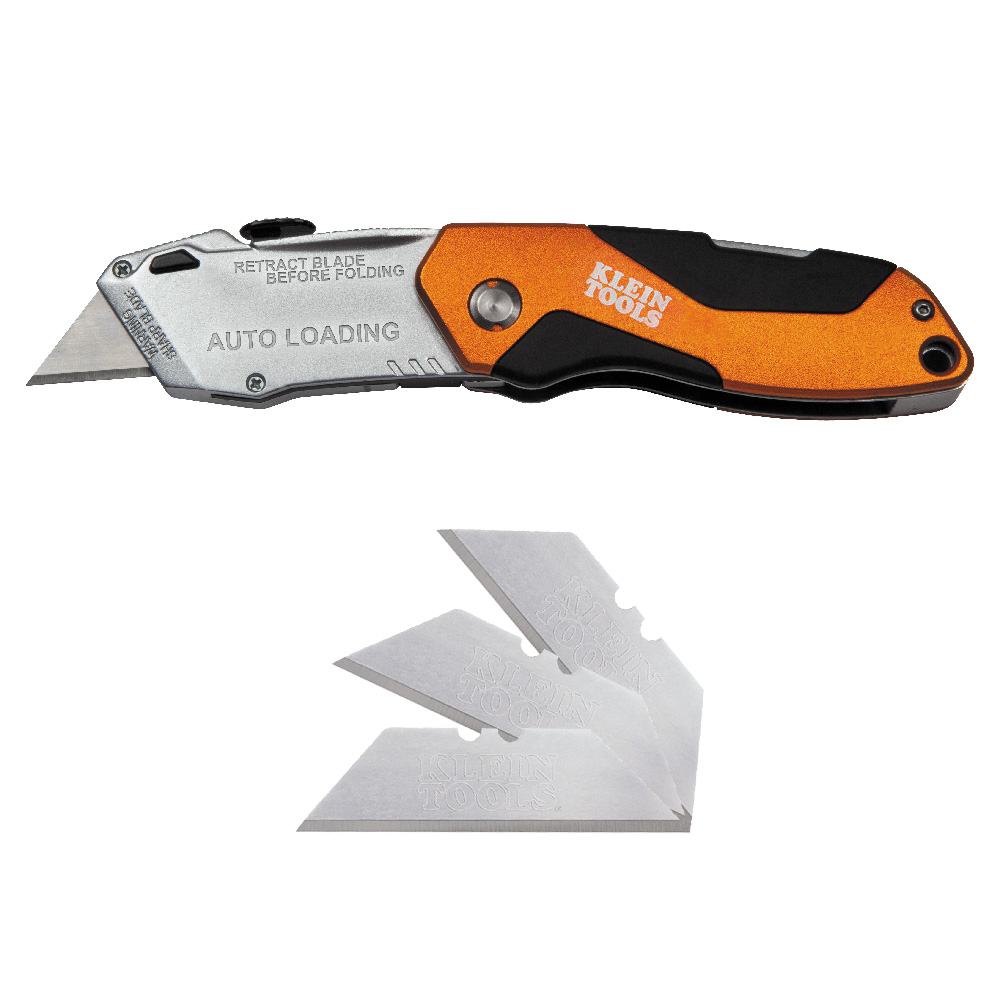
The Milwaukee FASTBACK and Klein Tools 44130 are both folding utility knives built around replaceable standard utility blades. They suit routine work such as opening cartons, trimming roofing felt and cutting carpet, but differ in how they handle blade changes and everyday carry. The right choice depends less on brand than on how often you swap blades, whether you want a belt clip, and how much you value a one-handed opening mechanism.
As an Amazon Associate we earn from qualifying purchases at no extra cost to you.



Our Top Picks
Quick comparison
| Feature | Milwaukee FASTBACK | Klein Tools 44130 |
|---|---|---|
| Blade type | Standard replaceable utility blade | Standard replaceable utility blade |
| Opening | Flip-open design; operation varies by FASTBACK version | Folding design with a thumb stud |
| Blade changes | Tool-free on versions with quick-change mechanism | Typically requires a screwdriver to release the blade holder |
| Carry | Clip on many versions; check the exact model | Belt clip |
| Best fit | Frequent blade changes and fast access | Straightforward cutting and lower-cost ownership |
FASTBACK is a product family, not one fixed knife. Milwaukee sells versions with different features, so check the exact listing for a wire stripper, gut hook, blade storage or quick-change mechanism before ordering. This comparison focuses on the standard folding utility-knife use case, not every variant.
Opening and carry
Milwaukee’s flip-open action is useful when one hand is holding material or a ladder rail. It can make repeated access quicker than pulling a folded knife out, opening it with two hands and putting it back. The trade-off is that a flip-open knife needs practice: keep fingers clear of the blade path, and do not treat the opening action as a substitute for checking that the blade is locked before cutting.
The Klein 44130 uses a thumb stud to open the blade. It is a familiar, controlled motion, but may take more deliberate effort than a flick-style opener. For a worker who takes the knife out only a few times per shift, the difference is minor. A belt clip on either knife is convenient, though clips can catch on pockets or loosen with hard use. If you carry a knife in a pocket, check that the blade is folded and that the clip is secure before climbing or bending.
Blade changes and cutting performance
A utility knife cuts only as well as its blade. Both models use common replaceable blades, so you can choose standard, hook or specialty profiles when the holder supports them. A dull blade takes more pressure, wanders more easily and is more likely to slip. For cardboard, a fresh edge can make a bigger difference than the handle you choose.
Some FASTBACK models allow tool-free blade changes, which saves time if you swap blades several times a day. That convenience matters on flooring, roofing and packaging work, where blade edges dull quickly. The 44130’s blade holder is generally less convenient to service, often requiring a screwdriver. That is not a serious drawback for occasional changes, but it is slower when blades are being replaced between tasks.
Before buying, verify the blade-change method for the exact FASTBACK version: features differ across the line. In either knife, clear debris from the holder when changing blades and confirm the new blade is seated and locked. A blade that is not fully retained can shift under load, creating a cut hazard.
Jobsite trade-offs
Both knives are compact enough for routine jobsite carry, but neither is a heavy-duty substitute for a fixed-blade knife when prying, scraping or cutting thick material under force. Utility blades are thin; twisting one in a cut can snap the tip or damage the holder. Make several shallow passes through thick material rather than forcing one deep cut, and use a purpose-built tool for prying.
The FASTBACK is the better fit for crews that want rapid access and quick blade swaps. Those features cost more than a basic folding knife, and they are wasted if the knife stays in a toolbox or sees light use. The Klein is a sensible choice for occasional cutting, a backup knife or a buyer who prefers a conventional folding action. It still does the basic job without paying for a faster change system.
Which one to buy
Choose a Milwaukee FASTBACK folding utility knife if one-handed access and tool-free blade changes are useful on your daily tasks. Check the listing carefully, since not every FASTBACK has the same features.
Choose the Klein 44130 if you want a basic folding utility knife and do not mind taking a little longer to change blades. The cheaper option is fine for occasional carton, trim and packaging cuts; spending extra makes sense only when the FASTBACK’s quicker access or blade changes save time often enough to matter.
Whichever you buy, keep spare blades in a closed dispenser, replace them when cutting takes noticeably more force, and fold or close the knife before carrying it. Those habits do more for safe, clean cuts than a premium handle.