What's inside
As an Amazon Associate I earn from qualifying purchases. This post may contain affiliate links at no extra cost to you.
Our Top Picks
 DEWALT Oscillating Fastcut Carbide Grout Removal BladeOne Size4.81 x 0.85 x 5.75 inches0.17 poundsCheck on Amazon
 5pcs Mixed Universal Carbide oscillating Tool Blades Set3.74 x 3.74 x 1.57 inches0.5 PoundsCheck on Amazon



Best Oscillating Tool Blade for Removing Grout Without Damaging Tile
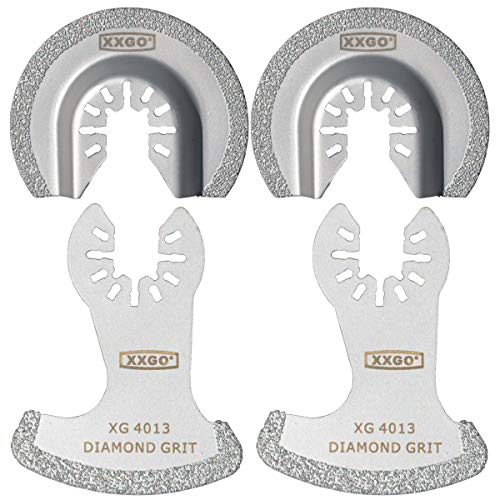
The safest oscillating-tool blade for removing grout is usually a diamond-grit grout removal blade that is narrower than the grout joint. It cuts slowly compared with a wood blade, but it gives you the control needed to clean out grout without chipping tile edges.
For most bathroom and kitchen repairs, choose a 1/8-inch or 3/16-inch blade for narrow joints, or a 1/4-inch blade for wider joints. Match the blade width to the joint, not to the tile size. A blade that is too wide will rub the tile on both sides, even if you work carefully.
As an Amazon Associate we earn from qualifying purchases at no extra cost to you.



Quick comparison
| Blade type | Best use | Advantages | Main risk |
|---|---|---|---|
| Diamond-grit grout blade | Standard cement grout; precise removal | Controlled cutting, long life, clean joint | Slow if pushed; can overheat |
| Carbide-grit grout blade | Small jobs and softer grout | Lower cost, cuts quickly at first | Wears faster and can gouge tile |
| Carbide rasp blade | Thick grout or hardened material | Aggressive stock removal | Coarse control; easy to damage edges |
| Segmented diamond blade | Long, straight joints and corners | Better visibility and access | Less forgiving if angled into tile |
Diamond or carbide: which should you buy?
A diamond-grit blade is the best general choice when protecting tile matters more than speed. Diamond particles are bonded to the blade’s edge and wear gradually. This makes the cut predictable, particularly in porcelain or hard cement grout. It is also the better choice for a large repair, where a cheap blade may become dull halfway through the job.
Carbide-grit blades cost less and are fine for replacing a few feet of soft, sanded grout. They remove material faster when new, but the abrasive coating can wear unevenly. Once the edge loses its shape, the tool tends to wander toward the tile. That is an especially bad trade on glazed ceramic tile, where a small edge chip remains visible.
Do not use a standard oscillating saw blade, wood blade, or bare metal cutting blade for grout. Those teeth are designed to bite and pull. They can catch the joint, jump sideways, and chip tile before you can release the trigger. Use a purpose-made carbide-grit oscillating grout blade only when the material and job size justify the lower price.
Choose the right blade size
Measure the grout joint at several points. Tile installation is rarely perfectly uniform, and a joint that looks like 1/8 inch may narrow to less than that near a corner. The blade should be slightly narrower than the joint, leaving a thin strip of grout for a second pass.
- Use a 1/8-inch blade for narrow joints around wall tile.
- Use a 3/16-inch blade for common shower and backsplash joints.
- Use a 1/4-inch blade for wide joints, provided it fits without touching the tile.
For a 1/8-inch joint, a 1/16-inch blade is safer than a full-width blade. You may need two passes, but that is preferable to one pass that scratches both tile edges. A segmented blade is useful on long straight runs because its open side improves visibility. A pointed or narrow blade is easier to control around corners and fixtures.
How to remove grout without chipping tile
Set the oscillating tool to a low or medium speed. Exact speed numbers vary by tool, but starting around 3,000 to 6,000 oscillations per minute is reasonable. High speed creates heat and dust without necessarily cutting faster. Let the abrasive edge do the work; pressing hard only increases vibration and makes the blade bend into the tile.
Begin in the middle of the joint, not against a tile edge. Hold the tool with both hands and keep the blade square to the face of the tile. Make a shallow pass about 1/16 inch deep, then repeat. Removing the full 1/4-inch depth in one pass gives the blade more opportunity to climb out of the joint.
Most grout replacement requires removing at least 1/8 inch of material. For a full regrout, remove roughly two-thirds of the joint depth, while avoiding the thinset or adhesive beneath the tile. Stop if you see mesh, waterproofing, or the tile’s setting bed. Cutting into a shower’s waterproofing layer can create a leak that is far more expensive than replacing grout.
Work in short sections, about 12 to 18 inches at a time. Vacuum dust as you go, and inspect the joint before continuing. If the blade starts leaving dark marks, smells hot, or stops removing material, pause and let it cool. A dust-control accessory for an oscillating tool can help indoors, but a shop vacuum nozzle held near the cut is often just as useful.
Common failure modes
The most common mistake is twisting the tool while the blade is inside the joint. Oscillating blades are thin, and sideways pressure deflects the cutting edge into the tile. Keep the tool moving straight along the joint and lift it out before changing direction.
Another mistake is using a blade wider than the grout line because it appears faster. It is faster only until it contacts the tile. Likewise, forcing a worn blade can polish the grout instead of removing it. Replace or rotate the blade when the abrasive edge is visibly rounded.
Be cautious with epoxy grout. It is much harder than ordinary cement grout and can quickly destroy an inexpensive carbide blade. A diamond blade is more suitable, but even then, test in an inconspicuous area first. If the tile is soft, highly polished, handmade, or already cracked, hand tools may be safer than powered removal.
The practical buying choice
For one small repair, buy a reasonably priced carbide-grit blade slightly narrower than the joint. For a shower floor, kitchen backsplash, or any job involving many linear feet, spend more on a diamond-grit blade and choose a second narrow blade for corners. A diamond grout blade set is worthwhile only if it includes useful widths; extra blades do not help if they are all too wide for your joints.
The blade is only part of the result. Low pressure, shallow passes, a square tool, and frequent cleaning matter more than maximum speed. If you cannot keep the blade centered in the joint, stop using the power tool and finish the last thin strip with a manual grout saw or carbide scraper.