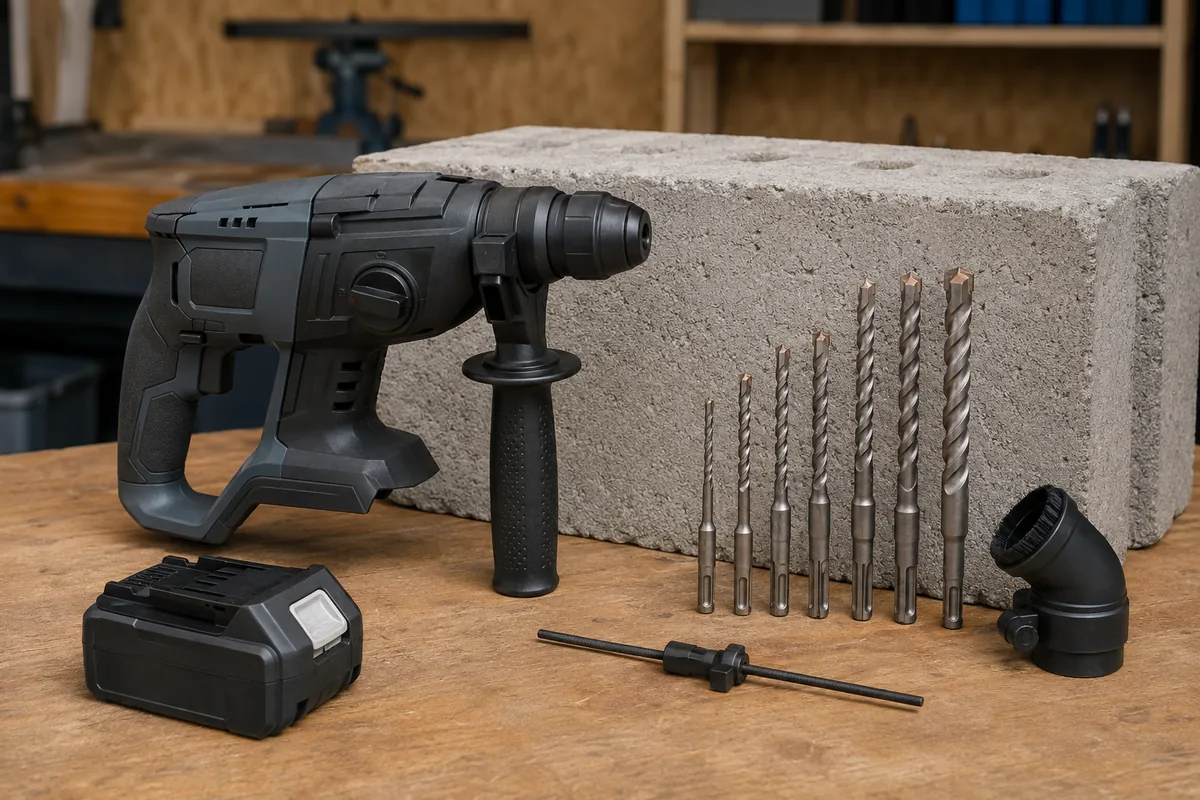
What's inside
As an Amazon Associate I earn from qualifying purchases. This post may contain affiliate links at no extra cost to you.
For most small masonry anchors, a hammer drill is the sensible first choice. It costs less, weighs less, and handles the holes used for shelves, conduit straps, light fixtures, and small wall-mounted cabinets. A rotary hammer is the better tool when you need larger holes, many holes, deeper holes, or faster progress in hard concrete.
The important distinction is not simply power. The two tools create impact in different ways, and that affects drilling speed, bit selection, control, dust, and the risk of damaging the hole. Choosing the right one can also determine whether an anchor holds properly.
As an Amazon Associate we earn from qualifying purchases at no extra cost to you.


Our Top Picks
 DEWALT DCH293B 20V Max XR Brushless 1-1/8” L-ShapeOne Size15.3 x 4 x 10.6 inches8.7 poundsCheck on Amazon
 DEWALT DCH273P2 20V Max Brushless SDS Rotary HammerOne Size19.29 x 11.93 x 4.72 inches11.68 poundsCheck on Amazon
 Berserker 1-1/8" SDS-Plus Rotary Hammer Drill for ConcreteMedium14.57 x 3.74 x 9.45 inches9.5 poundsCheck on Amazon


How the Tools Work
A hammer drill uses a pair of toothed discs to make the chuck vibrate back and forth. The impact is relatively light and works best when you apply steady forward pressure. It accepts standard three-jaw chuck bits, including masonry bits with round or hex shanks.
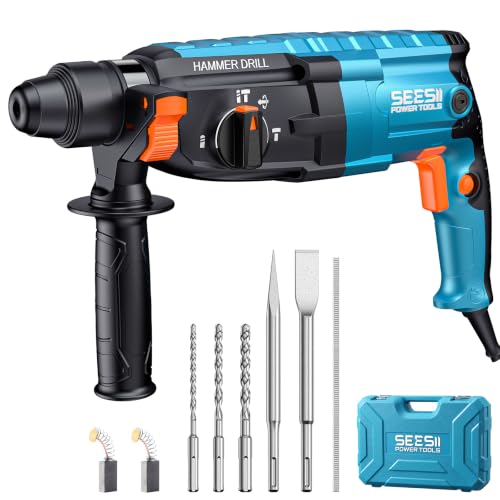
A rotary hammer uses a piston mechanism to strike the bit. Its impact is substantially stronger, and the bit usually slides into an SDS-Plus or SDS-Max chuck. The bit receives direct blows without forcing the entire drill body to vibrate as much. Most rotary hammers also have a rotation-only mode and a hammer-only mode.
That difference matters in concrete. A hammer drill can peck away at a hole, but a rotary hammer breaks the material more efficiently. In brick, block, and softer mortar, the gap is smaller.
Hammer Drill vs Rotary Hammer
| Factor | Hammer drill | Rotary hammer |
|---|---|---|
| Best hole size | About 1/4 to 3/8 inch | About 3/8 to 1 inch or larger, depending on the tool |
| Best materials | Brick, block, mortar, occasional concrete | Concrete, reinforced concrete, hard masonry |
| Typical chuck | Three-jaw or hex | SDS-Plus or SDS-Max |
| Control | Good for small holes and delicate surfaces | More aggressive; easier to over-drill or chip edges |
| Cost and weight | Lower cost and usually lighter | Higher cost and heavier |
| Dust and vibration | Usually less productive, but can feel buzzy in extended use | Removes material quickly, with more impact and often more dust |
When a Hammer Drill Is Enough
Choose a hammer drill for a handful of small anchors in brick, concrete block, or relatively soft concrete. A 1/4-inch hole for a plastic expansion anchor or a small sleeve anchor is well within its range. A 3/16-inch hole for a light-duty masonry screw is also a straightforward job with a sharp carbide-tipped bit.
It is especially suitable when the surface could chip easily. The lower impact makes it easier to stop at the correct depth and avoid blowing out the back of a hollow block. It is also the cheaper option if you already own a good cordless drill with a hammer setting.
For occasional work, a cordless hammer drill with masonry bits is usually all you need. Use a bit that matches the anchor manufacturer’s specified diameter, not merely one that looks close. A hole only 1/32 inch too large can reduce the grip of some expansion anchors.
There are limits. A hammer drill becomes frustrating in dense poured concrete, especially with holes larger than 3/8 inch. The bit can spin without making useful progress, overheat, or glaze at the tip. Pressing harder does not fix a worn bit and can strain the drill’s clutch, chuck, and motor.
When a Rotary Hammer Wins
A rotary hammer is the better purchase for repeated anchor installation or hard concrete. It is noticeably faster for holes around 1/2 inch and larger, and it remains productive when you need several inches of embedment. The piston impact also makes it easier to drill vertically into a slab or foundation wall.
For this work, look for an SDS-Plus rotary hammer. SDS-Plus covers the hole sizes commonly used for residential anchors and accepts bits that slide in and out without tightening a chuck. A 1/2-inch rotary hammer is a useful general-purpose size; larger SDS-Max tools are intended for much bigger holes and heavy demolition.
The extra capacity is not automatically better. A rotary hammer can chip the face of a brick, enlarge the entrance of a hole, or crack a thin masonry unit if you lean on it carelessly. Its weight can also make it awkward for a single small anchor. For a pair of 1/4-inch holes in sound brick, setup time and handling may outweigh the speed advantage.
How to Drill the Hole Correctly
First, confirm the anchor type, diameter, minimum embedment, and required edge distance. Avoid drilling too close to a corner or the edge of a block. As a general rule, leave at least several hole diameters between the hole and an unsupported edge, but follow the anchor instructions when they specify a larger distance.
Mark the location and check for wiring and plumbing. Start with the drill held square to the surface. On glazed brick or tile, begin in rotation-only mode with light pressure, then engage hammer mode once the bit has established a shallow dimple. This reduces walking and surface chipping.
Drill slightly deeper than the anchor’s required embedment—often about 1/4 inch deeper—so dust and chips do not prevent full insertion. Do not guess if the anchor instructions give a specific depth. Use the drill’s depth rod or wrap tape around the bit as a visual stop.
Clear the hole before inserting the anchor. Blow it out only with suitable eye protection and awareness of where the dust will go; a hand pump, vacuum, or hole-cleaning brush is safer in many indoor situations. Dust left at the bottom can stop an expansion anchor short or prevent a screw from reaching its intended depth.
With an SDS tool, use hammer mode for drilling concrete and masonry, but switch to rotation-only when the bit breaks through fragile material or when drilling tile. Keep the bit straight, withdraw it occasionally to clear dust, and let the carbide tip do the cutting. Excessive pressure creates heat and makes the hole less accurate.
Common Failures and Better Choices
If the anchor spins when you tighten the screw, the hole may be oversized, dusty, or drilled in weak material. Move to a sound location or use an anchor designed for hollow block rather than simply filling the hole with extra hardware.
If the hole is ragged at the entrance, reduce pressure near breakthrough and use a sharp, correctly sized bit. If the bit takes more than roughly a minute to make a small hole in concrete, stop and inspect it. A rotary hammer or new carbide bit is usually a better solution than forcing a dull hammer-drill bit.
For a few light anchors in brick or block, buy the hammer drill—or use the drill you already have. For structural-looking brackets, repeated work, hard concrete, or holes above 3/8 inch, rent or buy a rotary hammer and use the proper SDS masonry bit. The cheaper tool is fine when the material and hole size match it; beyond that point, the rotary hammer saves time and produces more reliable holes.