What's inside
As an Amazon Associate I earn from qualifying purchases. This post may contain affiliate links at no extra cost to you.
Our Top Picks
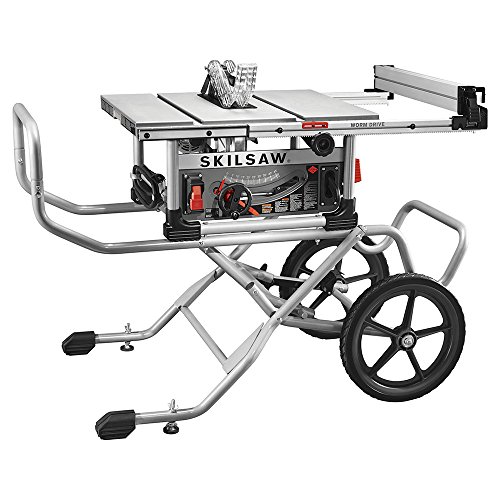 SKIL 10 Inch Heavy Duty Worm Drive Table52.6 x 29.5 x 35 inches52.6 x 29.53 x 35.08 inches94.3 poundsCheck on Amazon


The short answer
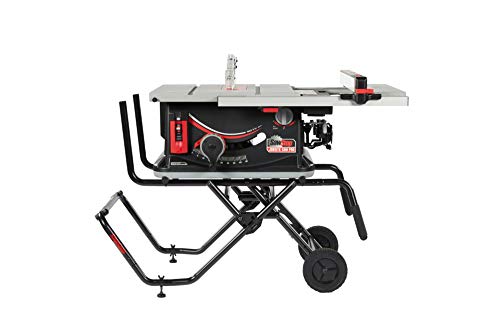
The SawStop Jobsite Pro is the better saw for cutting performance, safety features, and a sturdy stand. The Bosch 4100XC-10 is usually faster and less awkward to fold, load, and store.
That difference matters if you move the saw several times a day. Bosch’s Gravity-Rise stand is designed around transport: release the latch, pull the handle, and the stand collapses around the saw. SawStop’s stand is solid and easy enough to use, but its heavier saw body and more substantial frame take more effort to maneuver.
As an Amazon Associate we earn from qualifying purchases at no extra cost to you.


For a contractor who wants the quickest pack-up, choose the Bosch. For someone who wants a jobsite saw that feels closer to a compact cabinet saw and is willing to accept extra weight, choose the SawStop.
Which one packs away faster?
The Bosch 4100XC-10 has the clearest advantage when the job is finished. Its Gravity-Rise stand uses a large handle and a single main release to fold the frame. The pneumatic-assisted mechanism does much of the lifting as you collapse or open it. Once folded, the saw can be tipped onto its transport wheels and rolled like a hand truck.
That process is not completely hands-free. You still need to retract the fence, secure loose accessories, and make sure the stand latch catches. If the saw is sitting on uneven ground, the frame can bind slightly. Still, the basic fold is quick and predictable, often taking less than a minute once you know the sequence.
The SawStop Jobsite Pro also has a folding wheeled stand, but it feels more like a heavy tool being folded than a light saw riding on a stand. The saw includes more built-in structure, and the rolling base is stable rather than especially compact. Folding it is straightforward, but you are handling a heavier package and may need more room to tip it upright or guide it through a doorway.
In a garage, either saw stores without much trouble. In a pickup bed, narrow trailer, or crowded van, the Bosch’s folding action and large wheels are easier to live with. The SawStop can be rolled over ordinary jobsite surfaces, but lifting it over a tailgate is a two-person task for many users.
SawStop Jobsite Pro vs Bosch 4100XC-10
| Feature | SawStop Jobsite Pro | Bosch 4100XC-10 |
|---|---|---|
| Best at | Cut quality, safety system, solid support | Fast folding, transport, lower carrying burden |
| Stand design | Integrated folding wheeled stand | Gravity-Rise folding stand |
| Transport feel | Stable but heavy | More balanced and hand-truck-like |
| Blade size | 10 inches | 10 inches |
| Motor rating | 15 amps | 15 amps |
| Safety technology | Electronic flesh-detection brake | Traditional guard and anti-kickback system |
| Typical trade-off | More expensive and heavier | Less advanced safety system |
Weight, storage, and failure points
The most common packing mistake with either saw is leaving the rip fence, miter gauge, or guard assembly unsecured. These parts can fall off while the saw is tilted, and the fence can be knocked out of alignment if it catches on a truck wall. Before folding, put the fence in its storage position and check that the blade is fully lowered.
The Bosch is easier to roll because its stand puts the wheels and handle in a natural transport position. Its large wheels handle gravel, thresholds, and extension cords better than small casters. The failure mode is the stand latch: dirt or incomplete engagement can keep the frame from locking. Always pull back on the folded stand before loading it.
The SawStop’s heavier construction reduces flex during wide rips, but it raises the cost of every move. If you carry it up stairs, load it into a van, or move it from room to room, the weight becomes more important than the few seconds saved by a folding mechanism. Its stand is also less convenient when storage space is tight because the complete unit remains tall and substantial even when collapsed.
For a permanent workshop corner, the weight is largely irrelevant. For a remodeler who moves between three rooms before lunch, it is the deciding factor.
What you give up by choosing the faster Bosch
The Bosch 4100XC-10 remains a capable jobsite saw. Its 15-amp motor, rack-style fence adjustment, and wheeled stand handle framing lumber, sheet goods, and trim work well. The fence is not a substitute for checking alignment, however. A quick setup can still produce poor cuts if the fence is not parallel to the blade or if the stand is not fully locked.
The major difference is SawStop’s electronic brake. With a compatible blade installed and the safety system active, the brake is designed to stop the blade when it detects electrical contact with skin. It does not make the saw risk-free: the blade can still cause a cut before stopping, and the brake cartridge and blade may need replacement after activation. Wet lumber, conductive materials, or some treated stock can also require the safety system to be bypassed.
The Bosch uses conventional guarding, anti-kickback parts, and user discipline. That is a valid setup for many experienced woodworkers, especially when the saw is used mainly for rough construction cuts. If the price difference is significant and you already use push sticks, keep the guard installed, and control the workpiece properly, the Bosch is the cheaper option that makes sense.
Which table saw should you buy?
Buy the Bosch if your priority is getting the saw in and out of the truck quickly. It is the better match for mobile crews, punch-list work, and anyone who regularly works alone. Add a table saw push-stick set and use the supplied guard instead of treating fast setup as permission to skip safe feeding practices.
Buy the SawStop if the saw will be used frequently, if several people with different experience levels will operate it, or if you value a more rigid cutting platform over the easiest carry. It is also the better choice when the safety brake meaningfully reduces risk for your household or crew.
If pack-away speed is the only question, the Bosch 4100XC-10 wins. Its Gravity-Rise stand is quicker to collapse, easier to roll, and less tiring to load. The SawStop Jobsite Pro earns its extra bulk through safety and a more substantial overall package—not through a faster folding routine.