What's inside
As an Amazon Associate I earn from qualifying purchases. This post may contain affiliate links at no extra cost to you.
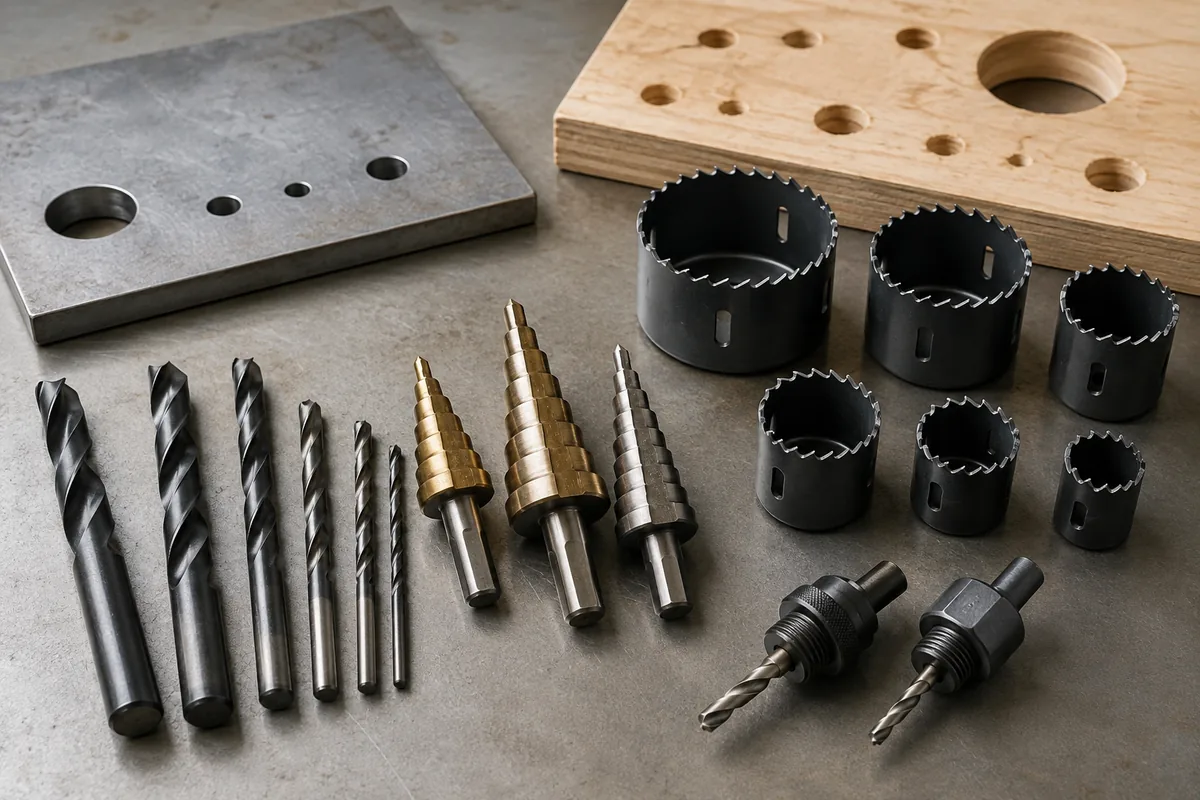
For clean holes in stainless sheet, a sharp cobalt twist bit is usually the best buy. A quality high-speed steel (HSS) bit can work on thin sheet, but it loses its edge faster if the metal heats up or the bit rubs without cutting. Step bits are often easier to control for larger holes, though they are not the economical choice for every diameter.
As an Amazon Associate we earn from qualifying purchases at no extra cost to you.


Our Top Picks
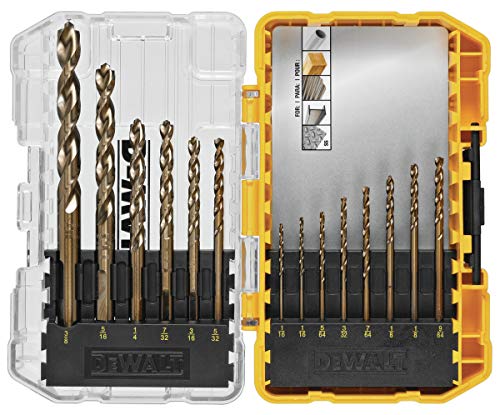 DEWALT Cobalt Alloy Steel Drill Bit Set withOne Size8.75 x 1.74 x 8.75 inches0.8 PoundsCheck on Amazon
 BOSCH CO14B 14-Piece Cobalt Drill Bit Set With14-Piece Drill Bit Set7.2 x 5.6 x 1.8 inchesCheck on Amazon
 BOSCH CO21B 21-Piece Assorted Set with Included Case21-Piece Drill Bit Set0 x 0 x 0 inchesCheck on Amazon
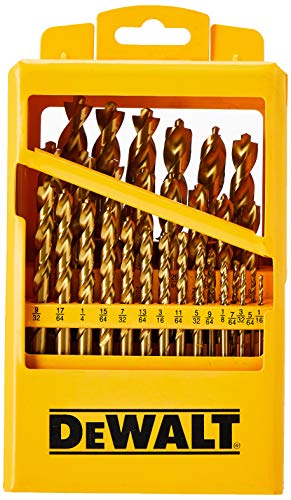 DEWALT Titanium Nitride Coated Drill Bit Set withOne Size10 x 7 x 3.75 inches3 poundsCheck on Amazon
Quick picks
| Bit type | Best for | Main trade-off |
|---|---|---|
| M35 cobalt twist bits | Small and medium holes, frequent stainless work | Cost more than standard HSS |
| M42 cobalt twist bits | Repeated drilling and tougher stainless | More expensive; still need careful technique |
| HSS twist bits | Occasional holes in thin sheet | Can dull quickly if overheated |
| HSS step bit | Clean, larger holes in thin sheet | Limited diameter range and higher cost per bit |
Best overall: M35 cobalt twist-bit set
A set of M35 cobalt bits is the most useful all-round choice for stainless sheet. M35 means the steel contains about 5% cobalt; M42 contains more, but the label alone does not guarantee a better-ground, longer-lasting bit. For most home and shop jobs, sharp M35 bits are a sensible balance of price and durability.
Look for a set with common sizes from about 1/16 to 1/2 inch, preferably in 1/16-inch increments. A split point helps the bit start without wandering, and a 135-degree point is a practical choice for metal. Check that the set actually identifies the bits as cobalt alloy, rather than using “cobalt” loosely in the product title. Compare M35 cobalt drill-bit sets for metal by size range, point style and case quality.
When a step bit is the better pick
For a hole around 1/4 to 7/8 inch in thin stainless, a step bit can make a cleaner, more controlled opening than a large twist bit. Each step enlarges the hole gradually, which reduces grabbing and makes it easier to stop at a chosen diameter. It is particularly handy for sheet-metal work where you need a few different connector or fastener sizes.
Step bits are less attractive for a box of repeated holes at one exact size, and they are not a substitute for small pilot bits. They also need steady pressure and lubrication: if the cutting edge gets hot and dull, it will skate and polish the metal instead of cutting. A coated HSS step bit is adequate for occasional work in thin sheet; a cobalt version is worth considering for regular use. See cobalt step bits for stainless sheet if larger holes are the main job.
When standard HSS is enough
For one or two small holes in thin stainless, a sharp HSS bit can be perfectly adequate. It costs less, and there is little benefit in buying an expensive set for a one-off task if you can keep the bit cool and feed it firmly. The catch is that stainless hardens when the bit rubs without cutting. Once that happens, a cheap bit may go dull quickly, and pushing harder can make the problem worse.
A basic HSS set is a reasonable choice for occasional work under roughly 1/8 inch thick. If you have several holes to drill, need sizes over 1/4 inch, or have already dulled ordinary bits on stainless, move up to cobalt. Avoid buying a large assortment just for the word “titanium” on the case: titanium nitride is a surface coating, not a different cutting steel, and a coating cannot rescue a poor or blunt edge.
How to get a clean hole
Clamp the sheet flat against a sacrificial piece of wood or another backing material. Thin sheet can flex, catch the bit and form a ragged exit hole. Mark the center, then use a punch lightly; a deep punch mark can distort very thin stock. For holes larger than about 1/4 inch, drill a small pilot hole first, around 1/8 inch, unless using a step bit.
Use a drill with controllable low speed. For a 1/8-inch bit in stainless, start around 500–800 rpm; for a 1/4-inch bit, around 250–400 rpm is a useful working range. These are starting points, not fixed rules—use the slower end for thicker material and stop if the bit squeals, smokes or produces blue chips. Keep the bit cutting with steady pressure rather than letting it spin against the surface. Apply cutting fluid or a small amount of suitable tapping fluid, and add more if the cut dries out.
Once the bit breaks through, ease off pressure to prevent grabbing and burrs. Deburr both sides with a countersink, deburring tool or fine file. Wear eye protection, keep gloves away from rotating parts, and remove sharp scrap only after the drill has stopped.
What to buy
For a mixed set of small holes, buy a split-point M35 cobalt twist-bit set with clearly marked fractional sizes and a case that holds each bit securely. If you only need a handful of holes, buy the specific sizes instead of paying for dozens you will not use. For larger holes in thin sheet, add a step bit rather than forcing a large twist bit through the panel.
The bit is only part of the result. A dull edge, high speed, loose workpiece or lack of lubrication can spoil a hole regardless of price. Spend extra on cobalt when you will drill stainless repeatedly; choose ordinary HSS when the job is occasional and you are prepared to work slowly, keep the bit sharp and accept that it may not last as long.