What's inside
As an Amazon Associate I earn from qualifying purchases. This post may contain affiliate links at no extra cost to you.
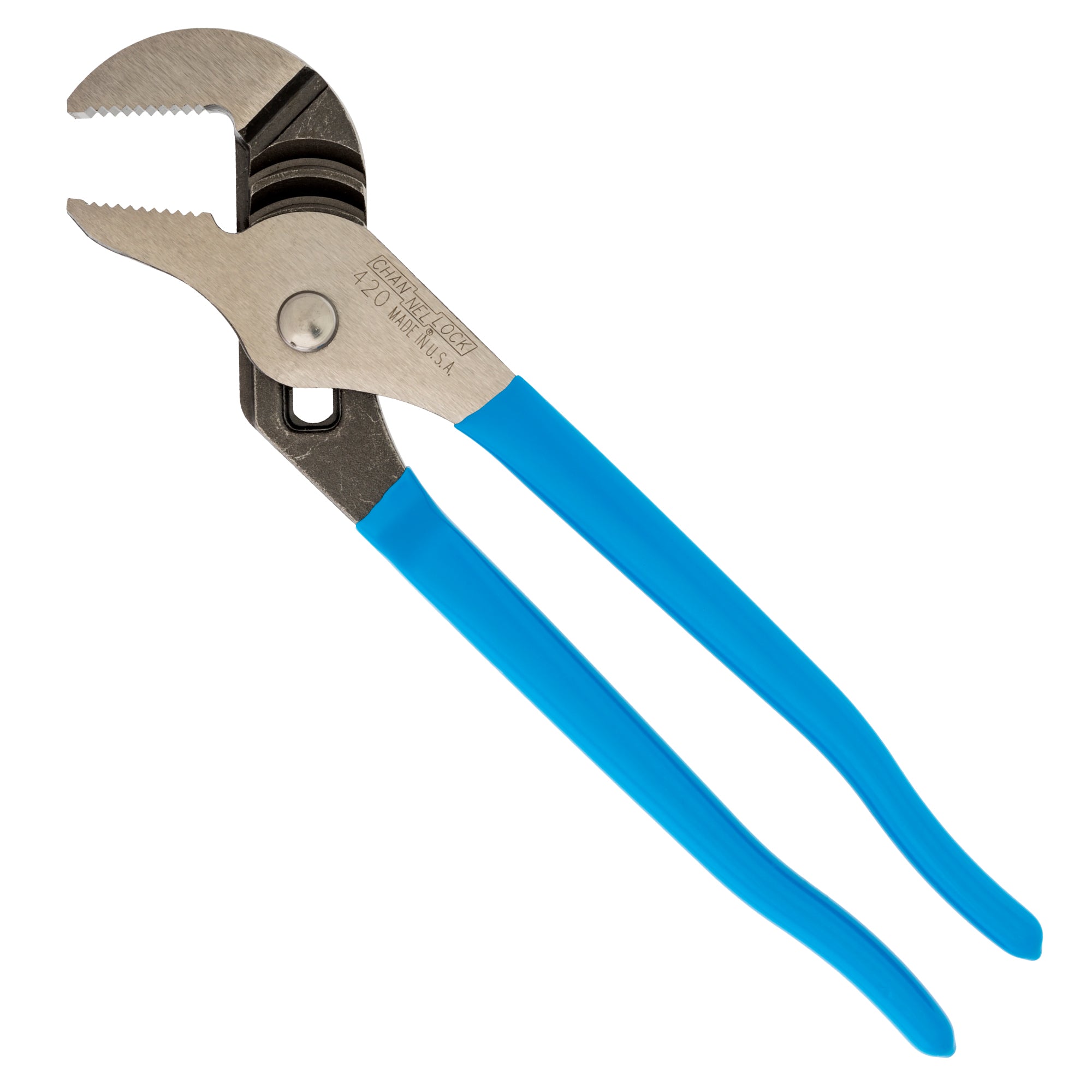
Round pipe is an awkward workpiece for ordinary pliers. Its curved surface gives the jaws little to resist, so the tool can slip, rotate, or leave deep marks. The choice between V-jaw and straight-jaw pliers comes down to how well the jaws conform to the pipe, how much force you need, and whether protecting the finish matters.
For gripping round pipe securely, V-jaw pliers are usually the better choice. Straight-jaw pliers are still useful for flat stock, hex fittings, and general holding, and they are often the cheaper option if pipe work is occasional.
As an Amazon Associate we earn from qualifying purchases at no extra cost to you.


Our Top Picks
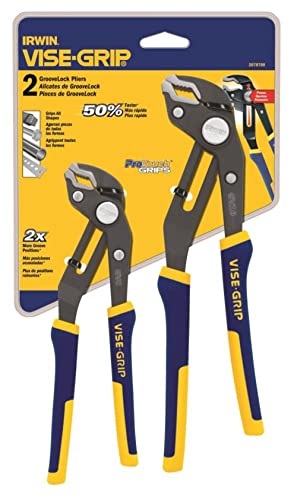 IRWIN Tools Vise-Grip GrooveLock Pliers Set2-pack (8", 10")0.75 x 7 x 11.6 inches1.4 poundsCheck on Amazon
How V-jaw pliers grip pipe
A V-jaw has angled faces that meet the work at two lines or narrow contact areas. On a round pipe, those faces create a cradle rather than trying to clamp the pipe between two flat surfaces. Serrated teeth usually bite into the surface, increasing resistance to rotation.
Many V-jaw designs are locking pliers, groove-joint pliers, or specialized pipe-gripping pliers. Their exact geometry varies. Some have a fairly sharp V for small tubing; others have a wider, rounded recess for larger pipe. Check the stated capacity before buying. A jaw that technically opens wide enough may still contact a large pipe only at the tips, which reduces control.
The main advantage is resistance to rolling. When you turn a fitting or hold pipe while cutting, a V-jaw keeps the force closer to the center of the round stock. That makes it less likely that the pipe will pop out as torque rises.
Where straight-jaw pliers fall short
Straight jaws work best when the workpiece has flat sides. On a round pipe, two flat jaws touch at relatively small areas. If the jaws are not aligned squarely, the pipe may sit on an edge and twist out under load.
This problem becomes more noticeable with larger pipe, smooth copper, painted steel, or stainless tubing. A tight squeeze can hold the pipe initially, but added torque may rotate it suddenly. That can damage the pipe and pinch fingers if the tool is being used as a hand clamp.
Straight-jaw locking pliers can still hold short pieces for drilling, cutting, deburring, or assembly. They are also preferable when the workpiece has a flat section or when you need broad, even pressure on a finished surface. They are not automatically weak; their shape is simply less suited to a round cross-section.
V-jaw vs. straight-jaw comparison
| Feature | V-jaw pliers | Straight-jaw pliers |
|---|---|---|
| Grip on round pipe | Usually stronger and more stable | Acceptable for light holding; more prone to rolling |
| Grip on flat stock | Good, but contact may be concentrated | Usually better and more even |
| Risk of surface damage | High with sharp serrations or excessive force | Moderate, but slipping can cause broader scratches |
| Best use | Pipe, tubing, conduit, and round bar | Sheet, flats, fasteners, and general clamping |
| Typical limitation | Less versatile on thin or delicate material | Can lose grip under twisting force |
When V-jaw pliers are worth buying
Buy V-jaw locking pliers if you regularly work on round pipe, threaded fittings, conduit, exhaust tubing, or round bar. They are especially useful when one hand must hold the work while the other operates a wrench, saw, drill, or cutoff tool.
They are also the better choice when the pipe is under twisting force. As a practical test, clamp a scrap piece and apply force gradually with a wrench. If a straight-jaw tool begins to rotate at a moderate effort while the V-jaw remains planted, the difference is obvious. Do not test by jumping on a wrench or extending the handle with another pipe; that can overload the tool and distort the work.
For larger plumbing pipe, a properly sized V-jaw groove-joint pliers may offer more reach than compact locking pliers. Groove-joint models adjust quickly, but they do not lock onto the work, so they require steady hand pressure. A locking version is better for holding, while a pump or tongue-and-groove version is often better for turning.
When straight-jaw pliers are enough
The cheaper straight-jaw option is fine for occasional work if the pipe is small, the required force is low, and the job does not involve significant torque. For example, they can hold a short tube while you mark it, file an edge, drill a pilot hole, or position it for assembly.
They also make sense if you already own a good pair and do not want another single-purpose tool. Improve their grip by cleaning oil and grit from both the jaws and the pipe. Clamp close to the point being worked, keep the jaws square to the pipe, and use only enough pressure to prevent movement.
Do not wrap a loose rag around the pipe and assume it will improve security. It may protect the finish, but it can also compress and let the work shift. For finished pipe, use purpose-made jaw covers or a thin piece of leather only when the lower holding force is acceptable.
Avoiding slip, crushing, and damage
Pipe wall thickness matters. A serrated V-jaw can leave deep tooth marks in thin-wall tubing, copper, painted conduit, or chrome-plated fittings. Excessive clamping force can ovalize thin tubing even when the tool does not slip. If appearance or sealing surfaces matter, clamp on a sacrificial section or use soft jaws.
For turning threaded plumbing fittings, a properly sized pipe wrench generally delivers more controlled bite than either type of pliers. Use two tools when loosening a fitting: one to turn and one to counter-hold the adjoining pipe. Otherwise, the twisting load can transfer into a valve, solder joint, or threaded connection.
Never rely on pliers to hold pressurized, hot, or energized pipe. Shut down and isolate the system first. If the pipe still moves, stop increasing force and change the setup, tool size, or support point.
Which one should you buy?
Choose V-jaw pliers when round pipe is the main job or when slipping would be costly. Choose straight-jaw pliers when you need a general-purpose clamp for flat stock and only occasional light pipe work. If your work includes both, a straight-jaw pair plus a V-jaw pair is more useful than expecting one jaw shape to do everything.
The short answer is clear: V-jaw pliers grip round pipe more securely because they conform to its shape and resist rolling. Straight jaws are cheaper and more versatile for flat materials, but they should not be your first choice for high-torque work on smooth or large-diameter pipe.