What's inside
As an Amazon Associate I earn from qualifying purchases. This post may contain affiliate links at no extra cost to you.
A rounded fitting changes the job. A wrench that works well on clean hex faces may slip as soon as its jaws ride over a damaged corner. Locking pliers and pipe wrenches can both hold awkward shapes, but they grip in different ways—and neither is a safe cure for every rounded nut.
As an Amazon Associate we earn from qualifying purchases at no extra cost to you.


Our Top Picks


How the two tools grip
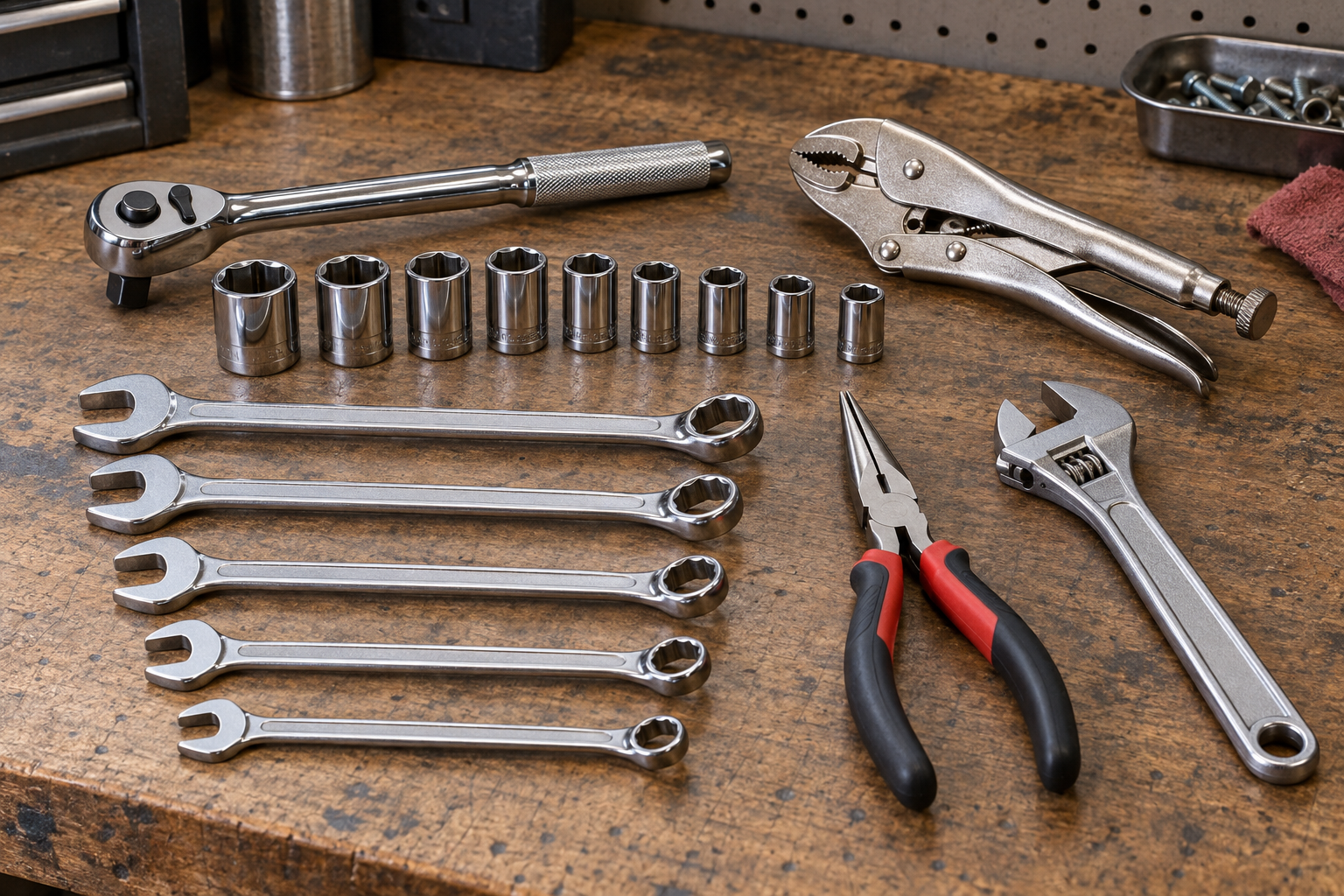
Locking pliers clamp two opposing jaws together. You adjust the opening, squeeze the handles until the tool locks, then use the handles to turn the fitting. Their toothed jaws can bite into a rounded surface, and the locking action keeps pressure on it without requiring you to keep squeezing.
A pipe wrench uses a fixed upper jaw and a movable lower jaw. Its teeth and jaw geometry are designed to dig into round pipe as turning force is applied. That makes it effective on pipe and other cylindrical work, but it can crush, gouge or distort thinner material.
For a rounded hex fitting, the key difference is contact. Locking pliers can clamp across remaining flats or bite into the corners. A pipe wrench is more at home on round stock; on a small nut, it may contact too few points or be too bulky to seat securely.
Which gives better grip on a rounded fitting?
For most small or medium rounded nuts and fittings, locking pliers are the more practical first choice. They fit into tighter spaces, can be adjusted to match the work, and keep their jaws closed while you turn. A pair with curved jaws often suits rounded surfaces better than a narrow, straight-jaw design.
A pipe wrench can win when the fitting is large, cylindrical, sturdy and accessible—particularly if it is a pipe section rather than a thin-walled nut. Its leverage and self-energizing bite help on round work. But that bite is aggressive: on brass, soft copper, plated parts or thin fittings, it can leave deep teeth marks or collapse the part before it turns.
Neither tool is ideal for a fitting that must remain cosmetically clean or be reused. If there are still usable flats, try a correctly sized six-point socket or wrench first. A six-point tool spreads force across the flats instead of concentrating it on damaged corners.
Quick comparison
| Factor | Locking pliers | Pipe wrench |
|---|---|---|
| Best fit | Small to medium nuts, awkward shapes, tight access | Large round pipe and sturdy cylindrical fittings |
| Grip action | Clamps and locks onto the work | Teeth bite harder as turning force is applied |
| Risk to fitting | Tooth marks, crushed corners, or distortion if overtightened | Deep gouges, crushing, or damage to thin walls |
| Control | Good for short turns and repositioning | More leverage, but can be unwieldy on small work |
| Typical limitation | May slip if poorly adjusted or gripping only one corner | May not seat securely on a small hex fitting |
Using locking pliers without making things worse
Choose jaws that cover as much of the fitting as possible. Adjust the tool so it locks with firm pressure; don’t force the handles shut far beyond the point where they engage. Too little pressure lets the jaws slip, while excessive pressure can deform a hollow fitting or snap a small bolt.
Seat the jaws squarely, ideally across the remaining flats rather than on one damaged corner. Turn steadily and keep the tool aligned with the fitting. If it slips, stop and reset the jaws—repeatedly squeezing harder can round the surface further. For a small job, ordinary curved-jaw locking pliers are often enough; a larger tool is not automatically a better fit.
When a pipe wrench makes sense
Use a pipe wrench when the work is round, strong enough for toothed jaws and large enough for the wrench to sit securely. Keep the jaw opening suited to the pipe diameter and position the tool so its bite tightens as you pull. Do not use a pipe wrench on thin tubing or a delicate plumbing fitting simply because it has more leverage.
Leverage is the main trade-off. A longer handle can free a stubborn pipe, but it also increases the chance of bending a bracket, twisting connected plumbing or breaking a corroded fitting. If the part begins to flex, the tool is no longer solving the problem. A suitable adjustable pipe wrench is useful for robust round work, not a general-purpose replacement for a correctly sized wrench.
Before you turn the fitting
Check whether the fitting is left-hand threaded or part of a connected assembly, and support nearby pipe so it does not twist. If corrosion is likely, apply penetrating oil where appropriate and give it time to work. Avoid open flame near plumbing compounds, fuel lines or other flammable materials.
Stop if the fitting is under pressure, connected to a gas line, visibly cracked, or part of equipment where a failure could cause injury or flooding. Shut off and depressurize the system when the job requires it. A rounded fastener on a machine may be easier to remove with a dedicated damaged-fastener socket than with either of these tools.
What to buy for the job
If you want one tool for occasional household repairs involving rounded nuts, buy locking pliers sized to the fittings you actually encounter. They cost less than a quality pipe wrench, store easily and handle more shapes. If your work regularly involves water pipe or sturdy round stock, add a pipe wrench in an appropriate size rather than trying to make locking pliers do every plumbing task.
For a fitting you need to preserve, the cheapest sensible option may be neither. Use the correct six-point tool if any flats remain, or replace the damaged fitting if removal would ruin it anyway. The best grip is the one that turns the part without damaging whatever must stay attached.