What's inside
As an Amazon Associate I earn from qualifying purchases. This post may contain affiliate links at no extra cost to you.
Our Top Picks


What makes a good flush-cut plier
Trimming zip ties inside an electrical enclosure is a small job with expensive ways to go wrong. A bulky cutter may not fit between terminal blocks. A dull cutter can leave a sharp spike that catches fingers or wires. A tool with too much jaw offset can also strike nearby conductors when you are working in a crowded panel.
The best choice is usually a compact diagonal cutter with a genuinely flush-cutting edge, narrow jaws, and enough leverage for the tie sizes you actually use. For most control panels, junction boxes, and low-voltage enclosures, a 4.5- to 5-inch cutter is easier to control than a standard 6- or 7-inch diagonal cutter.
As an Amazon Associate we earn from qualifying purchases at no extra cost to you.


Look for a cutting capacity of at least 2.5 mm (about 3/32 inch) for ordinary nylon cable ties. If you regularly use wide, heavy-duty ties, check the manufacturer’s capacity rather than forcing a small electronics cutter. Overloading the edge is a common cause of chips and premature dulling.
The best types to buy
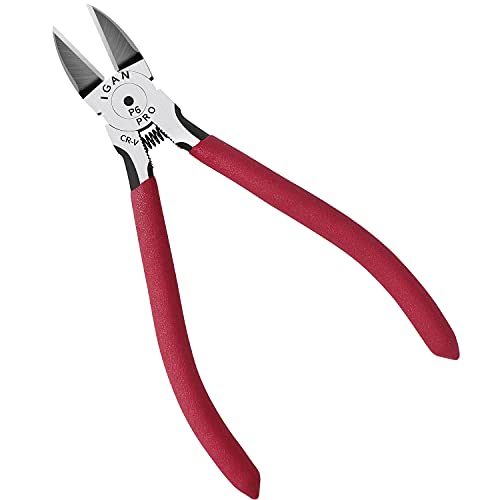
For general enclosure work, start with 5-inch flush-cut diagonal pliers. They offer the best balance of access, cutting power, and hand control. A narrow head can reach a tie wrapped around a bundle without requiring you to pull the bundle away from a DIN rail or terminal strip.
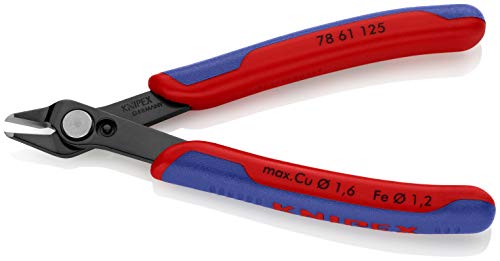
Electronics cutters are the cleanest option when the ties are small and access is tight. A precision cutter often has a very sharp, low-profile head and cuts thin nylon with little effort. The trade-off is durability: many are intended for soft copper wire, plastic leads, and small cable ties, not thick industrial nylon or stainless-steel ties.
For tougher ties, choose heavy-duty flush-cut cable tie pliers. These have more robust jaws and handles, but they are usually wider and may leave a slightly less polished cut than a dedicated electronics cutter. They are the better choice when a broken cutting edge would stop a job.
A specialty cable-tie tensioning tool is different from ordinary flush cutters. It tensions the tie and cuts the tail at a controlled point, which is useful in production work. It costs more and takes more room, so it is rarely necessary for occasional enclosure assembly.
Head-to-head comparison
| Tool type | Best use | Typical access | Strength | Main drawback |
|---|---|---|---|---|
| 5-inch flush diagonal cutter | Most enclosure work | Good | Balanced power and control | Not ideal for very thick ties |
| Precision electronics cutter | Small ties and crowded boards | Excellent | Very clean, low-force cuts | Edges can chip if overloaded |
| Heavy-duty flush cutter | Wide or tough nylon ties | Fair to good | Handles repeated hard cuts | Larger head and more hand force |
| Cable-tie tensioning tool | High-volume assembly | Fair | Consistent tension and cut height | Expensive and specialized |
Features that matter inside enclosures
Jaw geometry matters more than a brand name. A flush cutter should leave the cutting edge nearly level with the surface of the tie. Bevel-edge cutters are tougher, but they leave a small pointed nub. That nub may be acceptable in a utility box, but it is unpleasant inside a panel that will be serviced repeatedly.
Check the width of the head at its widest point. A cutter advertised as compact can still be too broad to enter the gap between a cable bundle and an enclosure wall. Also check whether the handles open far enough for your hand. A short tool with a cramped grip is difficult to control when you are reaching into a box.
Spring-return handles are useful for repetitive trimming, but the spring should not be so strong that it forces the jaws open against nearby wiring. Smooth, moderate handle travel is preferable to maximum spring tension. Textured grips help, especially when wearing thin electrical gloves.
If the tool will be used near energized equipment, insulation requires careful interpretation. A dipped or colored handle is not the same as a certified insulated tool. For work where contact with live parts is possible, use a properly rated insulated tool and follow the applicable electrical safety procedure. A flush cutter is not automatically safe because its handles are coated.
How to trim ties without damaging the enclosure
First, tension the tie and position the locking head so the tail exits in a direction you can reach. Do not cut blindly behind a bundle. Put the cutter around the tail with the flat side facing the finished surface, then close the jaws in one controlled squeeze. Twisting the tool after the cut can scar insulation or pull the tie out of position.
Leave enough clearance to avoid touching adjacent wires. A practical target is 3 to 5 mm of working room around the tail and cutter head. If there is less space, use a narrower electronics cutter or temporarily move the bundle with an insulated pick. Never use a screwdriver as a lever against a terminal or conductor.
For a perfectly flush finish, the tie must be tight against the cutter’s flat face. If the cutter is held at an angle, it may leave a sharp wedge even when the tool is marketed as flush-cutting. Inspect the cut with a fingertip only after power is isolated and the enclosure is safe to handle. A visual check with a flashlight is often enough.
When a cheap cutter is enough
A basic mini flush cutter for zip ties is fine for occasional work with small nylon ties. If you trim ten or twenty ties a month in plastic junction boxes, there is little reason to buy a premium production tool. Replace it when the cut starts leaving a spike, requires rocking, or shows visible damage at the edge.
Spend more when the tool lives in your service bag, when access is consistently restricted, or when you cut dozens of ties per enclosure. Better cutters usually justify their price through sharper geometry, more consistent flush cuts, and edges that tolerate repeated use. They do not make an overloaded cutter safe, however. For stainless-steel ties, thick reinforced nylon, or hardened wire, use the specified tool rather than sacrificing a flush cutter.