What's inside
As an Amazon Associate I earn from qualifying purchases. This post may contain affiliate links at no extra cost to you.
Our Top Picks


Short answer: the TS 75 has more depth, not magic
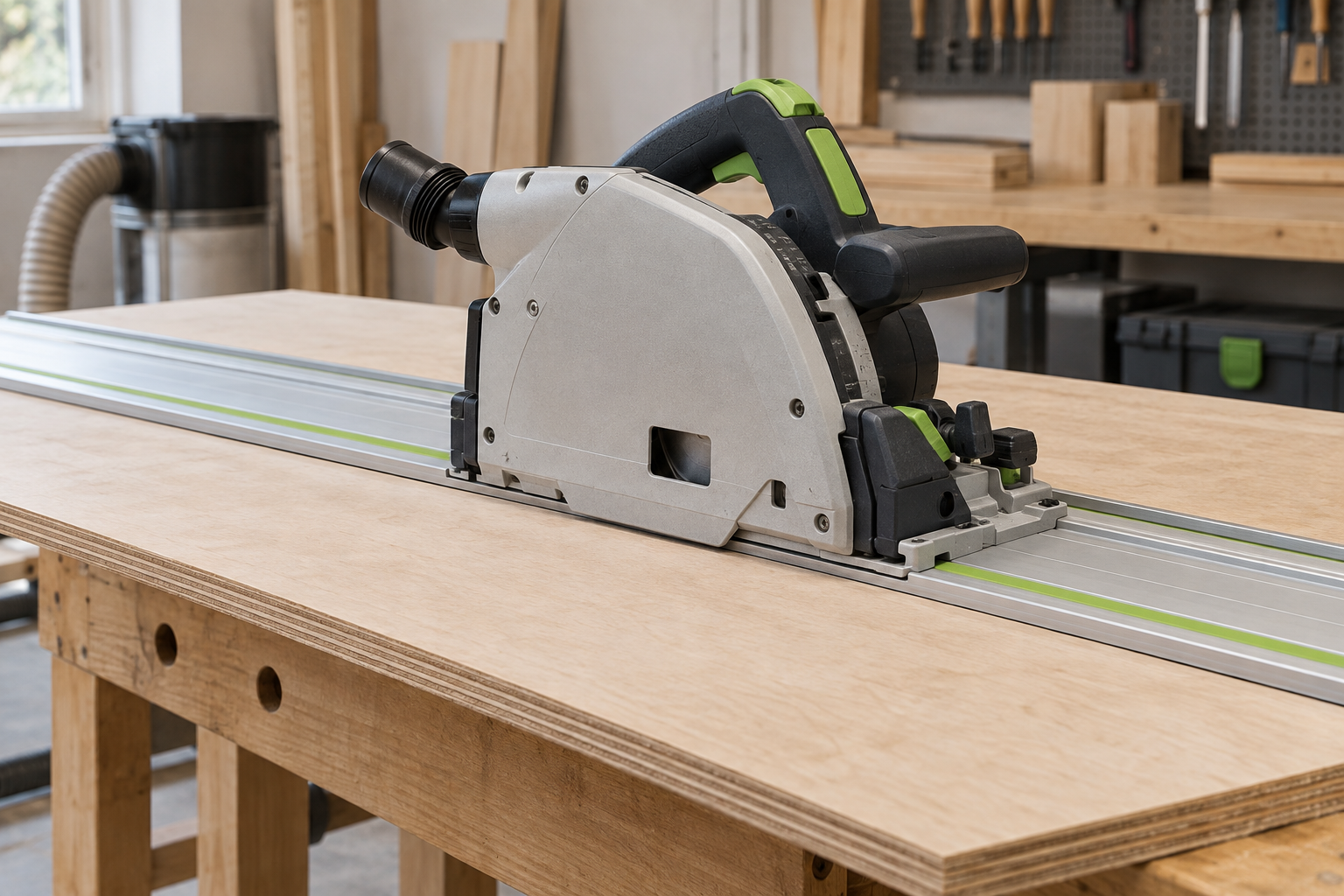
If you routinely rip thick hardwood slabs or need to cut material thicker than about 2 inches in one pass, the Festool TS 75 is the more capable saw. Its maximum cutting depth is about 2-15/16 inches (75 mm) with the rail, compared with roughly 2-1/8 inches (55 mm) for the Makita SP6000. That extra inch can eliminate a second pass or a flip-and-realign setup.
For plywood, cabinet parts, doors, and most glued-up panels, the Makita is usually enough. It is lighter, less costly, and has ample depth for common sheet goods. The TS 75 is a specialist advantage: useful when your stock is genuinely thick, but not a guarantee of a cleaner cut or faster work on every panel.
As an Amazon Associate we earn from qualifying purchases at no extra cost to you.



Cutting depth and what it means in practice
| Feature | Festool TS 75 | Makita SP6000 |
|---|---|---|
| Approximate cut depth on rail | 2-15/16 in. (75 mm) | 2-1/8 in. (55 mm) |
| Motor rating | 1,600 W | 1,300 W |
| Blade diameter | 210 mm (about 8-1/4 in.) | 165 mm (about 6-1/2 in.) |
| Best fit | Thick stock and deeper one-pass cuts | Sheet goods and typical panel work |
Depth figures are maximums; the usable cut depends on the rail, blade, and setup. A 2-inch panel is within the Makita’s stated capacity, but leaves less room for variation in material thickness and setup than it does on the Festool. A 2-1/2-inch slab is beyond the SP6000’s on-rail capacity, while the TS 75 can handle it in a properly set up cut.
Do not confuse capacity with a recommendation to cut the thickest stock at full feed speed. Dense hardwood increases load and can make a long cut prone to bogging, burning, or wandering if you push the saw. A sharp, suitable blade, a stable panel, and a controlled feed matter as much as the extra motor power. For stock near the TS 75’s maximum depth, test the cut on scrap and avoid forcing the saw.
How they behave in hardwood
The TS 75’s larger blade and higher motor rating give it more reserve for deep cuts. That matters most when the cut is long, the wood is dense, or you need to make repeated cuts through thick stock. Its advantage is not simply that it can reach deeper: a deeper cut leaves less margin for a dull blade, a pinched kerf, or an unstable workpiece. Support the panel so the offcut cannot close on the blade, and let the saw work rather than leaning into it.
The SP6000 is a capable saw for hardwood panels within its depth range. Its smaller blade makes it easier to handle than a larger saw, and its variable speed and electronic controls help manage different materials. But when a cut exceeds its capacity, it is not a matter of slowing down: the blade cannot pass through the work in one rail-guided cut. You would need another method, such as cutting from both faces with careful alignment, or choosing a saw built for the depth.
For a double-sided cut, mark and register both faces accurately. Any offset between the two cuts can leave a step in the edge, especially noticeable on a glued panel. If the finished edge matters, a single pass with the TS 75 may be simpler than flipping a heavy slab and trying to line up the kerfs.
Rails, blades, and cut quality
Both saws are designed for guide-rail work. A rail helps keep a long cut straight and supports the material near the cut, but it does not prevent tear-out on its own. A damaged or poorly seated splinter strip, a dull blade, or a rail that shifts can spoil the edge. Check that the rail is clamped or otherwise secure, particularly on a heavy hardwood panel.
Blade choice changes the result. A blade suited to fast ripping may leave more visible marks across figured hardwood than a finer-tooth blade. More teeth generally favor a cleaner finish but can feed more slowly and load up in a deep cut. Before investing in a different saw for finish quality, consider a suitable track-saw blade for hardwood and a fresh rail splinter strip.
Dust collection is worth setting up for indoor work. Hardwood dust accumulates quickly, and poor extraction reduces visibility along the cut. Use extraction compatible with the saw, keep the hose from dragging the rail out of position, and wear appropriate hearing and respiratory protection.
Which one makes sense for your work?
The Makita SP6000 is the sensible choice if most of your cuts are in 3/4-inch plywood, MDF, solid-core doors, or hardwood panels no thicker than about 2 inches. It is also the better buy for occasional track-saw use when the TS 75’s extra capacity would sit idle. You can put the savings toward a good rail, clamps, extraction, or a blade suited to your material. Check rail and accessory compatibility before mixing brands; systems that look similar are not always interchangeable in every detail.
Choose the TS 75 if thick slabs or panels are a regular part of the job, especially when you need a clean, continuous cut deeper than the Makita can reach. The saw and its larger blade are heavier and more expensive to own and handle. If you rarely exceed the SP6000’s depth, that cost buys little practical improvement. If thick hardwood is occasional, compare the price of ownership with having a shop make those few deep cuts.
For either saw, use a stable support that holds the full panel without trapping the offcut, and keep hands clear of the cut path. If you need a complete setup rather than a saw alone, compare a track-saw guide-rail kit and confirm its rail length suits your longest cut.
A practical buying test
Measure your thickest real workpiece, not the nominal thickness on a lumber listing, and allow for setup. If it measures 2-1/8 inches or less, the Makita can cover the cut within its stated on-rail capacity. If it is thicker, the TS 75’s additional depth is a concrete benefit. Then consider how often you will use it: frequent deep cuts justify the larger saw; occasional work may not.
For the specific job of cutting thick hardwood panels, the Festool TS 75 wins on capacity and has more reserve for demanding cuts. For the broader mix of furniture and cabinet work, the Makita SP6000 is often the better-value tool. Buy the deeper saw only when you can point to work that actually needs its depth.