What's inside
As an Amazon Associate I earn from qualifying purchases. This post may contain affiliate links at no extra cost to you.
Our Top Picks


The short answer
For breaking down full sheets in a small shop, a track saw is usually the more practical first purchase. You can set a sheet on foam insulation, clamp a guide, and cut without lifting the panel onto a table. That saves floor space and reduces the risk of wrestling a heavy, floppy sheet near a blade.
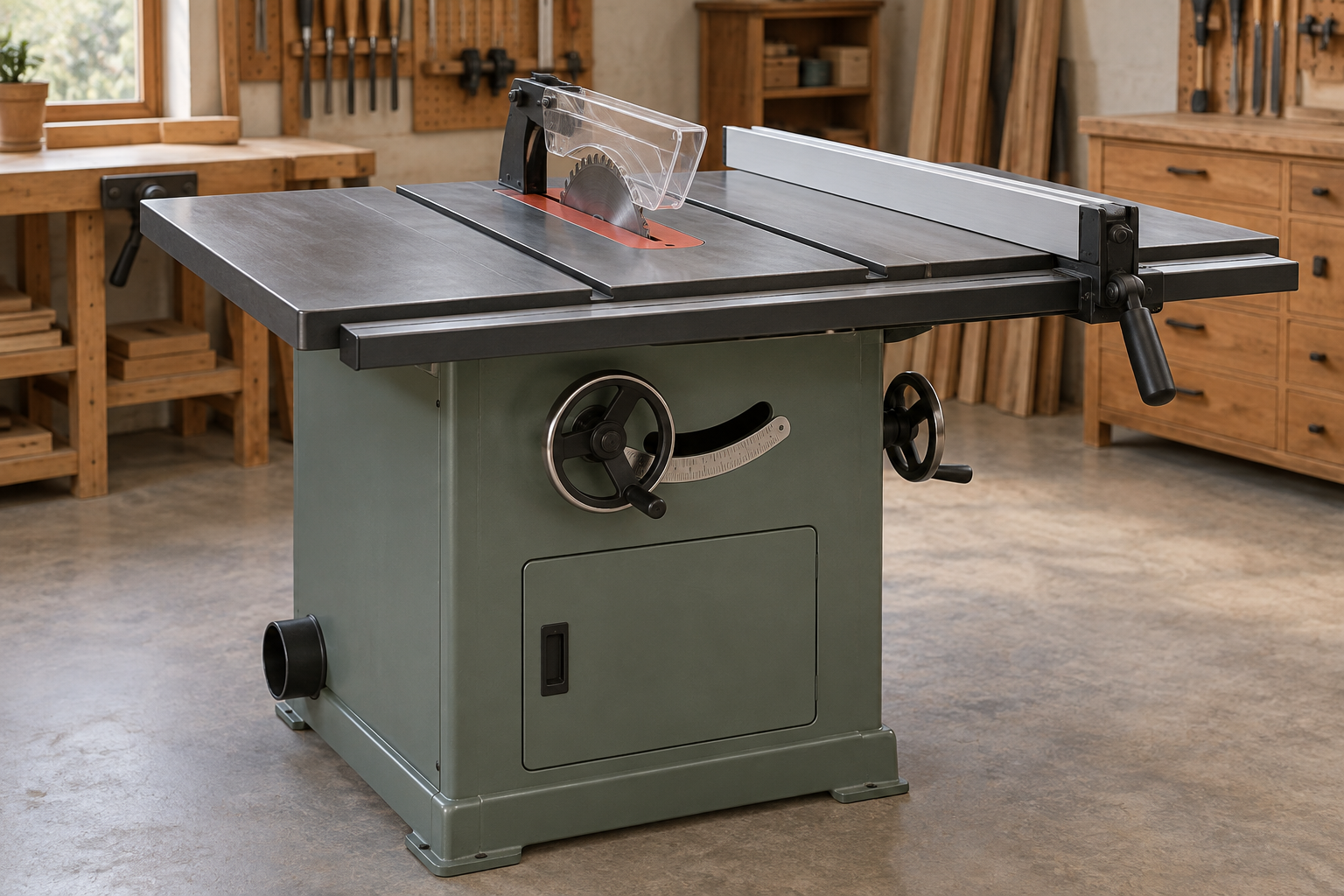
A table saw earns its keep when you make repeated, accurate cuts on smaller parts, rip lots of stock, or have enough room for safe infeed and outfeed. It can break down sheets, too, but a small saw with short support surfaces is a poor place to handle a full 4-by-8-foot panel alone.
As an Amazon Associate we earn from qualifying purchases at no extra cost to you.


What breaking down a sheet involves
A typical sheet is 48 by 96 inches and may weigh roughly 50 to 80 pounds, depending on material and thickness. Plywood is also awkward: it flexes, catches on supports, and can shift as a cut opens. The challenge is not just making a straight cut. It is supporting both sides of the cut while keeping the sheet stable and your hands clear.
In a small shop, the best setup is often one that lets the material stay put while the tool moves. That favors a track saw. A table saw reverses the arrangement: the tool stays put, and you feed the sheet through it.
Track saw and table saw compared
| Factor | Track saw | Table saw |
|---|---|---|
| Full-sheet handling | Sheet stays on a supported surface; saw travels along the cut | Sheet must be lifted and guided over the table |
| Shop space | Stores compactly; needs floor space only while cutting | Needs room for the saw plus safe infeed and outfeed |
| Long straight cuts | Guide track establishes the cut line | Fence establishes the line, but panel support is critical |
| Repeated narrow rips | Possible, but measuring and resetting take time | Fast and convenient once the fence is set |
| Dust control | Usually good with a connected extractor or shop vacuum | Varies; many saws need an added collection setup |
| Typical weak point | Track movement or poor sheet support can spoil a cut | Sheet can tip, bind, or steer off line during feeding |
Why the track saw is easier for full sheets
Lay the panel on rigid foam insulation, mark the cut, align the track, and make the pass. The foam supports the offcut and lets the blade cut slightly into the surface beneath. This is simpler than building a large table, and it lets one person manage the sheet without carrying it through the saw.
A track saw can make clean, repeatable cuts, but it is not automatic precision. If the track shifts, the cut shifts. Check that the sheet is flat, keep the track clear of dust, and use clamps or another reliable method to prevent movement. For a narrow strip, support the offcut so it cannot sag and pinch the blade near the end of the cut.
For a first setup, a track saw kit with a guide rail is the straightforward category to consider. A matching rail and saw are generally less fussy than trying to adapt an unrelated circular saw. If you already own a circular saw, a compatible saw-and-rail guide system may cost less, though the result depends on fit, blade alignment, and how securely the saw rides the guide.
Where the table saw is better
Once large panels are cut into manageable sections, a table saw is usually faster for repeated rips and crosscuts. Set the fence once, then feed multiple pieces. It also handles solid lumber and smaller cabinet parts more conveniently than a track saw, particularly when cuts need to be repeated.
The catch is support. A 4-foot-wide sheet can hang far beyond a compact table, and an unsupported corner can lever the panel sideways or pull it into the blade. That can cause a poor cut, a jam, or dangerous kickback. A helper, outfeed support, and stable infeed support can reduce the problem, but they take space and do not make an awkward feed effortless. Never try to control a full sheet by reaching across the blade or standing where a kicked-back piece could hit you.
Cost, accuracy, and the cheaper option
A track-saw setup often costs less than buying a table saw with enough support equipment to handle full panels safely. However, a basic circular saw and a straightedge can also break down sheets accurately enough for many home projects. That is a sensible budget choice if you make only a few cuts, take time to clamp the guide, and verify its offset from the blade. It is slower to set up and usually takes more care to match the clean, repeatable results of a good track-and-saw combination.
Blade choice matters whichever tool you use. A sharp blade suited to plywood reduces tear-out; a dull or coarse blade can leave ragged edges and make the saw work harder. For parts that will be trimmed to final size later, leave a little extra material on the first breakdown cut rather than trusting a rough sheet edge as a reference.
Which one should you buy?
Choose a track saw if your main task is turning full sheets into cabinet sides, shelves, or smaller blanks, and your shop cannot spare the room for long table-saw support. It is also a good fit if you work alone and want the panel to remain on a low, stable surface during the cut.
Choose a table saw if you already have a safe way to support sheet goods, have room for the feed path, and spend more time on repeated rips or smaller work than on initial sheet breakdown. If you need both, a common small-shop workflow is to rough-cut panels with a track saw, then use the table saw for repeatable sizing of smaller pieces.
For most cramped shops buying one tool specifically to handle full sheets, start with the track saw. If full sheets are an occasional job and you already own a circular saw, a clamped straightedge and foam support may be enough. Spend on a table saw when the rest of your work—not just the occasional 4-by-8 panel—will benefit from it.