What's inside
As an Amazon Associate I earn from qualifying purchases. This post may contain affiliate links at no extra cost to you.
Our Top Picks

Quick verdict
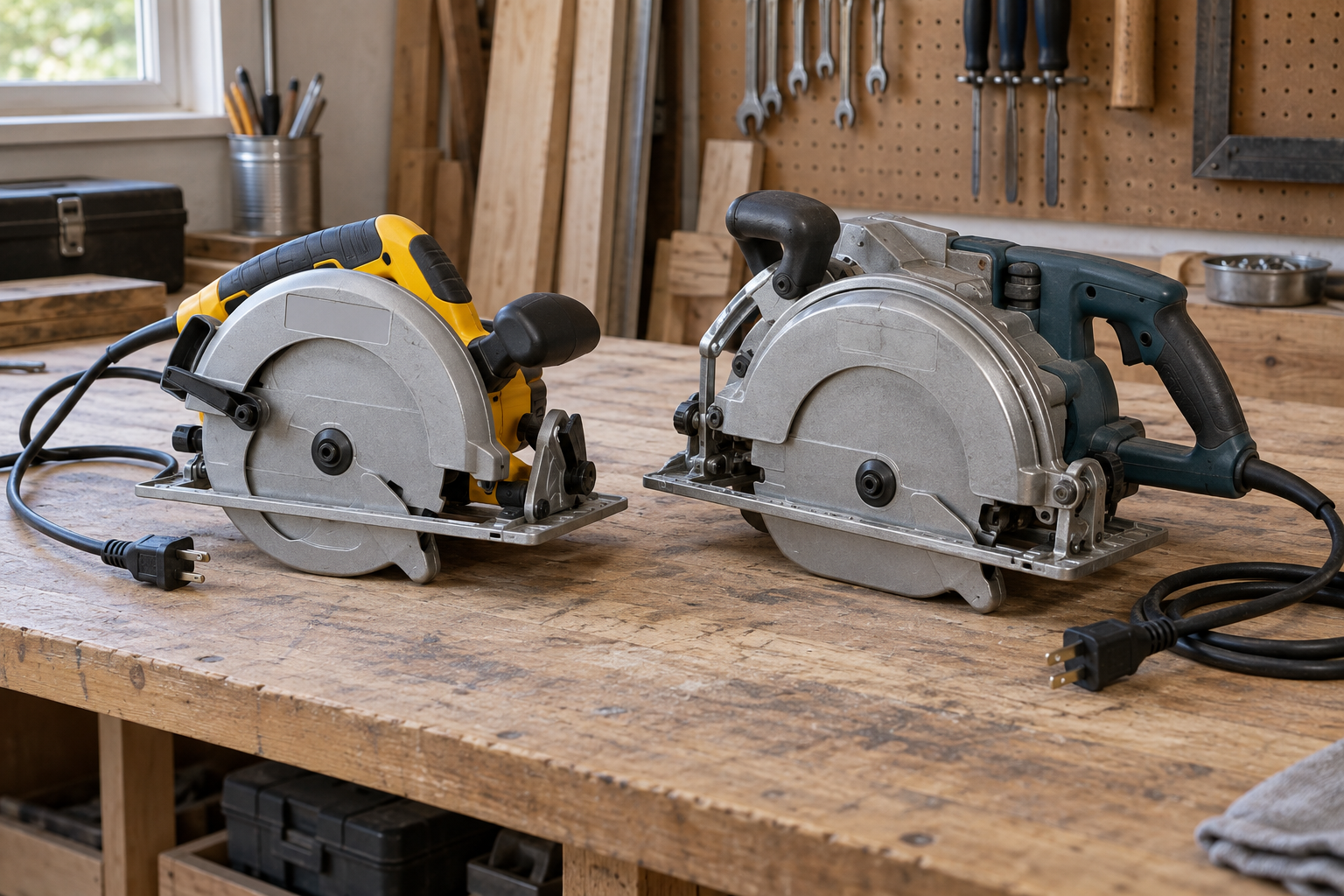
The SKILSAW SPT77WML is the better fit for repeated heavy framing if you want a worm-drive saw with a magnesium housing and are prepared to pay more for a lighter, easier-to-handle package. The Bosch CS10 is a conventional sidewinder, not a worm-drive saw. It costs less and can handle ordinary framing, but it is not a like-for-like substitute if you specifically want a worm drive’s blade position and low-speed torque feel.
For a crew making long cuts in dimensional lumber all day, choose the SPT77WML if its price and weight suit you. For occasional framing, renovation work, and straightforward cuts, the CS10 is often enough. Neither saw makes a poor blade or a misaligned cut disappear; use a sharp framing blade, support the stock, and check the shoe before blaming the motor.
As an Amazon Associate we earn from qualifying purchases at no extra cost to you.


Key differences at a glance
| Feature | SKILSAW SPT77WML | Bosch CS10 |
|---|---|---|
| Drive type | Worm drive | Sidewinder |
| Blade size | 7-1/4 inches | 7-1/4 inches |
| Motor rating | 15 amps | 15 amps |
| Weight | About 11.5 lb | About 10.6 lb |
| Bevel range | Up to 53 degrees | Up to 56 degrees |
| Best fit | Frequent framing and demanding cuts | General framing on a tighter budget |
Weights can vary by configuration and what is included in the listed figure, so compare bare-tool specifications and the actual package before buying. Both are corded 15-amp saws; neither has the freedom of a cordless model, and both need a suitable extension cord when the outlet is far away.
Worm drive versus sidewinder
The SPT77WML uses a worm-drive gear arrangement, with the motor aligned lengthwise along the saw. It is designed for sustained cutting and gives the saw a different balance and feel than a compact sidewinder. Some framers prefer that layout for guiding long rip cuts and working from the left side of the blade. Others find the extra bulk takes getting used to, especially when cutting overhead or carrying the saw up ladders.
The CS10’s direct-drive sidewinder layout is more familiar to many homeowners and is lighter on paper. It is not a worm drive, despite sometimes being compared with worm-drive saws in shopping searches. Its 15-amp motor and 7-1/4-inch blade are capable of common framing cuts, including cutting 2-by lumber. A 2-by-4 is 1-1/2 inches thick; a 2-by-6 is 1-1/2 inches thick as well, but wider, so both are within the normal work of a 7-1/4-inch saw when set up correctly.
Cutting performance on a framing job
For crosscutting studs and trimming plate, the CS10 should be adequate when fitted with a sharp, appropriate blade. It is also the sensible value choice if the saw comes out for a few cuts during a remodel rather than hundreds of cuts each week. The lighter build can be easier to manage for short, repeated cuts, and the lower purchase cost leaves room for a quality blade and a square.
The SPT77WML makes more sense when the saw sees long days of framing, ripping stock, or cutting thicker material where the operator values its worm-drive layout. Its magnesium construction keeps weight below what many people expect from a worm drive, but it is still heavier than the Bosch CS10 listed above. If fatigue is already a problem, that difference matters over a full shift. A worm drive is not a guarantee against bogging: forcing the saw, using a dull blade, or running a long undersized extension cord can slow either tool and overheat it.
Watch for burning, a slowing blade, or repeated breaker trips. Stop, unplug the saw, check for a pinched blade and inspect the cord and blade condition. Do not push harder to compensate for a dull or unsuitable blade. For general framing, compare 7-1/4-inch framing blades by tooth count and material rating, not just price.
Accuracy, handling, and common failure points
Both saws depend on a stable shoe and accurate depth and bevel settings. Before a large job, unplug the tool and check that the blade is square to the shoe at 90 degrees, then verify the bevel scale against a reliable square. A saw can cut consistently out of square if the shoe has taken a knock or the setting indicator has shifted. Check the kerf on scrap rather than trusting a scale that has not been verified.
Set the blade depth so the teeth extend slightly below the stock—roughly 1/8 to 1/4 inch for a typical crosscut. Too much exposed blade increases the chance of a dangerous kickback; too little can leave an incomplete cut. Clamp or support long stock so the cut does not close and pinch the blade. Keep the offcut supported, but do not place a hand under the work or reach across the blade path.
The CS10’s lower weight is a real handling advantage, but its sidewinder layout may feel less natural to someone accustomed to a worm drive. The SPT77WML’s balance may suit that user, though its length and weight can be awkward in confined spaces. Try holding both in your normal cutting stance if a local retailer allows it.
Which one should you buy?
Buy the SPT77WML if you specifically want a worm-drive saw, do frequent framing, and value its build and cutting feel enough to accept the higher price and additional bulk. It is the more appropriate of these two for a buyer whose work regularly includes long cuts and full-day use. If your priority is comparing worm-drive options, browse 7-1/4-inch worm-drive circular saws and confirm the drive type in the manufacturer’s specifications.
Buy the CS10 if your work is occasional or mixed, you prefer a lighter sidewinder, and saving money matters more than matching a worm-drive layout. It is not a weak choice for ordinary framing; it is simply a different type of saw. Put the savings toward a sharp blade, eye and hearing protection, and a dependable extension cord sized for the run. If you need a true worm drive for heavy daily framing, do not choose the CS10 just because the blade diameter and amp rating look similar.